 Maradok
Kereskedési feltételek
Products
Eszkozok



We are truly living in an unusual time, where the classic principles of assessing market situations are being cast aside in favor of more pressing and, more importantly, unclear and uncertain conditions regarding potential developments.
Traditionally, the most important factor in determining the value of one currency relative to another is the interest rate differential between the central banks of the respective countries. Of course, one must also consider trade balances, national economic outlooks, and particularly the monetary policy trajectory—whether a central bank is likely to raise or lower interest rates in the near future.
These solid fundamentals worked reliably in the past, helping investors assess the potential for currency pair appreciation or depreciation. But today, as already noted, the situation is markedly different. The Federal Reserve has not lowered interest rates for months. Like a steadfast tin soldier, Fed Chair Jerome Powell continues to insist at each meeting that there is no reason to resume rate cuts, citing uncertainty around the outcomes of Donald Trump's policies. Meanwhile, other major central banks—namely the Bank of England, the European Central Bank, and more recently, the Reserve Bank of Australia and Reserve Bank of New Zealand—have already cut rates. And yet, the British pound, the euro, and the Australian and New Zealand dollars have not weakened against the dollar. In fact, they have even risen recently, defying the classic valuation models of currency pairs.
So why is this happening? Why are markets ignoring these supposedly dollar-supportive factors?
There are two, or even three, major reasons beyond the secondary ones. First, as mentioned, there is global uncertainty around the geopolitical and economic consequences of Trump's actions. Will his efforts to boost the national economy succeed, or will they end in collapse? This uncertainty, along with his push for a significant increase in the U.S. national debt, is discouraging potential buyers of Treasuries, which in turn weakens demand for dollars.
Second, the U.S. economy is highly likely to slip into a recession. This could be confirmed by downward revisions to Q1 GDP data expected this week, potentially showing a contraction. That raises the question: who wants the currency of a country in crisis?
Third and most obvious is the growing expectation that the Fed may resume rate cuts sooner—possibly in June or July—instead of later in the year, as was previously thought. This view is supported by falling annual inflation toward 2.3%, increasing recession risks, and a broader range of negative economic indicators.
These and other factors put pressure on the dollar and support gains in its major Forex counterparts. Given this context, the dollar will likely continue falling toward the 90-point level on the dollar index.
Today, the market will focus on the release of the minutes from the latest Fed meeting. If the document suggests a likelihood of rate cuts in the near term, it will likely put downward pressure on the dollar and, after a short-term pullback, could reignite its broader decline against major currencies.
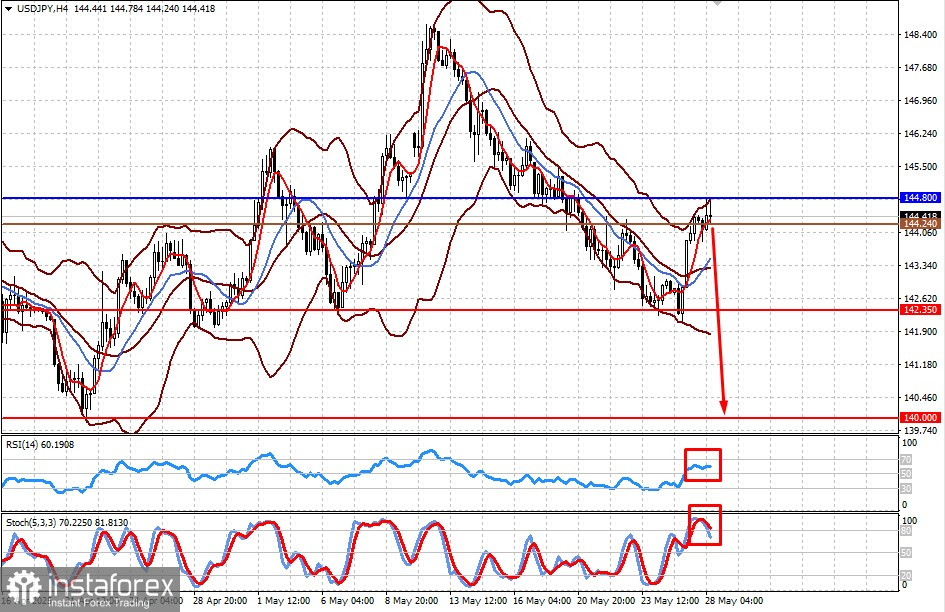
The pair is trading below the resistance level of 144.80. A dovish signal from the Fed minutes could push the pair lower—first toward 142.35 and then to the strong support level at 140.00, which has held since fall 2023. The 144.24 mark can serve as an entry point for short positions.
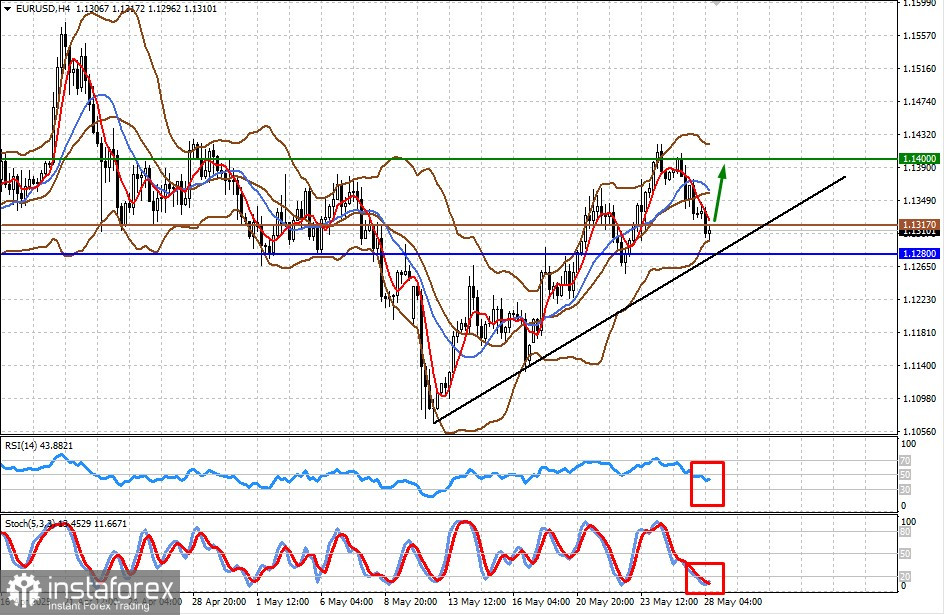
The pair is trading above the support level of 1.1280. A signal from the Fed could support the euro and lead to a move toward 1.1400. The 1.1317 level may serve as a good entry point for long positions.
InstaForex analytical reviews will make you fully aware of market trends! Being an InstaForex client, you are provided with a large number of free services for efficient trading.


