 Maradok
Kereskedési feltételek
Products
Eszkozok



The calm before the storm is not merely a meteorological metaphor but an accurate description of what transpired in the US stock market on the last day of August. The S&P 500 closed in the green, yet 9 out of 11 sectors ended the day in the red, with the hardest hit being communication services and utilities.
Stock index performance
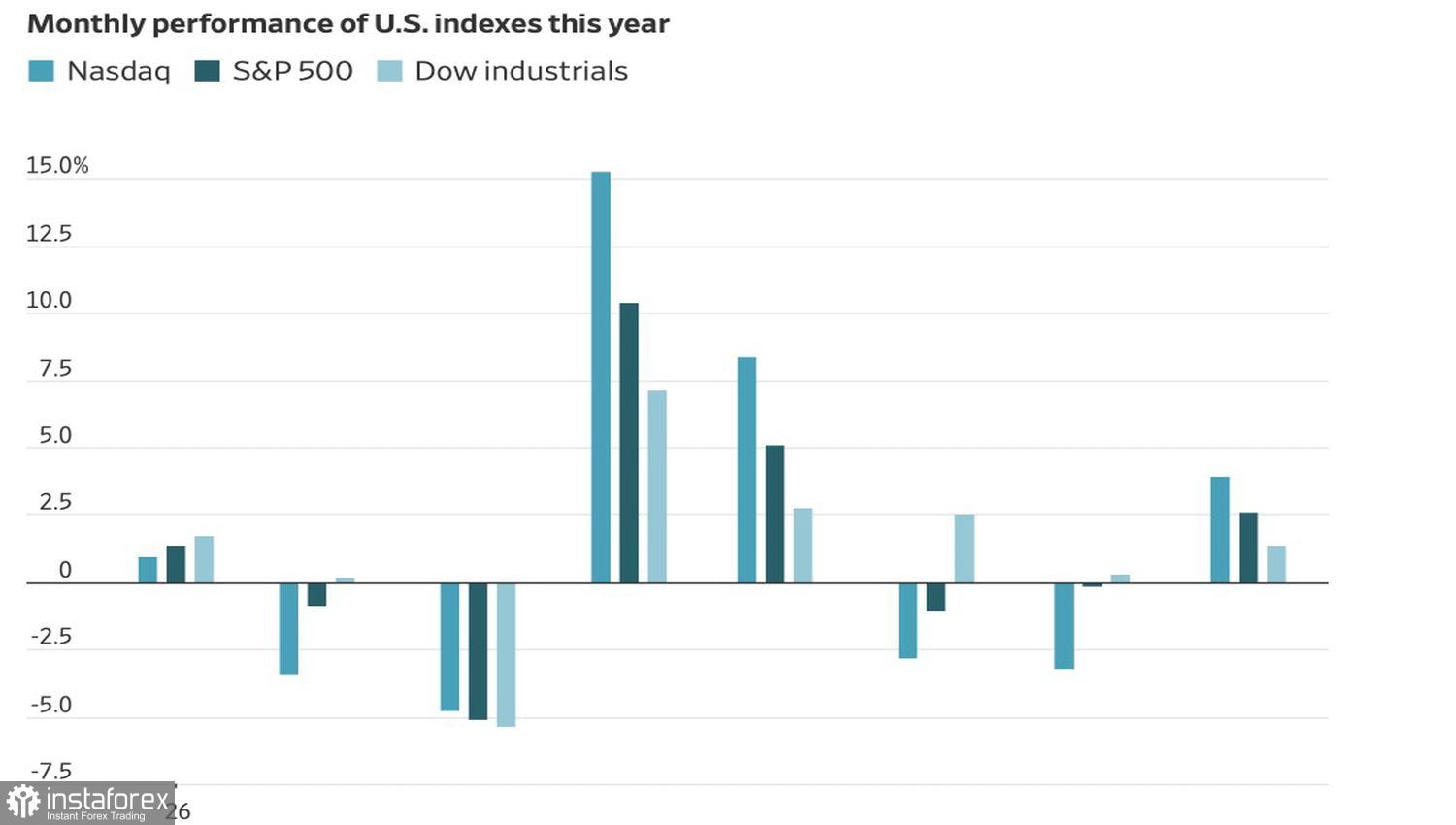
However, August has proven to be the best month for the S&P 500 since 2021. All three key indices finished the month in positive territory for the first time since May, while the Dow Jones recorded its best five-month stretch since November 2024. The tech-heavy Nasdaq increased by about 4%, but the growth was not led by familiar favorites from the AI sector. Instead, it was driven by software company stocks. A series of strong earnings reports partly lifted the dark cloud that had been hovering over the sector all year. Notably, Moderna soared by 156% in a month—a rare instance of biotech outpacing the entire tech sector.
Nonetheless, the calm turned out to be misleading. The escalation of the conflict in the Middle East and a 3% surge in oil prices, following an exchange of strikes between the United States and Iran for the first time in a month, along with Donald Trump's promise of new attacks, reminded the market that geopolitical tensions do not seek permission. In this context, the energy sector emerged as a leader in growth within the S&P 500.
In reality, the absence of significant macroeconomic statistics amplifies the sensitivity of market sentiment to news headlines. The S&P 500 currently believes that a full-scale military escalation is unlikely. However, any negative news from this front could shatter the fragile equilibrium and trigger a global flight from risk.
S&P 500 seasonal dynamics
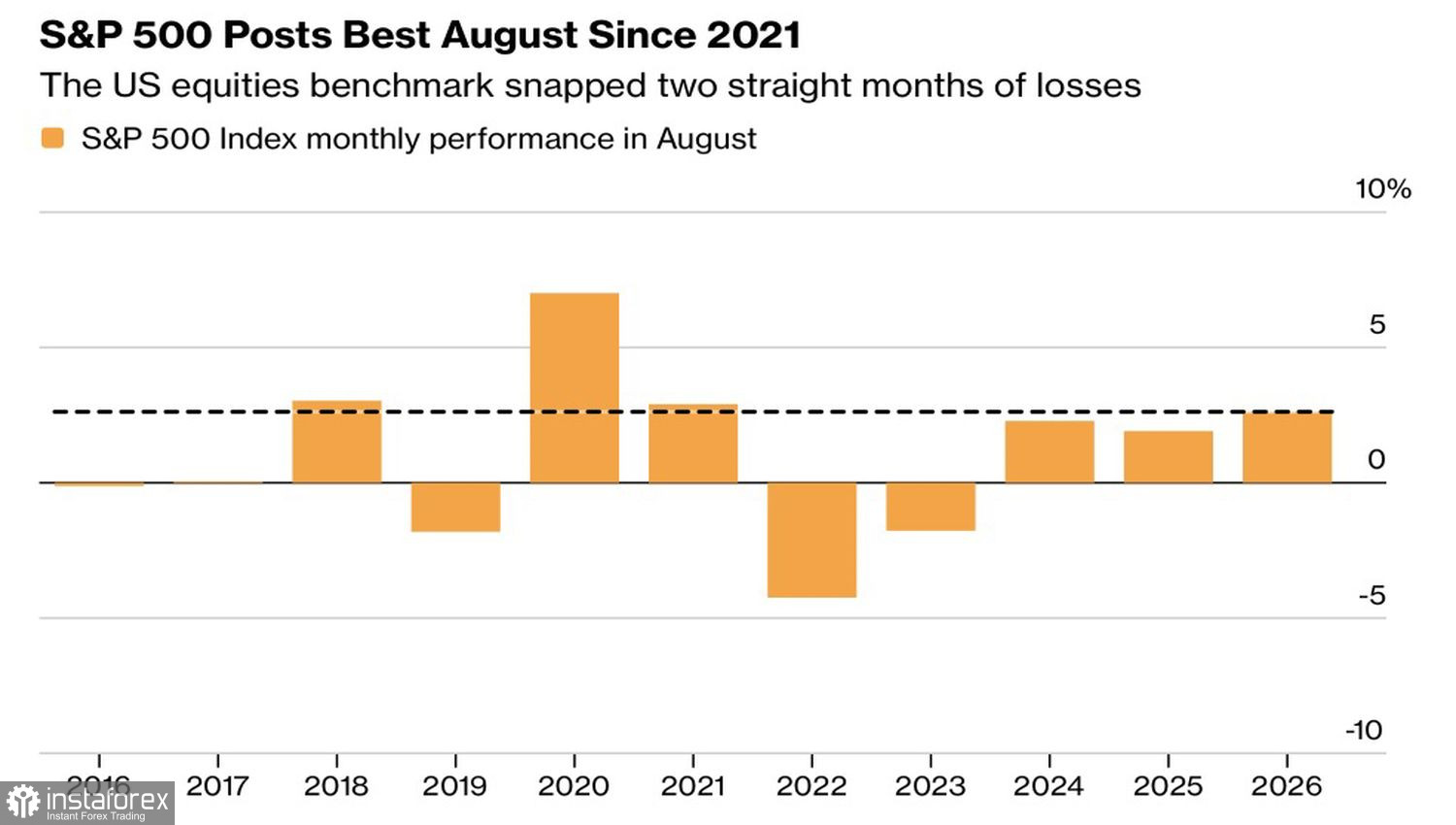
Historically, September remains the weakest month for US equities, and the list of risks continues to grow. From questions about the sustainability of the AI rally to the probable interest rate hikes in a persistent inflation environment, Finance Minister Scott Bessent declined to forecast the Fed's decision, but he listed arguments for maintaining a pause, noting the supply shock that in itself does not necessitate tightening monetary policy.
Meanwhile, JP Morgan shifted its stance from "bullish" to "tactically cautious." Hawkish comments from Fed Chair Kevin Warsh have led the market to price in a higher probability of interest rate hikes later this year. According to the bank, bull markets typically come to an end either through a rate-hiking cycle or a recession. While a downturn in the coming quarters seems unlikely, the September 16 Fed meeting is now referred to as a "live meeting," meaning its outcome is no longer predetermined.
The market enters September with records in hand and anxiety in its underpinnings. Will it manage to carry both burdens without incurring losses?
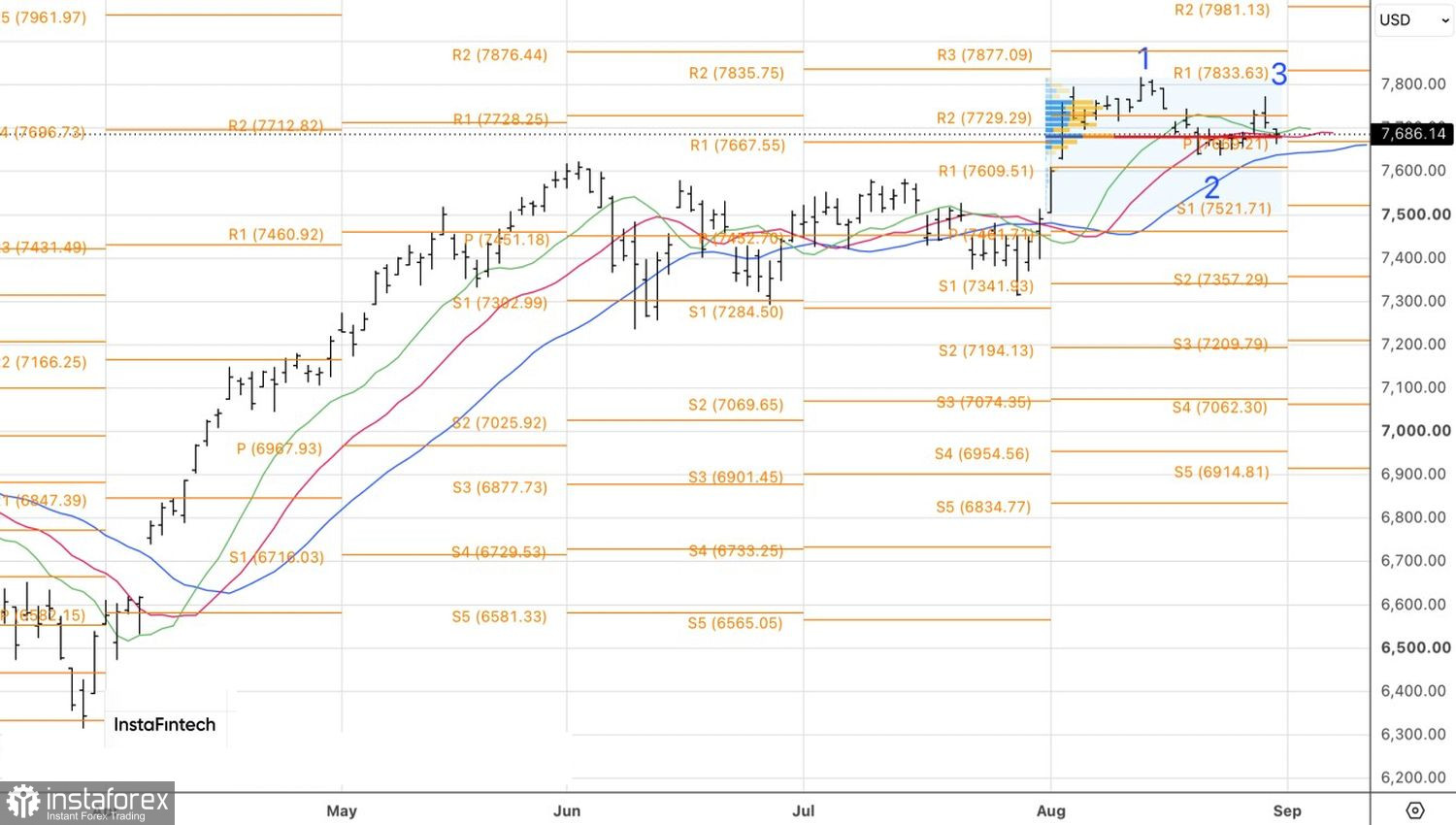
Technically, the daily S&P 500 chart shows that the risks of activating a 1-2-3 reversal pattern are rising, which would increase the likelihood of a substantial correction towards the bullish trend. A breach of support at 7,635 would be a signal to increase previously established short positions.
InstaForex analytical reviews will make you fully aware of market trends! Being an InstaForex client, you are provided with a large number of free services for efficient trading.


