 Maradok

Kereskedési feltételek
Products
Eszkozok


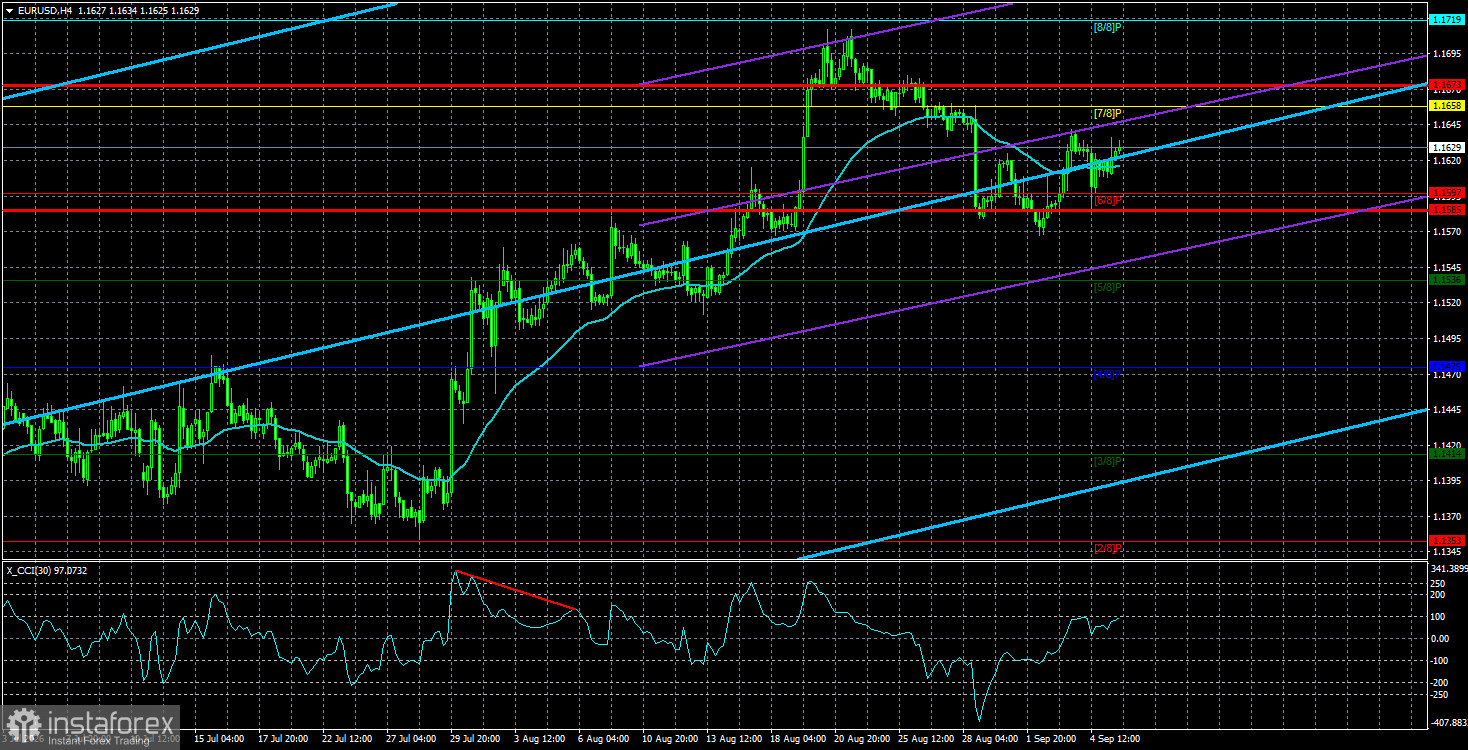
The EUR/USD currency pair showed a small rise on Monday; however, overall market moves were again weak, and volatility was low. Traders should clearly understand the current technical disposition. On the weekly timeframe, a clear uptrend that began in 2022 is visible. Thus, in the long term, we expect the euro to rise. On the daily timeframe, a flat is clearly visible, lasting for a year. Therefore, in the medium term we expect movement between 1.1450 and 1.1950. Since the price last reached the lower boundary of the sideways channel, it is reasonable to expect a move toward the upper boundary. On the 4-hour timeframe, an uptrend and a correction against it are clearly visible. Therefore, after the correction ends, the upmove should resume. All three main timeframes point to further euro strength.
The fundamental backdrop, in our view, also remains unambiguously positive. If not for the war between the US and Iran, the euro would long ago be trading above $1.20. The year began with a four-year high, and January's dynamics would likely have persisted throughout the year. But Donald Trump decided to neutralize Iran and eliminate the "nuclear threat," so for half a year the dollar acted as a defensive asset and a channel for capital flight from the Middle East. However, as we have repeatedly said, geopolitical factors cannot sustain the dollar forever. This summer, the Middle East conflict effectively cooled because Tehran and Washington found themselves in a stalemate. Neither side can achieve its aims, so the conflict has been put on pause. If the conflict is not expanding or intensifying, market tension related to it falls, and the dollar is no longer used as a safe haven. Thus, the single supporting factor for the US currency has essentially been neutralized.
As for Federal Reserve and central-bank policy, this factor now looks almost like a joke. The market spent the summer expecting Fed tightening in September, and that factor has already been priced in multiple times. Now traders are realizing that US tightening remains highly uncertain, and members of the Monetary Committee see no strong reasons to raise the key rate. Moreover, the European Central Bank may raise rates for the second time this year on Thursday, and the eurozone economy accelerated to 1.2% y/y in Q2 — unlike the Fed and the US economy.
Thus, almost all fundamental factors also favor the euro. We continue to expect euro appreciation based on the overall set of factors. We believe Trump's policies will continue to damage the US economy and the dollar. Traders should remember that "black swans" appear occasionally and the dollar remains the world's main currency, so it cannot depreciate very rapidly by default.
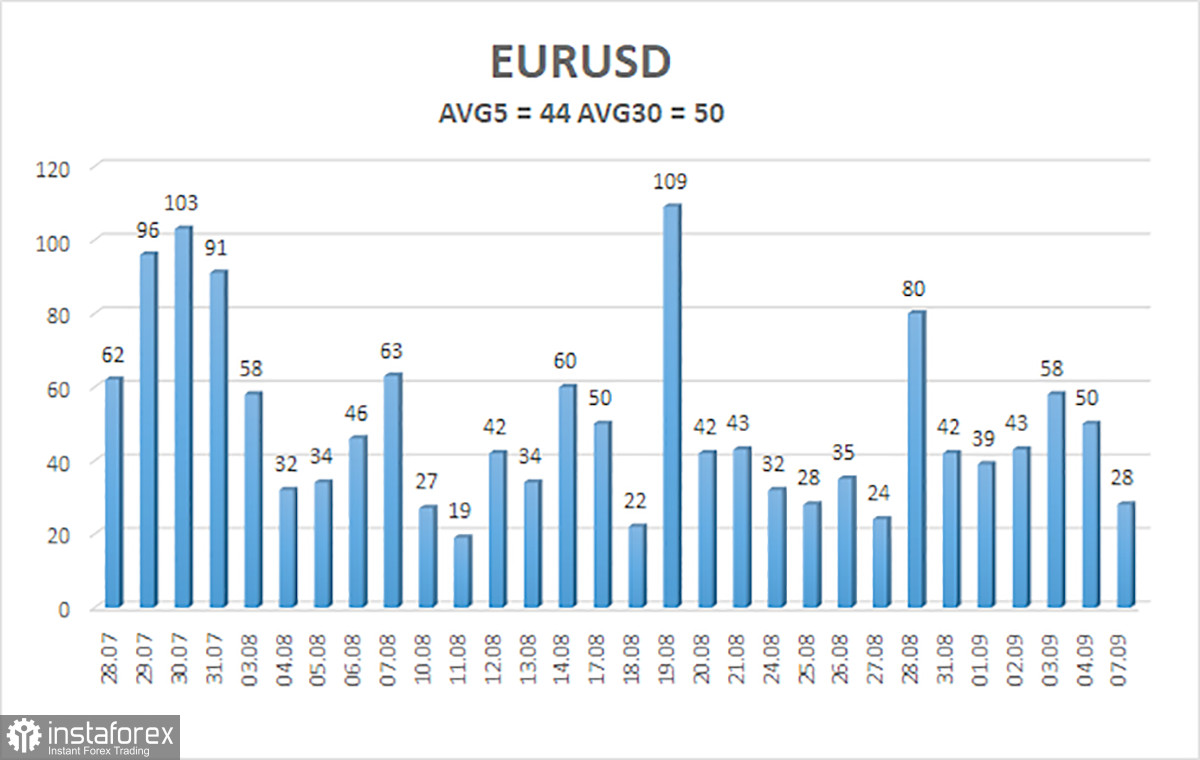
Average volatility of the EUR/USD pair over the last 5 trading days as of September 8 is 44 pips and is characterized as "mid-low." We expect the pair to move between 1.1585 and 1.1673 on Tuesday. The major linear-regression channel has turned up, indicating an uptrend. The CCI indicator entered oversold territory, warning of a possible end to the correction.
S1 – 1.1597
S2 – 1.1536
S3 – 1.1475
R1 – 1.1658
R2 – 1.1719
R3 – 1.1780
The EUR/USD pair continues an uptrend on the 4-hour timeframe, which may be the start of a new leg of a global uptrend on higher timeframes. The global fundamental backdrop for the dollar remains negative, although in 2026 geopolitics first and then the Fed's hawkish tilt provided strong support for the US currency. Those factors no longer support the dollar now. With price below the moving average, short positions can be considered on corrective grounds with targets at 1.1585 and 1.1536. Above the moving average, long positions remain relevant with targets at 1.1673 and 1.1719.
Regression channels help determine the current trend. If both are directed in the same direction, it means the trend is currently strong;
The moving average line (settings 20,0, smoothed) defines the short-term trend and the direction in which trading should be conducted at present;
Murray levels are target levels for moves and corrections;
Volatility levels (red lines) are the probable price channel within which the pair will spend the next 24 hours based on current volatility indicators;
The CCI indicator – its entry into the oversold area (below -250) or the overbought area (above +250) indicates that a trend reversal in the opposite direction is approaching.
InstaForex analytical reviews will make you fully aware of market trends! Being an InstaForex client, you are provided with a large number of free services for efficient trading.


