 Maradok
Kereskedési feltételek
Products
Eszkozok



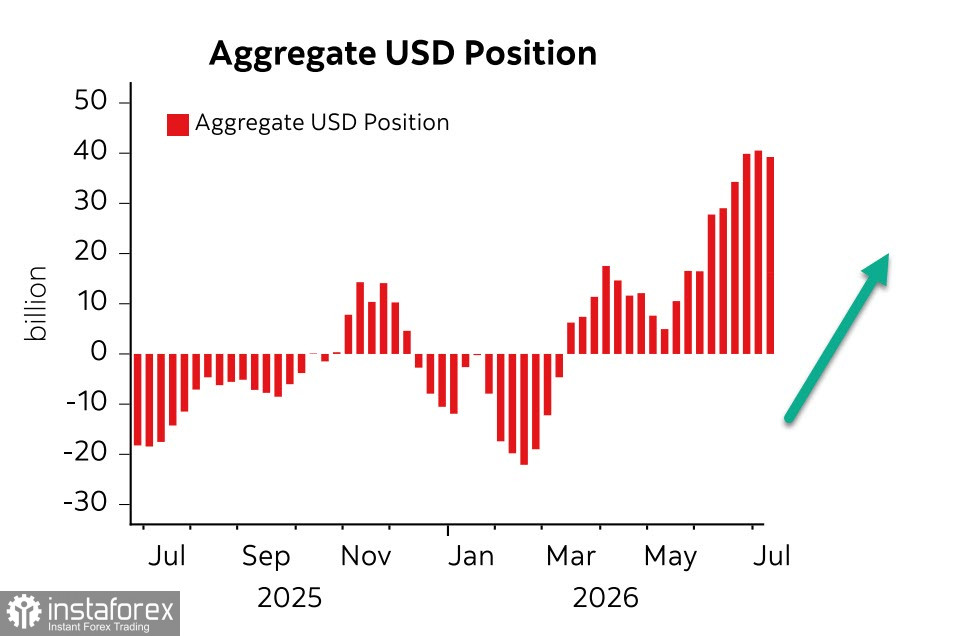
The latest CFTC report shows the first signs of a turning point in dollar positioning. A week earlier, the aggregate long USD position on IMM futures had reached its highest level since 2015; over the last week, it fell by 1.3 billion. This is the first decline in two months, yet positioning for the dollar remains firmly bullish.
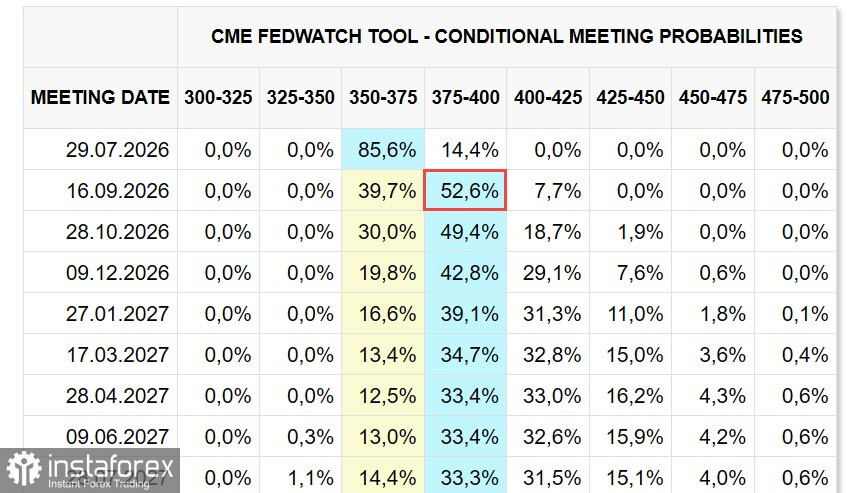
The futures market at CME has all but ruled out a July rate hike at the FOMC meeting on July 28–29. The probability of the funds rate staying at 3.5–3.75% is 85.6%, while the chance of a 25-basis-point hike is only 14.4%. A week ago, the probability of a July increase was 45%.
However, the view for September is markedly different. Markets price the probability of unchanged policy in September at 39.7%, a 25-basis-point hike at 52.6%, and a 50-basis-point move at 7.7%. According to CME, traders see roughly equal odds of a September hike and more than a 70% probability of at least one hike by December.
New York Fed chair Kevin Warsh maintains hawkish rhetoric, insisting on low tolerance for elevated inflation, while offering no precise timing for tighter policy. His aggressive tone contrasts with slowing June inflation. Two-year US Treasury yields have already hit a 15-month high, reflecting market confidence in a policy repricing and boosting the appeal of US debt, which in turn supports capital inflows.
The University of Michigan report showed one-year inflation expectations in July fell to 4.2% from 4.6% in June, while five-to-ten-year expectations held at 3.3%. This suggests markets still price persistent medium-term inflationary pressure.
This week, the main driver for the US dollar is the situation in the Middle East. Over the weekend, the US completed a ninth consecutive series of strikes on Iranian targets, including command posts, air defense systems, missile launchers, and naval assets. Tehran has struck back at US bases in neighboring countries.
President Trump announced a renewal of a maritime blockade of Iran and said the US will take control of the Strait of Hormuz. Washington intends to call itself the "guardian of the Strait of Hormuz" and to levy 20% of the cost of all cargo transits to cover security expenses.
US objectives extend beyond concerns over Iran's nuclear program. They aim for fundamental geopolitical control over the Strait of Hormuz—a key route for global oil shipments. Control of that route would give the US leverage over global energy flows and direct influence on world oil prices. Iranian forces, for their part, have warned the strait will be unsafe for a single drop of oil or gas while US actions continue in the region.
Markets reacted as expected: in the morning of July 20, Brent on ICE topped $90 per barrel for the first time in more than a month, briefly reaching $91.22. Rising oil exerts a dual effect on the dollar—it fuels inflation expectations and raises the odds of Fed tightening while also increasing demand for safe-haven assets.
The coming days will be defined by escalation or de-escalation in the Middle East. As the conflict intensifies, the dollar is likely to remain protected by safe-haven flows and an inflation impulse from higher oil. There are no signs yet of a durable reversal, but extreme positioning and technical resistance argue for caution.
InstaForex analytical reviews will make you fully aware of market trends! Being an InstaForex client, you are provided with a large number of free services for efficient trading.


