 Permanecer

Condições de Negociações
Ferramentas


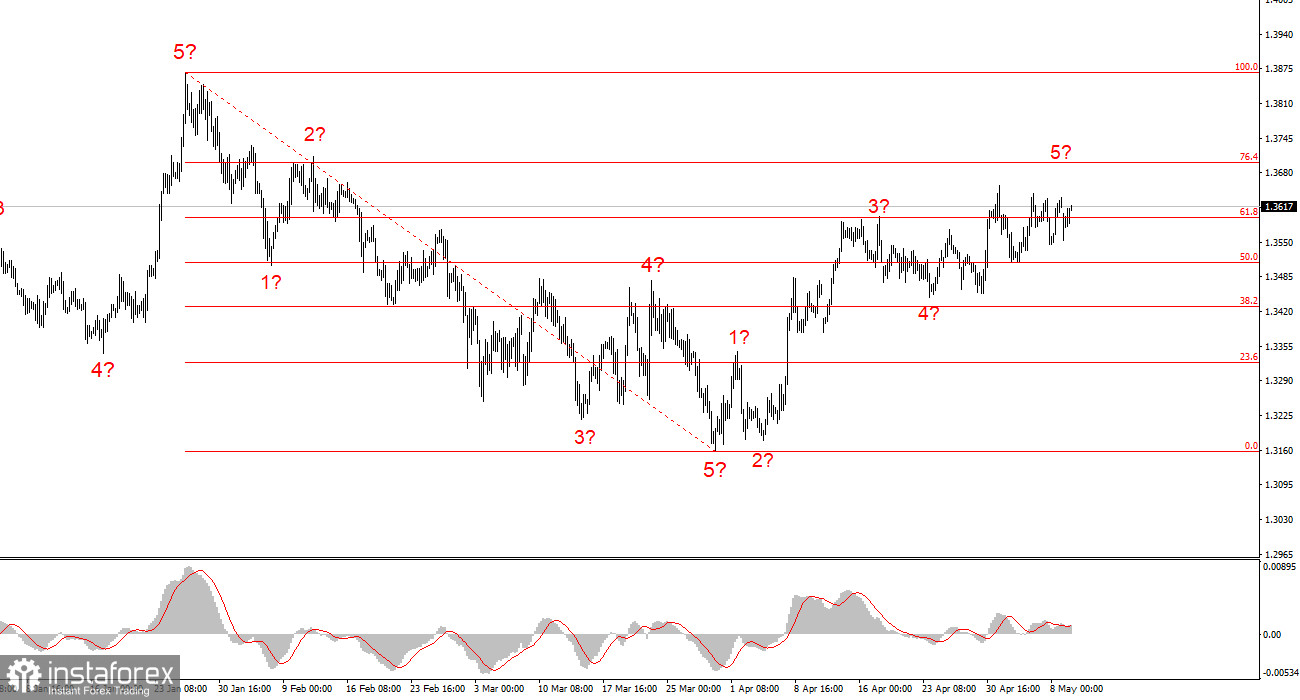
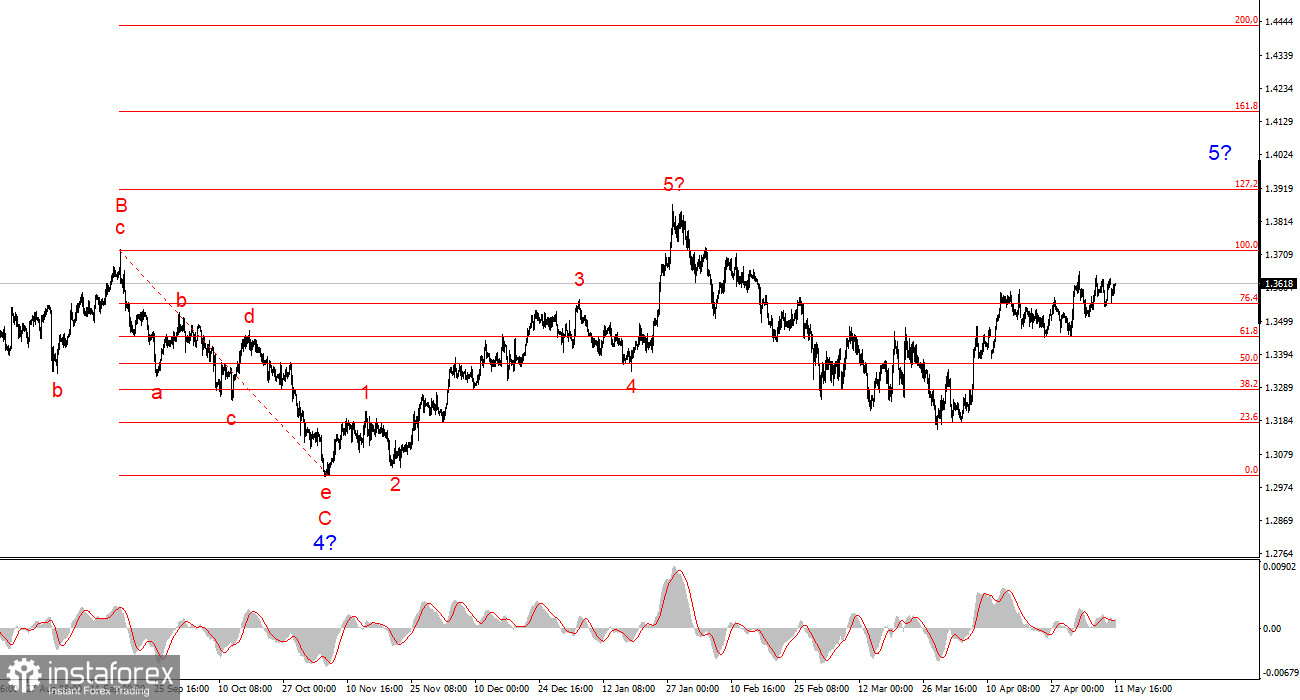
The wave pattern for GBP/USD continues to indicate the formation of a bullish trend segment (lower chart), while in the short term the structure that was initially interpreted as corrective is now being viewed as impulsive. Consequently, both major currency pairs are currently within bullish wave formations. The euro and the pound were supported by the ceasefire in the Middle East, which has lasted for a month (with rare exceptions) and still has every chance of becoming the foundation for a full-fledged peace agreement. Confidence in the eventual resolution of the conflict is reducing demand for the safe-haven U.S. dollar, which the market no longer sees as necessary if the conflict does not resume.
The latest upward wave structure has taken on a five-wave form, and wave 5 may complete its development in the near future. If this is indeed the case, then at least a three-wave corrective structure should follow. Much will depend on further developments in the Middle East. If no new escalation occurs and Tehran and Washington continue working toward a final ceasefire agreement, the upward movement in the pair is likely to resume after the correction.
The GBP/USD pair also ended Monday unchanged and displayed a relatively wide trading range due to geopolitical developments. The pound mirrored the euro's movements completely, as the market was trading almost exclusively on dollar sentiment today. Initially, the dollar was actively bought, as traders once again — for the third time in the past seven days — began expecting the ceasefire to collapse and the war to resume. Later, the dollar was actively sold after no escalation occurred and Tehran and Washington signaled their intention to continue negotiations.
There was no major news from the United Kingdom today, aside from Prime Minister Keir Starmer's party losing local elections. However, afternoon trading showed that the market largely ignored this event, just as it ignored the strong U.S. labor market and unemployment data.
Based on all of the above, two scenarios are currently possible. The first is that the market will continue buying the pound amid expectations of a final resolution to the Middle East conflict. The second is that the market is still recovering from the February–March decline this year and is focused solely on returning the exchange rate to what it considers a fair pre-war level, while ignoring all other news.
Either way, the current bullish wave structure appears close to completion. Therefore, in the near future, I would expect one more upward push followed by at least one corrective wave. The bullish trend segment could become much more extended, especially if the Bank of England decides to raise interest rates at its next meeting. It should be noted that the Federal Reserve is not expected to tighten policy this summer or before the end of the year.
The wave pattern for GBP/USD has gradually become clearer, as I expected. We can now see a distinct five-wave upward structure on the charts, which may be nearing completion. If that is the case, then a corrective wave sequence should begin after wave 5 is completed. Wave 5 may end near the 1.3699 level, which corresponds to the 76.4% Fibonacci retracement level.
If geopolitical developments continue moving toward a long-term peace agreement, the bullish trend segment may become more prolonged. Therefore, the combination of wave structure and geopolitics will determine the pound's direction in the coming weeks.
The higher timeframe wave structure looks nearly ideal, even though wave 4 exceeded the top of wave 1. However, I would remind traders that perfect wave structures exist only in textbooks. In practice, things are much more complicated. Wave 4 has a classic three-wave appearance, which suggests that a new impulsive trend segment began forming after its completion.
InstaForex analytical reviews will make you fully aware of market trends! Being an InstaForex client, you are provided with a large number of free services for efficient trading.


