 Permanecer

Condiciones de negociación
Products
Herramientas


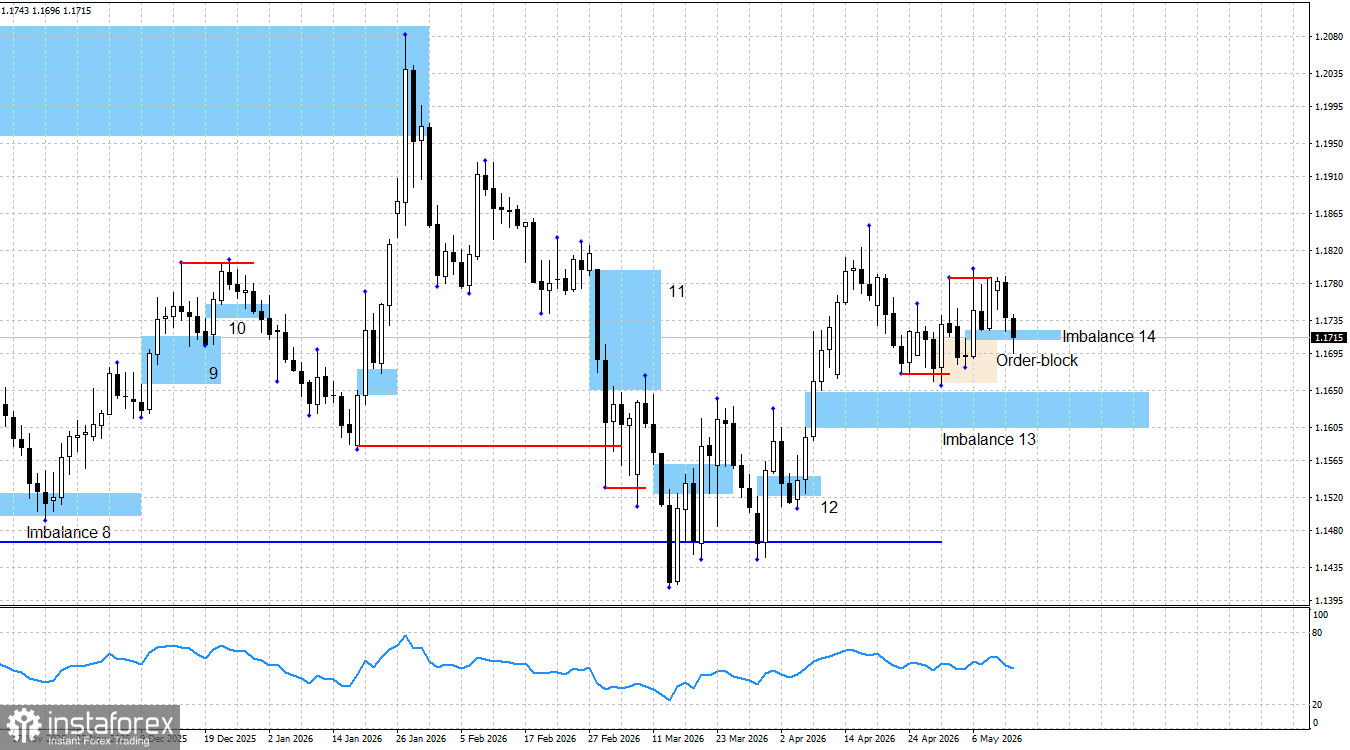
The EUR/USD pair reversed in favor of the euro after the formation of a bullish order block and began a new upward move. However, at the moment, the bulls' attacks look too weak and unconvincing. Bullish traders risk losing the initiative in the market, as geopolitics is currently exerting significant pressure on them.
The problem is that time is passing, the Strait of Hormuz remains closed, global oil supplies are shrinking, and Iran and the United States are not moving closer to a consensus on the key issues necessary to sign an agreement. As a result, the market is gradually losing faith that a deal between Tehran and Washington is even possible. A new acronym has even emerged: NACHO — Not A Chance Hormuz Opens. In other words, there is virtually no chance that the Strait of Hormuz will reopen.
Earlier, I already wrote that there are no signs of an agreement between Iran and the United States being reached in the near future. I also noted that bulls would struggle to maintain their offensive under such a news backdrop. The bullish impulse has not completely faded yet, but it is close to doing so.
In the current situation, traders looking to open new positions can only wait for the formation of new bullish patterns or signals and hope that the bullish impulse remains intact. I still consider the trend bullish. Among the bullish patterns currently visible are imbalances 13 and 14, which provide two potential zones of interest for long positions.
There are currently no bearish patterns at all, so there is no technical basis for selling the pair, even hypothetically. The only thing worth noting is the liquidity grab to the downside on May 6, but a liquidity grab is not a pattern in itself.
Once again, I must point out that all of the U.S. dollar's growth between January and March was driven solely by geopolitics. As soon as the United States and Iran agreed to a ceasefire, the bears immediately retreated, and for more than a month now the bulls have largely dominated the market.
At present, the truce remains fragile, but negotiations are continuing and the chances for peace still exist. I have repeatedly stated that I do not believe the bullish trend has ended, despite the breakout below key trend-forming lows and despite the war involving Iran. The market often prices in the most pessimistic scenario immediately, trying to anticipate the most radical outcome. Therefore, I allow for the possibility that traders have already fully priced in the geopolitical conflict in the Middle East. If that is the case, bears only have opportunities for isolated attacks.
The overall chart picture is currently crystal clear. The bullish advance remains intact, but it desperately needs support. Ideally, that support should come from geopolitics — Iran and the United States continuing to move toward each other diplomatically. Without a positive news backdrop, bulls may still continue their advance, but it certainly will not be rapid.
The economic background on Wednesday did not provide the market with any particularly interesting information and was not the reason for the euro's decline. Industrial production in the EU rose by 0.2% month-over-month in March, while GDP growth reached 0.1% quarter-over-quarter and 0.8% year-over-year. These figures were roughly in line with traders' expectations. They can be considered weak, but markets have long since become accustomed to weak economic data from the Eurozone.
There are still plenty of reasons for bulls to remain aggressive in 2026, and even the outbreak of war in the Middle East has not reduced their number. Structurally and globally, Trump's policies — which led to a significant decline in the dollar last year — have not changed. In the coming months, the U.S. dollar may occasionally strengthen amid investor flight from risk, but this factor requires constant escalation in the Middle East conflict. I still do not believe in a bearish trend for EUR/USD. The dollar has received temporary support from the market, but what exactly would allow bears to sustain an offensive in the long term?
Eurozone
United States
The May 14 economic calendar contains three events, none of which are likely to generate significant market interest. The influence of the news backdrop on market sentiment on Thursday is once again expected to be weak.
In my view, the pair remains in the process of forming a bullish trend. The news background changed sharply three months ago, but the trend itself cannot yet be considered canceled or completed. Therefore, bulls may well continue their advance in the near future, provided that geopolitics does not suddenly shift toward a new escalation.
Traders had opportunities to open long positions based on the signal from imbalance 12, as well as from the order block signal. The upward movement could continue toward this year's highs. However, in the coming days it will be important for bulls to maintain control of the market.
For the euro to rise without major obstacles, the conflict in the Middle East must continue moving toward a stable peace settlement, and some signs of de-escalation do appear from time to time — although they remain rare. Bullish traders still lack sufficient support for a new impulse move, which is why the advance is progressing with difficulty. The zones for potential new long positions remain imbalances 13 and 14.
¡Los informes analíticos de InstaForex lo mantendrá bien informado de las tendencias del mercado! Al ser un cliente de InstaForex, se le proporciona una gran cantidad de servicios gratuitos para una operación eficiente.


