 Rimani
Condizioni di trading
Strumenti



The New Zealand labor market report for Q2 presented a surprise, but not in the direction that NZD bulls hoped for.
The unemployment rate reached 5.6%, the highest figure since Q3 2015, and the broad measure of labor underutilization worsened from 12.9% to 13.8%, marking a 12-year high. Employment increased, but not enough to offset the rise in labor supply.
The labor cost index rose by 2.1% year-on-year, only slightly above the previous figure (2.0%) and remains within the Reserve Bank of New Zealand's target guidelines. The absence of accelerated wage growth leaves the central bank with room to tighten policy.
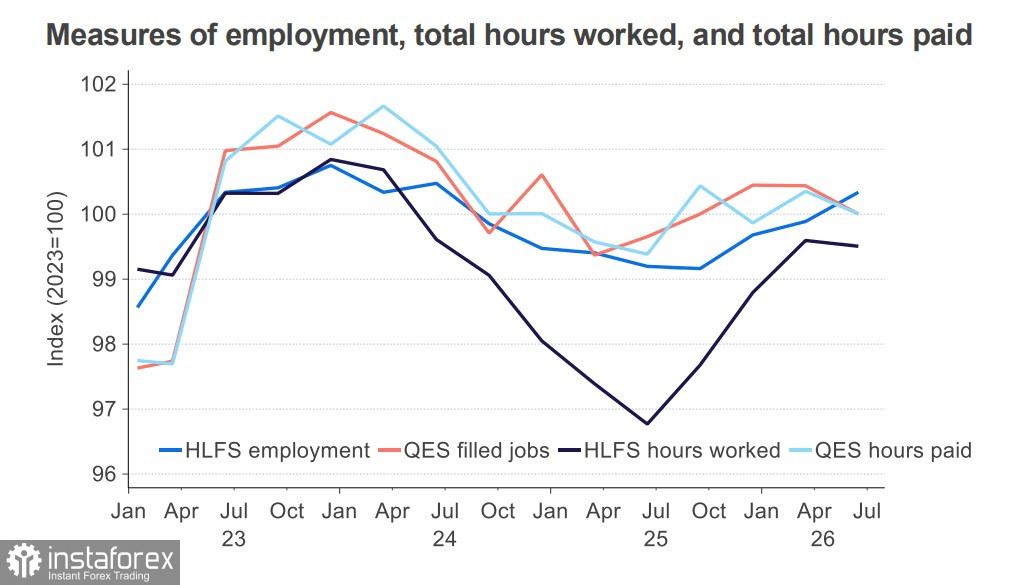
Despite the rise in unemployment, the labor market report did not alter "hawkish" expectations for the RBNZ. Economists from major banks agree: the central bank will continue to raise rates. The arguments remain the same – inflation is high, inflation expectations are rising, and moderate wage growth alleviates concerns about secondary effects. A weak labor market is exactly what is needed to cool inflation.
Forecasts from economists at major banks operating in New Zealand suggest two rate hikes in September and December, which is a bullish factor for the kiwi, especially following the release of extremely weak US labor market data.
The crisis in the Middle East vividly shows that New Zealand's geographical remoteness is not a safeguard against global upheavals. Moreover, the country finds itself involved in the situation on multiple fronts. The US strategy of destabilization poses a threat to free trade, and New Zealand is defenseless against it, with each new escalation directly damaging its economy. The main risks include high inflation, a slowdown in economic activity, rising living costs for citizens, and difficult choices for monetary policy. We do not see a favorable outlook for NZD under any scenario, and the longer uncertainty lasts, the greater the pressure on the kiwi.
The net short position on NZD decreased by $0.38 billion over the reporting week to -$2.4 billion, while the calculated price remains firmly above the long-term average.
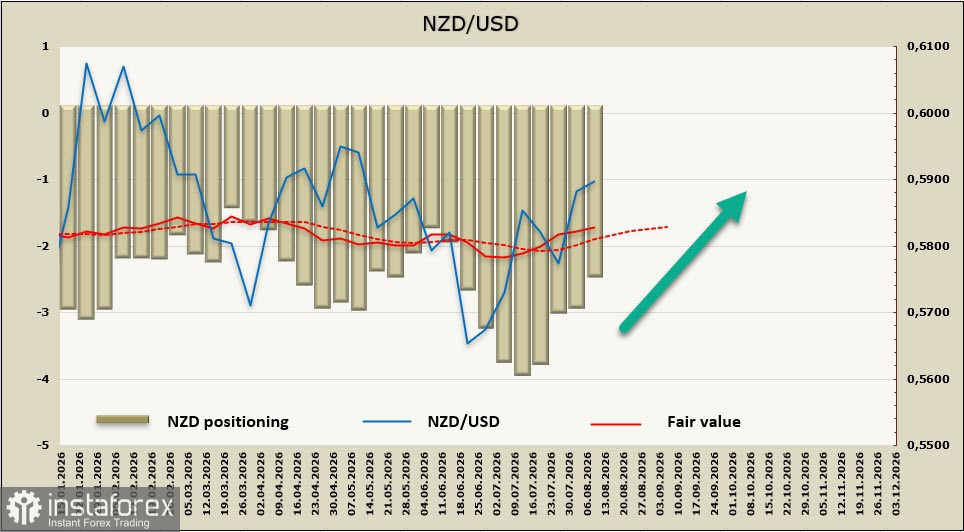
A week earlier, for NZD/USD, we expected an attempt to break through 0.5900. Still, the kiwi failed to realize bullish momentum after the release of the disappointing US labor market report and spent the rest of the week consolidating just below that level. Nevertheless, the bullish signal remains a priority at this moment. A decline to 0.5865 will weaken bullish momentum but may provide an additional buying opportunity. Conditions are not yet in place for a downward reversal.
Le recensioni analitiche di InstaForex ti renderanno pienamente consapevole delle tendenze del mercato! Essendo un cliente InstaForex, ti viene fornito un gran numero di servizi gratuiti per il trading efficiente.


