 Rimani
Condizioni di trading
Strumenti



The past week delivered a mix of conflicting signals for the British pound. The labor market is weakening, inflation is accelerating, and retail sales are disappointing—seemingly a recipe for currency pressure. However, the pound not only held its ground but also reached six-month highs against the dollar. This paradox can be explained: the movement was driven not by the pound itself, but by the dollar.
Labor market data remains the weak link in the British economy. The employment index in August has stayed below the neutral level of 50 for 23 consecutive months. This suggests that employers are exercising caution despite the economy's overall resilience. However, this is good news for the Bank of England, as a weak labor market serves as a safeguard against energy price increases transitioning into sustained wage inflation.
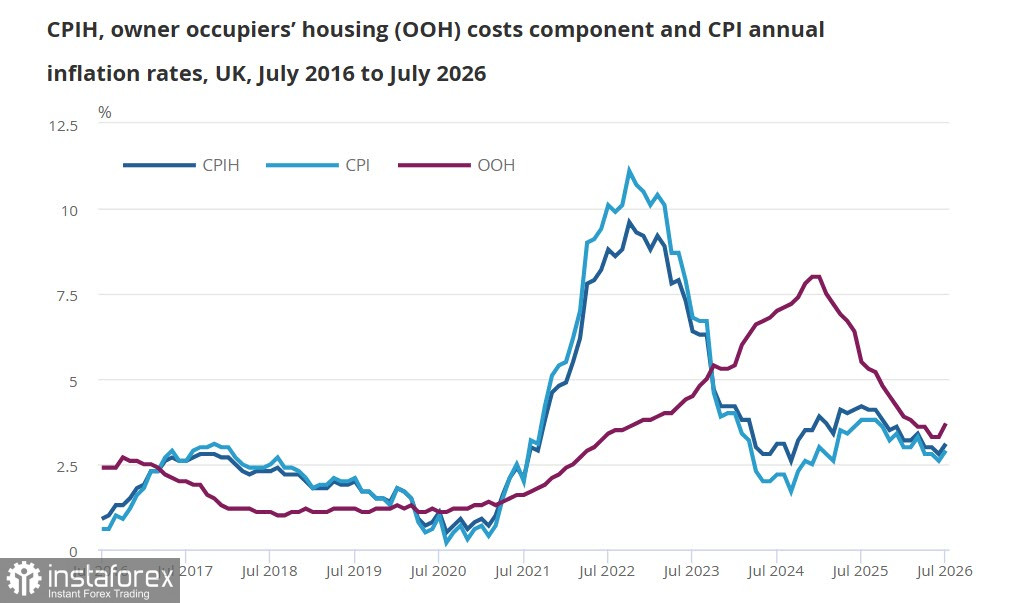
In July, inflation jumped to 2.9% from 2.6% in June, confirming the Bank of England's concerns that the energy shock is beginning to materialize. The primary driver here is the rise in gas and electricity prices, driven by the war in the Middle East and the ongoing blockade of the Strait of Hormuz. However, there are also reassuring signals: core inflation remained at 2.6%, and inflation in the services sector decreased from 3.6% to 3.4%. This indicates that there is currently no significant spillover of the energy shock into broader inflation. This nuance allows the "dovish" wing of the Monetary Policy Committee to insist on maintaining the rate.
The weakest signal came from the consumer sector. Year-on-year retail sales in July slowed to 1.6% from 3.8% in June, significantly below the forecast of 2.2%. On a monthly basis, sales fell by 0.5% after a 0.7% increase in June. Meanwhile, over a three-month period (May to July), sales increased by 1.1%, indicating that core consumer resilience remains intact despite monthly volatility.
The combination of these three reports creates a mixed but generally coherent picture that aligns with the BoE's strategy of "watching and not acting." Market consensus suggests that the BoE will keep the rate at 3.75% until the end of 2026.
Yet despite everything, the pound is rising—the GBP/USD pair has breached 1.3660 for the first time since February, reaching six-month highs. The reason is not the strength of the pound, but the weakness of the dollar. Among the reasons for this are the record U.S. national debt of 40 trillion dollars, the expanded U.S. Treasury bond repurchase program, and the emerging flight from the dollar amid concerns about the fiscal sustainability of the U.S.
The net short position on the GBP continues to decrease; for the reporting week, it adjusted to 4.47 billion pounds, and the calculated price is once again attempting to rise above the long-term average.
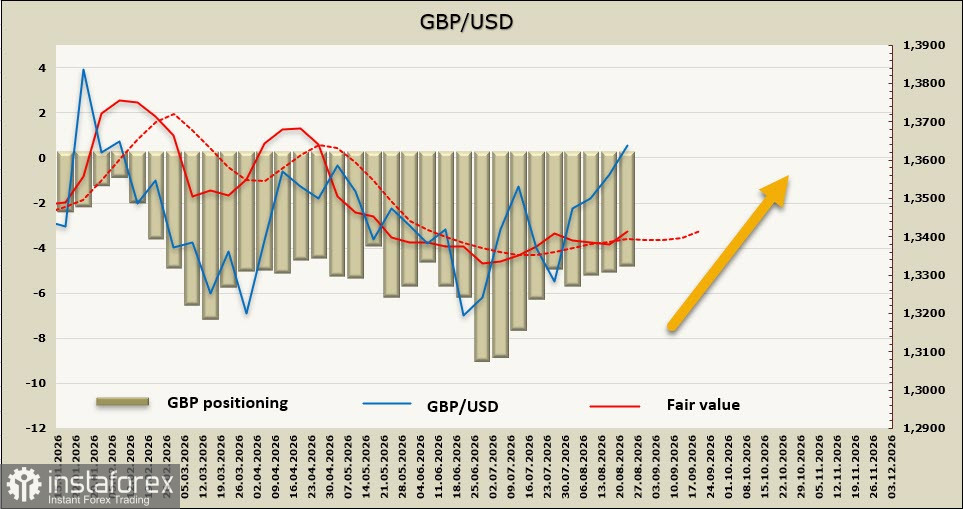
Last week, we suggested that the pound had no other driver for growth except for the weakness of the dollar. The dollar has shown growing weakness, allowing the pound to reach its highest level since the start of the hostilities. We expect attempts to continue the rise to develop, with the pound stabilizing above 1.3656 and then moving towards 1.3867 after a brief consolidation. A decline is possible if Warsh surprises markets with hawkish rhetoric at Jackson Hole.
Le recensioni analitiche di InstaForex ti renderanno pienamente consapevole delle tendenze del mercato! Essendo un cliente InstaForex, ti viene fornito un gran numero di servizi gratuiti per il trading efficiente.


