 Zůstat
Obchodní podmínky
Nástroje



A fresh wave of selling in technology stocks has sent the S&P 500 tumbling at the fastest pace in nearly a month. Even the dovish rhetoric from Christopher Waller, a Federal Open Market Committee (FOMC) governor, failed to provide relief. Waller stated that the federal funds rate could fall by 100 basis points. While he is among the candidates for the Fed chair position, he is not considered a favorite. The futures market has not adjusted its expectations concerning the timeline for resuming monetary expansion, with March being the most favored month for this potential shift.
Dynamics of US Stock Indices
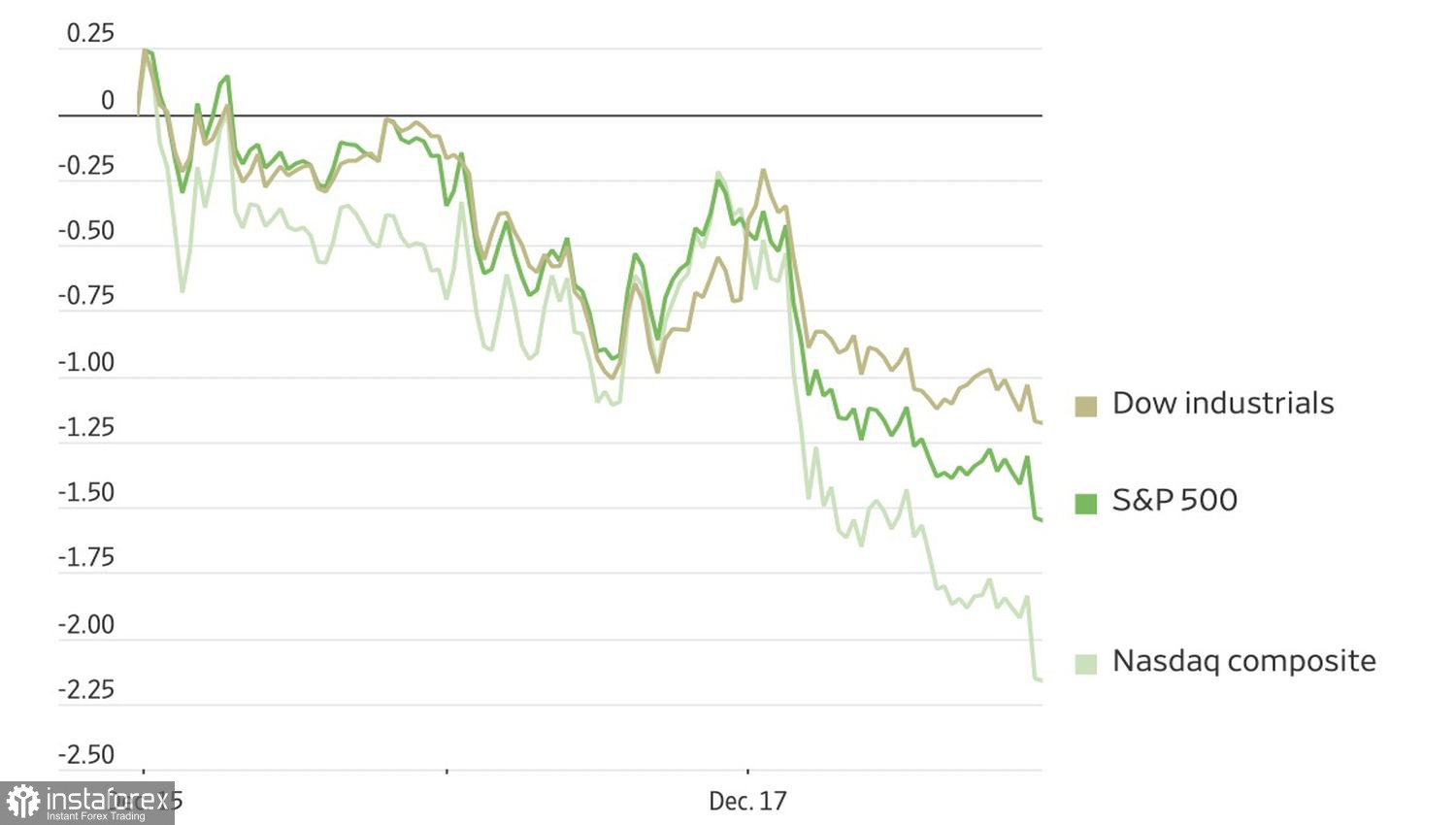
The last shall be first. Investors are actively reallocating funds from large-cap technology stocks to small-cap companies. They are more interested in tangible profits rather than ephemeral gains. What is the point of Oracle building numerous data centers to fulfill its $300 billion commitment to OpenAI if these investments cannot yield returns?
Answering this question requires 12 to 18 months. However, traders are not prepared to wait. According to Wellington-Altus, long-term investors typically refrain from intervening in the market during this time of year. The market is dominated by emotional crowd behavior that swings to extremes, leading to sharp movements in the S&P 500 either upwards or downwards.
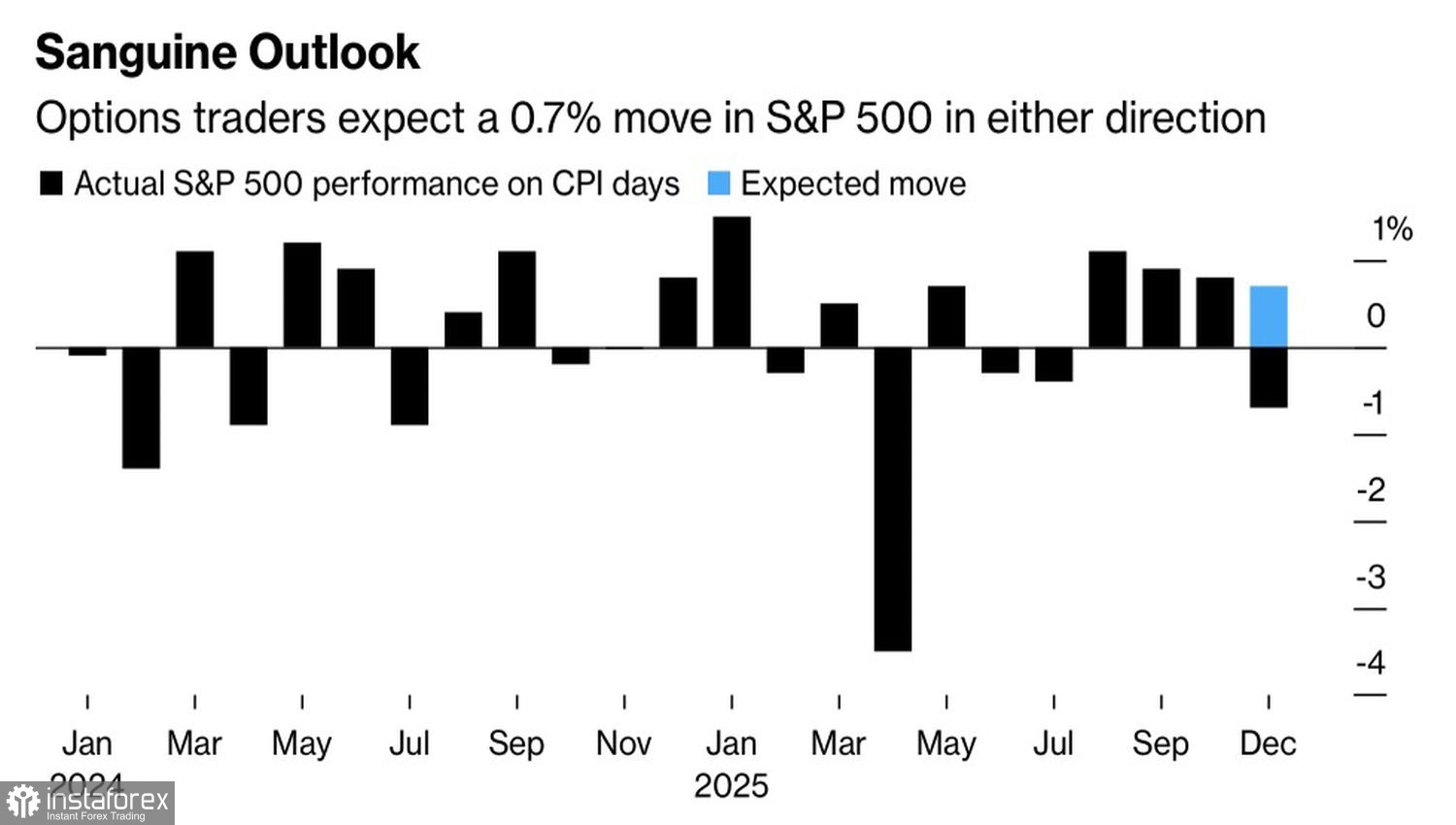
Nevertheless, professionals do not anticipate a dramatic reaction from the broad market index following the release of statistics on November inflation. It is projected that the S&P 500 will fluctuate no more than 0.7% either way. Historically, the average response of the index to significant data is +/-1%. This low sensitivity is attributed to signals from the Fed indicating that employment is more critical than consumer prices.
S&P 500's Reaction to US Inflation Data
Thus, in a prolonged pause in the Fed's monetary expansion cycle, the US stock market has lost its cushioning effect, and fears regarding the inability of technology giants to generate adequate returns on investments are dragging the S&P 500 southward. Investors are skeptical that mega-cap companies will exert the same influence on the broader market index as they did in the past.
Oracle's shares have fallen by 12% in December, while Broadcom has plummeted by 19%. Money is exiting the sector and flowing into others. On December 17, energy companies saw gains during trading. This increase was driven by a rally in oil prices due to the US blockade on sanctioned tankers from Venezuela and rumors of a new sanctions package against Russia should it refuse to sign a peace agreement with Ukraine.
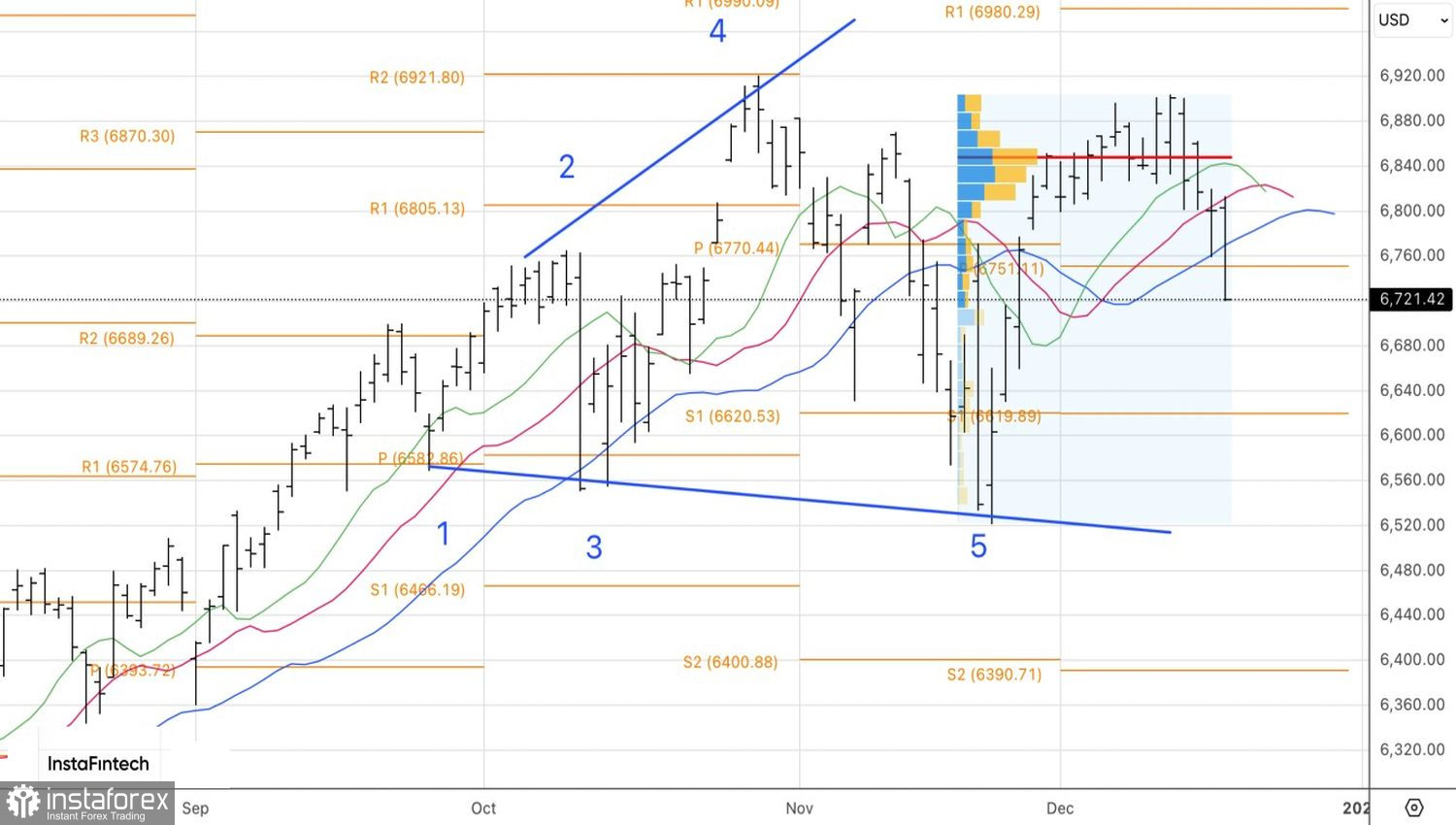
Technically, the daily chart of the S&P 500 shows a breach of all three dynamic supports represented by moving averages. This indicates the seriousness of sellers' intentions. As long as the broad market index trades below the pivot level of 6,750, sentiment remains bearish, suggesting a focus on short positions. However, a rebound from the convergence zone of 6,690-6,700 could turn the scenario completely upside down.
Díky analytickým přehledům společnosti InstaForex získáte plné povědomi o tržních trendech! Jako zákazníkovi společnosti InstaForex je Vám k dispozici velký počet bezplatných služeb umožňujících efektivní obchodování.


