 Zůstat
Obchodní podmínky
Nástroje



Constant pressure finally begins to penetrate the Bank of Japan's cautious stance. For months, the yen endured the weight of weakness, inflation, and a growing trade deficit.
Scott Bessent saw a payoff on Wednesday: the decision to double the buyback of long-term bonds to $4 billion crashed the yields on 30-year Treasuries by 0.1 percentage points — more than any other day in the past year — dragging the dollar down. USD/JPY soon came under a bearish counterattack. However, Bessent is essentially patching up the edges of the problem: yields are rising amid fiscal extravagance, an explosion of capital expenditures on artificial intelligence, and geopolitical pressures. The world is entering a new era of capital needs — for data centers, armies, and reshoring of manufacturing — and thus, capital suppliers require a higher reward.
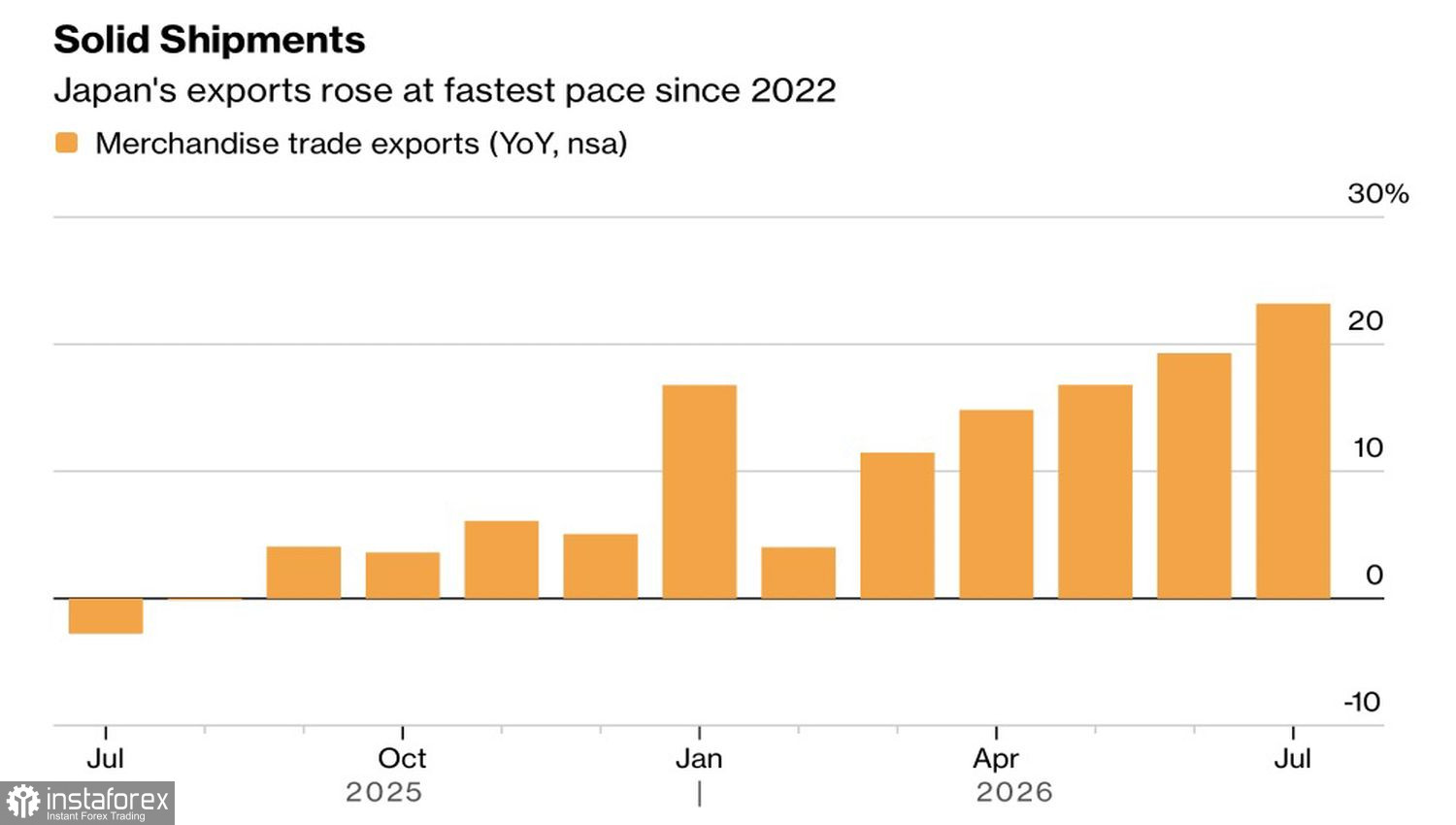
Meanwhile, the yen itself is not sitting idle. Japan's exports in July grew by 23.2% year-on-year — the fastest rate since 2022 — driven by demand for chips and cars, as well as the weakness of the currency, which has fallen to a 40-year low. However, imports grew even faster — by 27.8% compared to 25.4% a month earlier — and the trade deficit expanded to £634.5 billion compared to the revised £409.9 billion in June. This marks the third consecutive month in the red. In fact, the weak yen both aids exporters and inflates import bills.
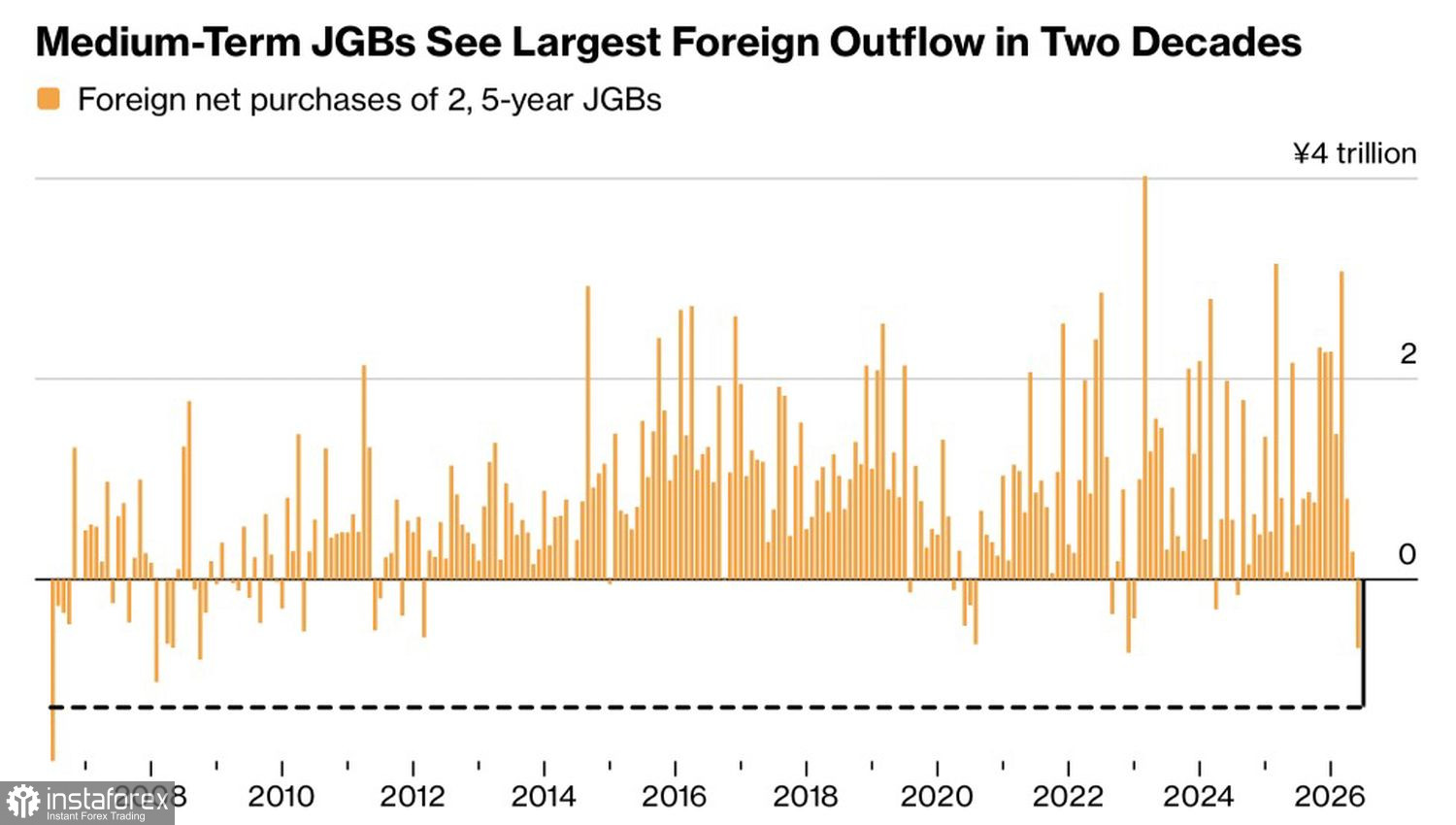
Foreign funds voted with their feet: in July, they sold Japanese government bonds maturing in two to five years at a record £1.28 trillion since 2006, betting on an imminent BoJ policy tightening. At the same time, long bonds maturing in more than ten years were still being bought — nearly £890 billion. The investors' bets are not unfounded. According to Mizuho, the BoJ could raise the overnight rate already in September and reduce the interval between decisions to three months instead of approximately six as it is now. Once the central bank shifts to such a pace, it will be tough to slow down. The 1% rate remains "deep in negative territory" when adjusted for inflation — an argument that is hard to ignore.
However, the central bank is currently acting with caution. On July 31, the rate was kept unchanged, even though Governor Kazuo Ueda indicated that September could be a turning point. The historical joint intervention by Tokyo and Washington after the yen fell to its lowest since 1986 has already had its say.
Will the BoJ speak the language of action before the market's patience runs out? I doubt the central bank will take a drastic step without extreme necessity.
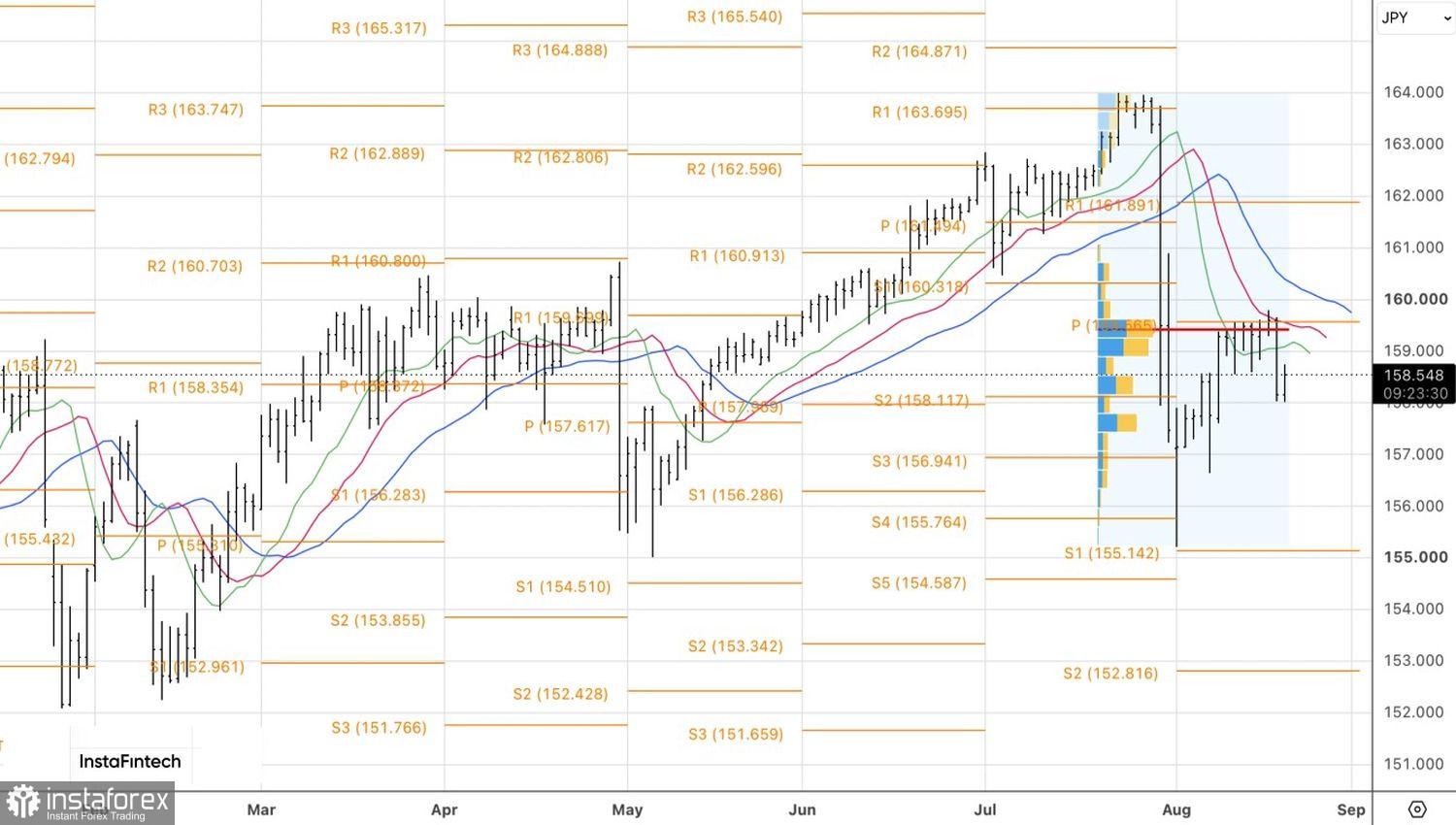
Technically, on the daily chart, USD/JPY rebounded from the key resistance level of 159.45-159.55. Only a return to these levels, followed by a subsequent assault, will provide a basis for long positions within the formation of the 1-2-3 pattern. Its emergence will signal the exhaustion of the correction. While the pair's quotes remain below, the focus is on selling.
Díky analytickým přehledům společnosti InstaForex získáte plné povědomi o tržních trendech! Jako zákazníkovi společnosti InstaForex je Vám k dispozici velký počet bezplatných služeb umožňujících efektivní obchodování.


