 Zůstat

Obchodní podmínky
Nástroje


The dollar continued to lose its edge versus risk assets, and coordinated currency interventions played a role.
Although the US services sector released a fairly decent report, it must be read in two ways at once. Business activity jumped to 61.7 from 59.1, a high since November 2022; new orders rose to 60.9; and the overall ISM Services index climbed to 55.4 from 54.1. ISM is survey?based and reflects the largest sector of the economy, where readings above 50 indicate expansion; under normal conditions, such strong figures would have supported the dollar. What is worrying is the price component: the price index surged to 72.6, the highest since August 2022, and its 12?month average of 68.5% remains elevated — in my view, a significant argument for a Federal Reserve rate hike in September.
However, the market reaction ran counter to fundamentals due to currency intervention. The US and the Bank of Japan actively entered the market, and these coordinated actions weakened the dollar, offsetting the positive from the strong report. That is why solid services data produced no usual dollar response, and the greenback retreated.
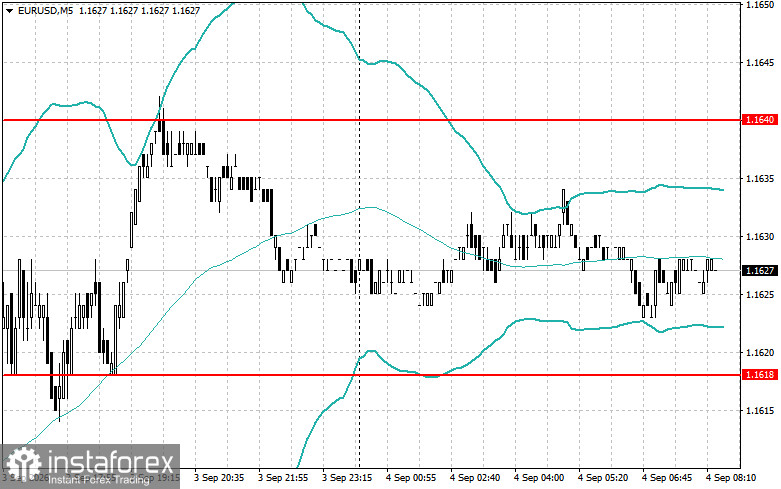
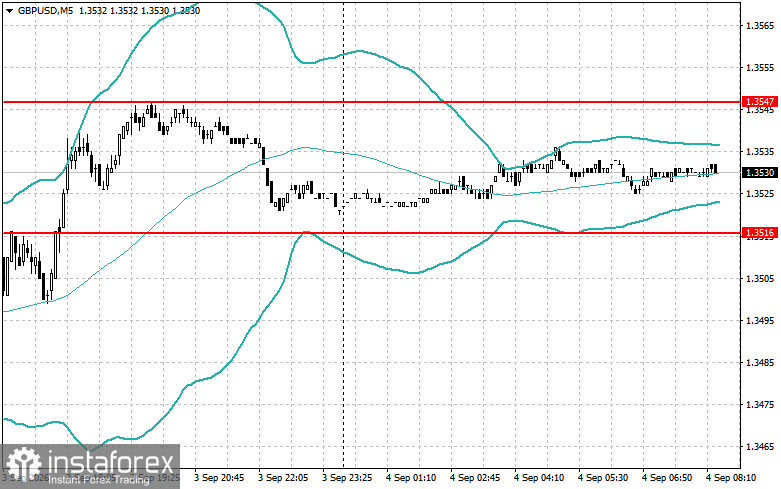
This environment supported the euro and the pound, and both European currencies strengthened versus the dollar. I believe that while the intervention remains an active factor, EUR/USD and GBP/USD have room to rise, but I would not discount the power of US data. When intervention ends, hawkish signals from price data could quickly return the dollar to the initiative.
Today, in the first half of the day, attention on the euro will focus on German industrial orders and eurozone retail sales. Industrial orders are a leading indicator of future factory utilization, and retail sales reflect consumer demand, so together they provide a good picture of the bloc's economy. In my view, weak prints could push the euro slightly lower. Still, a large sell-off is unlikely, as inflationary pressures and expectations of a hawkish European Central Bank continue to support the single currency.
Recall the market has almost fully priced a 25 bp hike to 2.5% at the September 10 ECB meeting, and recent data confirmed accelerating inflation in the eurozone. Therefore, I do not expect weak data to inflict a major blow on the euro — EUR/USD is more likely to see a moderate correction.
For the pound, the absence of UK data in the first half of the day leaves it dependent on external factors, and all eyes will be on Bank of England Governor Andrew Bailey's speech. I don't expect new policy announcements, but comments on recent inflation and labor market data would be useful. Recent figures show a mixed picture: services are recovering and price pressure there has increased, while employment has been declining for 23 months.
Bailey's tone will determine short?term pound dynamics. In my opinion, a cautious stance would quickly reapply pressure to GBP/USD as the market would interpret it as signaling against near?term tightening; firmer language would support the pound, but I do not count on that, so risks for the pair are skewed downward.
If the data match economists' expectations, it is better to trade using a Mean-Reversion strategy. If data are much higher or lower than expectations, use a Momentum strategy.
Díky analytickým přehledům společnosti InstaForex získáte plné povědomi o tržních trendech! Jako zákazníkovi společnosti InstaForex je Vám k dispozici velký počet bezplatných služeb umožňujících efektivní obchodování.


