 Zůstat
Obchodní podmínky
Nástroje



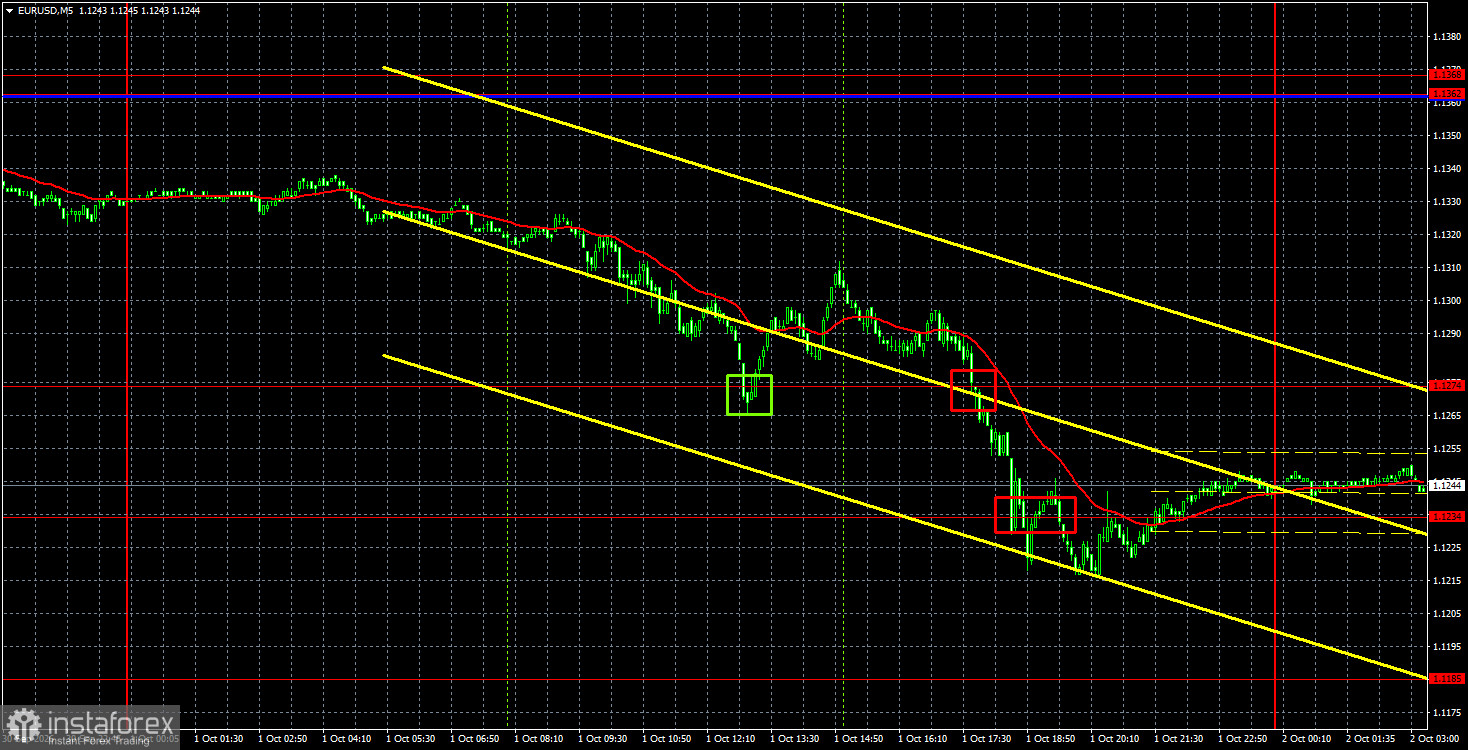
The EUR/USD currency pair continued its downward move on Thursday, which probably surprised no one in the FX market. We warned that, for now, one should not look for specific, local reasons for the near-daily rise of the US currency. The US dollar appreciates due to a strong inflow of liquidity that increases demand specifically for the US currency. Simply put, the US dollar rises because it is being bought en masse, and it is being bought because capital continues to flow out of bond markets while the dollar itself is showing strong gains. Thus, this is not about Federal Reserve monetary policy or the geopolitical conflict in the Middle East. Recall that the situation in the Middle East remains disappointing but broadly stable. The Fed's monetary stance softened this week and became less "hawkish." Therefore, those two factors certainly do not provide support for the dollar. Yesterday the macroeconomic backdrop even gave the market reasons to sell the dollar. The only somewhat important index, the US ISM manufacturing index, came in lower than forecast, but the market did not even notice.
Technically, the downtrend continues to form. The market has been buying the dollar for the fourth week in a row. The trendline remains relevant, and price is below the Ichimoku indicator lines, so technically the pair's decline is entirely natural—but only on the hourly TF. On the weekly TF, an uptrend remains, and on the daily TF the market is sideways.
On the 5-minute TF, three trading signals were formed on Thursday that traders could have worked. However, traders could have opened short positions as early as Wednesday on the signal in the 1.1362–1.1368 area. On Thursday, the price first bounced off 1.1274, then broke it, and then also broke the next level at 1.1234. Thus, traders could have opened two trades.
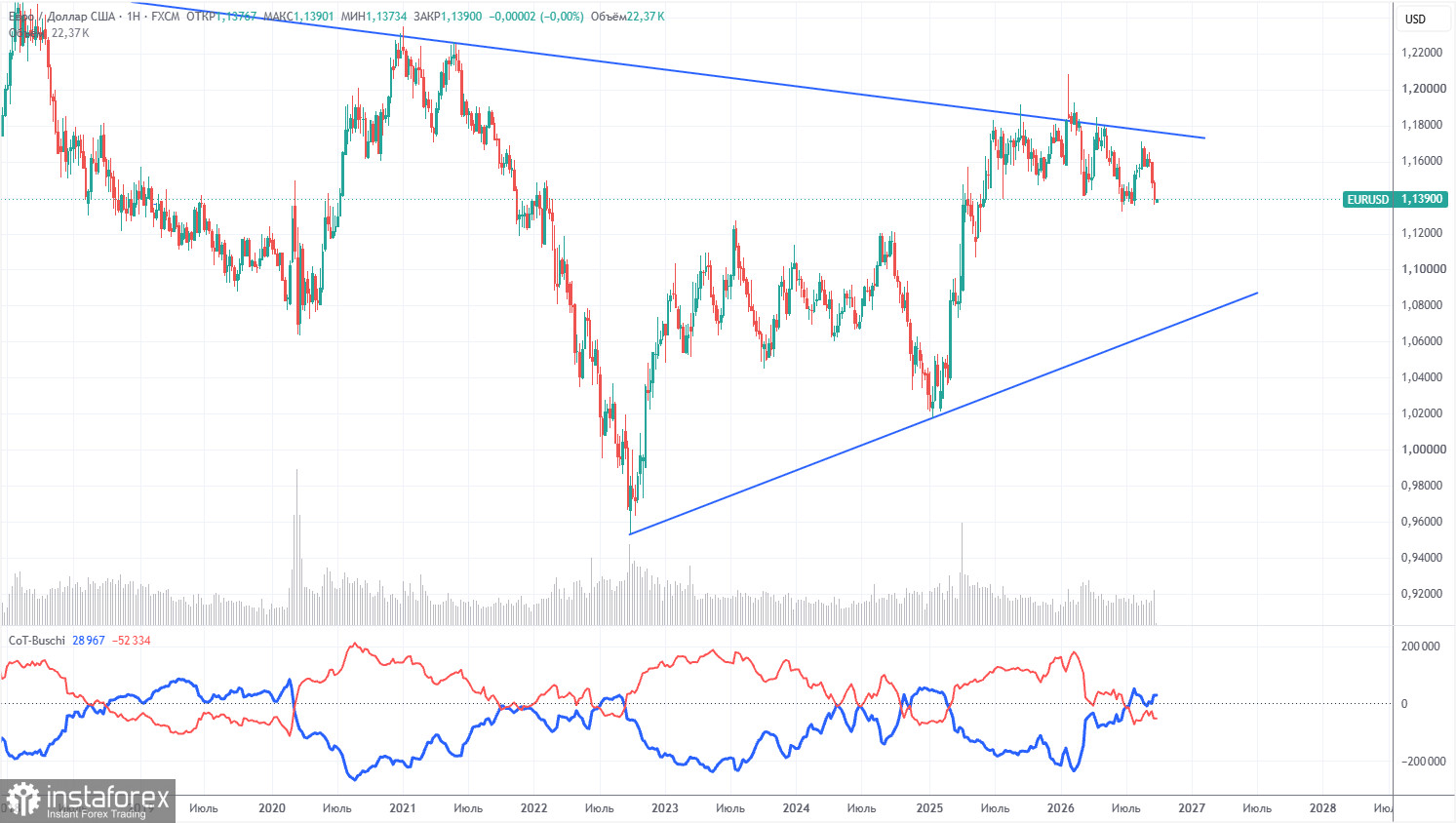
The latest COT report is dated September 22. On the weekly TF chart, it is clear that non-commercial traders' net position remains "bearish" and has significantly decreased in 2026 due to geopolitical events. Traders have been getting rid of the euro in favor of the US dollar over the past six months. Donald Trump's policies have not changed, but the dollar has, for a time, acted as a "reserve currency."
However, we still do not see any fundamental factors for further strengthening of the US currency. The war in the Middle East made the dollar temporarily super-attractive, and the Fed's monetary-policy stance surprised the dollar for the second time this year. In the long term, the euro can fall even to 1.08$ (the trendline), but the uptrend will remain relevant. During the recent months of dollar gains, the pair did not get very close to that line.
The positions of the red and blue indicator lines indicate approximate parity between bulls and bears. During the last reporting week, long positions in the "Non-commercial" group rose by 11,700, while shorts increased by 37,000. Accordingly, the net position fell by 25,300 contracts over the week.
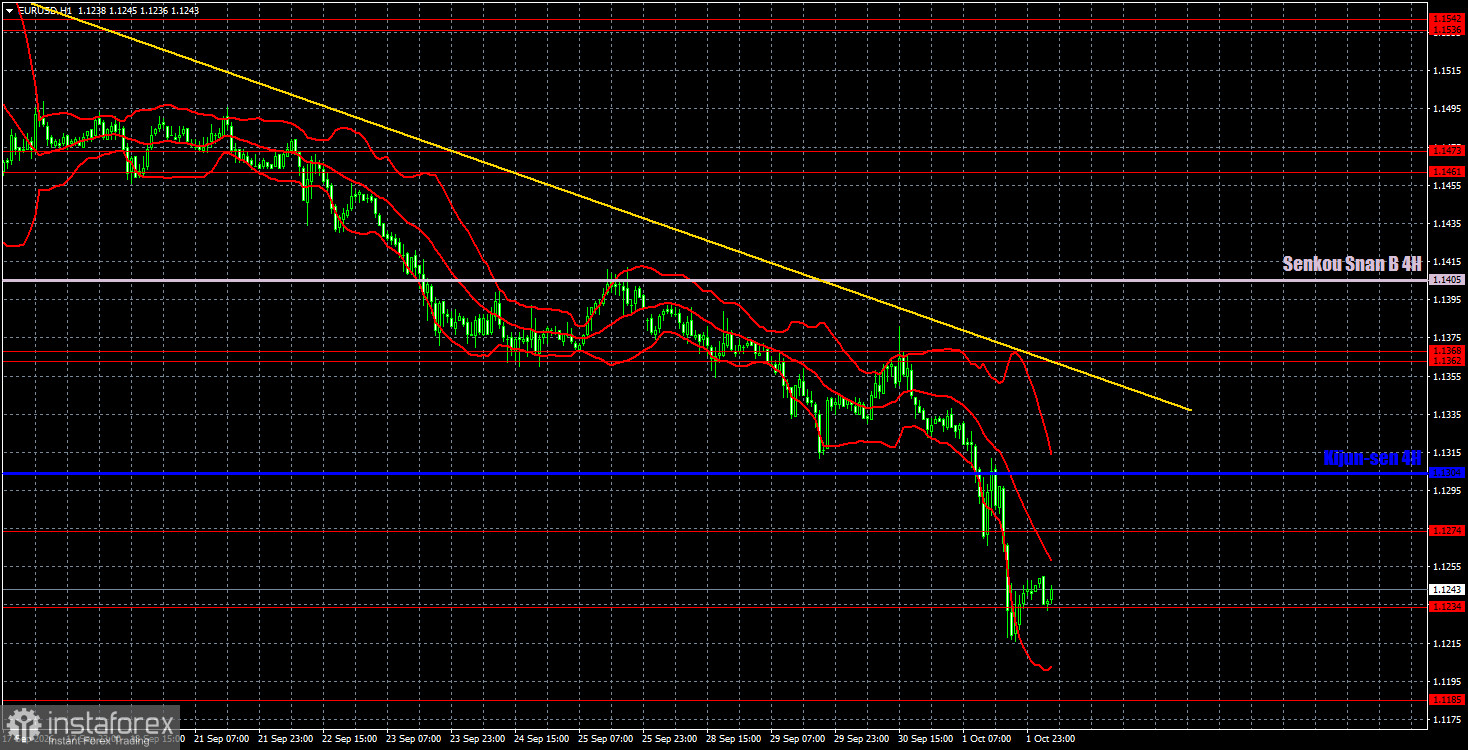
On the hourly timeframe, EUR/USD continues to form a downward trend, and the Fed helped drive the southbound move, though this is unlikely to be the main reason for the dollar's rise now. The European Central Bank should have supported the euro, having already raised rates twice in 2026, but the market currently sees no factors supporting the euro. Thus, the dollar continues forming a strong trend that now depends solely on market sentiment.
For October 2 we highlight the following levels for trading — 1.1147, 1.1185, 1.1234, 1.1274, 1.1362-1.1368, 1.1461-1.1473, 1.1536-1.1542, 1.1585, 1.1657-1.1665, and also the Senkou Span B line (1.1405) and Kijun-sen (1.1304). The Ichimoku indicator lines may shift during the day, so account for this when determining trading signals. Don't forget to move Your Stop Loss to breakeven if the price has moved 15 pips in the correct direction. This will protect against possible losses if the signal proves false.
On Friday, the EU will publish a fairly important September inflation report, and the US will release Nonfarm Payrolls and the unemployment rate. We believe the market may react to each of these reports, but we see that the current movement of the pair depends completely on something other than macroeconomic data.
Traders can consider targets for short positions around 1.1185 and 1.1147 if the price consolidates below 1.1234. If the trendline is breached, consider these targets for long positions: 1.1362–1.1368 and 1.1405.
Díky analytickým přehledům společnosti InstaForex získáte plné povědomi o tržních trendech! Jako zákazníkovi společnosti InstaForex je Vám k dispozici velký počet bezplatných služeb umožňujících efektivní obchodování.


