 Anuluj
Warunki handlowe
Narzędzia



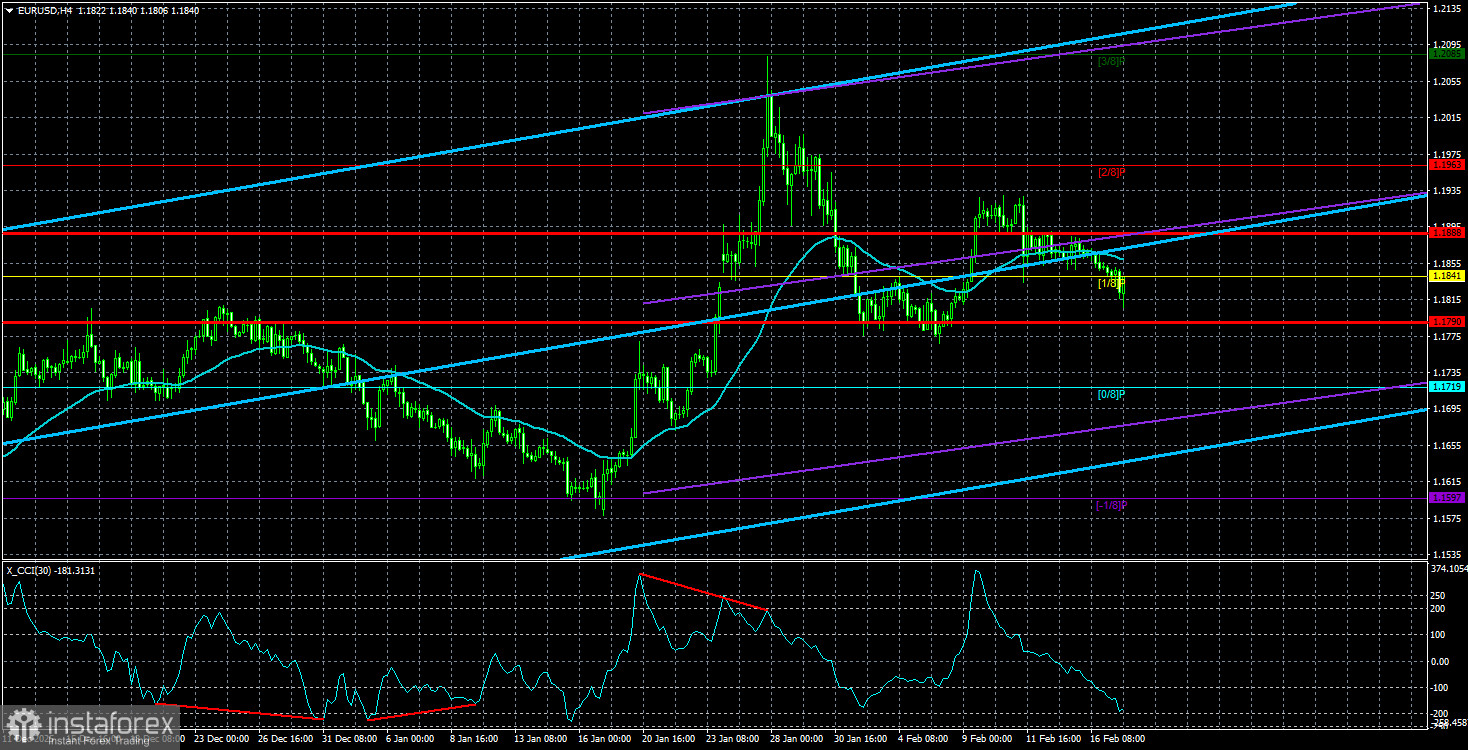
The EUR/USD pair continued to trade on Tuesday "as if at a wake." There were no significant macroeconomic reports planned for the day, and the fundamental events were characterized as "interesting news," but nothing more. Nevertheless, this "interesting news" could have far-reaching consequences, especially for the U.S.
The world is beginning to cooperate against Donald Trump. The level of hatred for the American president is soaring, both within the U.S. and outside its borders. This is hardly surprising, as Trump continues to use trade tariffs to push his interests worldwide. Thus, many countries find it difficult to trade fairly with America. The leader in the White House has somehow decided that America's trade balance with every country in the world should be at least zero and at most positive for the U.S. Why this is so is a question that few can answer. It is clear that such a scenario would be extremely beneficial for the U.S., which has been importing significantly more goods than it exports for decades. However, what is the fault of other countries?
Canadian leader Mark Carney, whose country has once again come under a barrage of threats from Donald Trump and tariffs that the U.S. Congress has managed to block with great difficulty, has decided that the time has come to cooperate against America and Trump personally. Currently, Canada and its trading partners, including the Eurozone, are working on forming a "bridge" between the Trans-Pacific Trade Partnership, Europe, and Canada, which will create favorable trading conditions for 1.5 billion people. Previously, Carney had repeatedly urged countries around the world to stand up against the protectionist policies of the American leader. As we can see, about a year after the first tariffs, world leaders have finally concluded that they should not appease the "cabal" of trade agreements but rather oppose them.
There are various ways to resist this. Countries can impose retaliatory sanctions, tariffs, and restrictions, as China has done. They can unite with other "sanctioned" countries to bypass America. The Trans-Pacific Trade Partnership (CPTPP) includes 12 countries: Australia, Brunei, Chile, Japan, Malaysia, New Zealand, Peru, Singapore, the United Kingdom, Vietnam, and Canada. This year, negotiations began with the Eurozone, which has also been affected by American tariffs, to create new supply chains that will connect approximately 40 countries at opposite ends of the globe. Furthermore, reports indicate that the Eurozone is interested in creating a new economic bloc with reduced or even eliminated trade tariffs.
As already stated at the beginning of the article, the whole world is beginning to stand up to the U.S. Now, we can expect new angry speeches from White House representatives, new threats, ultimatums, and new tariffs for "disobedience." Let us recall that Trump previously threatened Ottawa with increased trade tariffs if it continued to expand trade cooperation with China. Such are the realities in 2026. Washington considers itself entitled to dictate who can trade with whom.
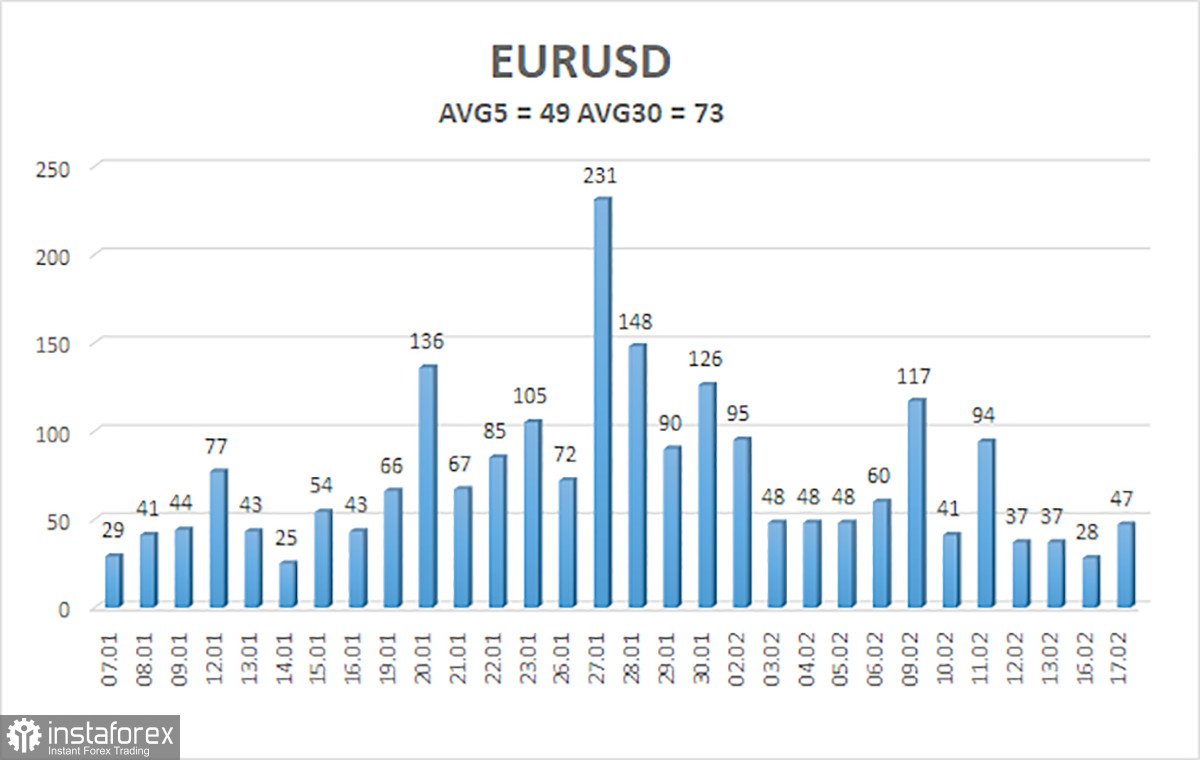
The average volatility of the EUR/USD currency pair over the last 5 trading days as of February 18 is 49 pips, characterized as "average." We expect the pair to trade between 1.1790 and 1.1888 on Wednesday. The upper linear regression channel points upward, indicating further euro appreciation. The CCI indicator has entered the overbought territory, signaling a potential pullback.
S1 – 1.1841
S2 – 1.1719
S3 – 1.1597
R1 – 1.1963
R2 – 1.2085
R3 – 1.2207
The EUR/USD pair continues its correction within an upward trend. The global fundamental backdrop remains crucial to the market and is extremely negative for the dollar. The pair spent seven months in a sideways channel, and it is likely time to resume the global trend of 2025. The dollar has no fundamental basis for long-term growth. Therefore, the dollar can only hope for a flat or corrections. When the price is below the moving average, small shorts can be considered with targets of 1.1790 and 1.1719 on purely technical grounds. Long positions remain relevant above the moving average line with targets of 1.1963 and 1.2085.
Linear regression channels help determine the current trend. If both are pointing in the same direction, it indicates a strong current trend;
The moving average line (settings 20,0, smoothed) determines the short-term trend and the direction in which trading should currently be conducted;
Murray levels are target levels for movements and corrections;
Volatility levels (red lines) indicate the probable price channel in which the pair will spend the next day based on current volatility indicators;
The CCI indicator – its entry into the oversold area (below -250) or the overbought area (above +250) indicates that a trend reversal in the opposite direction is approaching.
Dzięki analizom InstaForex zawsze będziesz na bieżące z trendami rynkowymi! Zarejestruj się w InstaForex i uzyskaj dostęp do jeszcze większej liczby bezpłatnych usług dla zyskownego handlu.


