 Anuluj

Warunki handlowe
Narzędzia


The USD/JPY pair has decreased by almost 900 pips in just a few days. This is something of a record (or an anti-record)—the most significant price drop in recent years. Japanese authorities have once again demonstrated their willingness to defend the national currency—as the saying goes, "not just in words, but in deeds."
The pace of the price decline suggests that the market has "believed" in the Japanese Ministry of Finance's ability to alter the long-term trend of USD/JPY. However, in reality, such a rapid decline is explained not only by Tokyo's intervention but also by the peculiarities of market positioning. This is why the current movement, despite its impressive scale, does not indicate the end of the long-term uptrend.
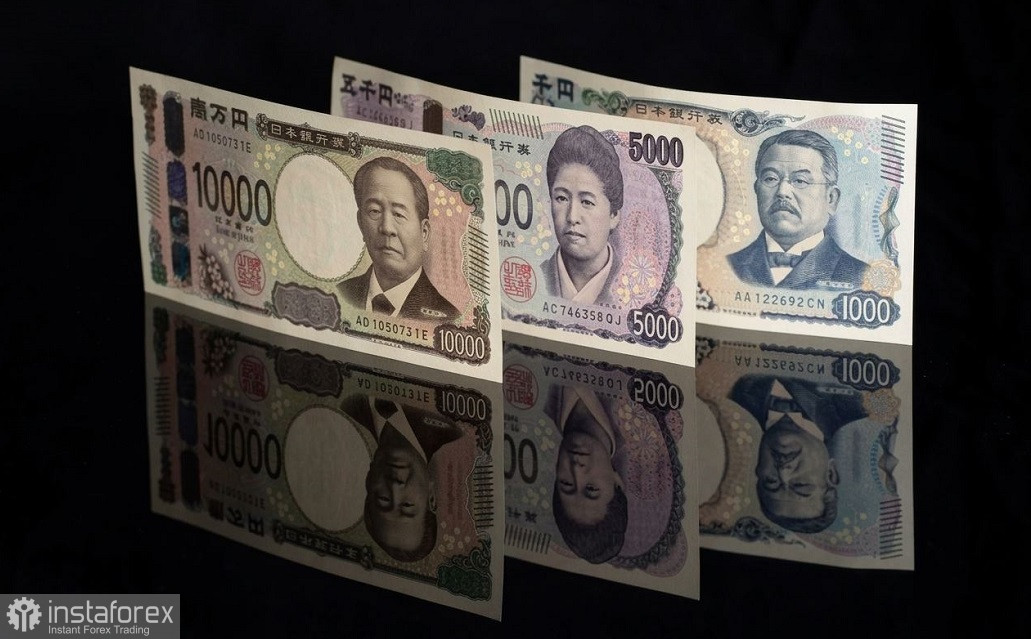
The key reason for such a significant decline in USD/JPY lies in the element of surprise. Just at the beginning of June, the pair had stabilized within the 160 range, which had previously been considered a "red line" by Japanese authorities. However, the Ministry of Finance did not take any practical steps at that time, merely observing the situation. The market interpreted this as an "invitation" for further growth, especially since the fundamental backdrop favored the development of an upward trend. In just two weeks, buyers pushed the price to the boundaries of the 163 range. However, even at this level, the authorities limited themselves to verbal interventions, which ultimately reinforced market participants' confidence in regulators' "patience". Therefore, when the pair tested the 164.00 mark (holding in this area for almost a week), most traders expected only another tightening of rhetoric from Japanese officials. Instead, there were real, and apparently quite sizable, currency interventions that caught the market off guard.
An additional catalyst was the large number of stop-loss orders accumulated below key technical support levels. After these triggers went off in cascade, the domino effect occurred: algorithmic systems began to increase sales automatically, and short-term speculators started to lock in profits en masse. The result was immediate: the initial impulse was amplified multiple times by the market's internal mechanics.
It should also be noted that the current intervention coincided with a far-from-favorable (to put it mildly) environment for the dollar. Weak U.S. GDP growth data and a "red tint" in the core PCE index did not go unnoticed: market participants began actively discussing the likelihood of a monetary policy easing by the Federal Reserve in the second half of the year. While previous Japanese interventions mostly occurred against a backdrop of stable DXY growth, the greenback is currently struggling. Thus, USD/JPY sellers capitalized on the initial success, pushing the pair down by almost 9 figures.
However, the history of previous Japanese currency interventions shows a rather interesting pattern. Almost every such episode was accompanied by a decline in the pair in the first hours or days, but the market then gradually returned to an upward trend. Within a few weeks, a significant portion of the initial drop was fully or nearly fully recovered.
What does all this indicate? First and foremost, the current price decline appears more like a correction within an ongoing long-term uptrend. It is a large, prolonged correction, but still just a correction — which, by definition, is temporary.
It is also important to remember that the interest rate differential between the U.S. and Japan remains significant, even as expectations for the Fed's policy easing gradually ease. The Japanese central bank is still pursuing a significantly more accommodative monetary policy compared to most major central banks worldwide. Consequently, the carry trade strategy continues to hold its appeal.
This raises a logical question: when to return to buying USD/JPY? In my opinion, it is unwise to try to predict the turning point right now. Traders should first wait for clear signs of fading downward momentum. Typically, after such emotional movements, the market goes through several characteristic stages: first, panicked selling, then the first signs of stabilization and consolidation. This period is the most interesting for opening long positions.
Such behavior patterns have been repeatedly observed after previous Japanese interventions. The initial collapse created the impression of a drastic trend reversal; however, after some time, investors again focused on "classic" fundamental drivers (differences in bond yields, the attractiveness of carry trade operations), after which the dollar, in tandem with the yen, gradually regained lost ground. For example, earlier this spring, the pair declined by more than 500 pips in response to Japanese authorities' intervention, but within a week, buyers regained almost all of the lost ground.
Therefore, the current situation in the USD/JPY pair requires more patience than aggressive selling. There is also no rush to go long until the amplitude of price fluctuations decreases. If the fundamental picture does not undergo significant changes, the current intervention may well follow the fate of most of its predecessors: the yen will "play its part," after which USD/JPY buyers will be able to open long positions at more favorable prices as the long-term upward trend resumes.
Dzięki analizom InstaForex zawsze będziesz na bieżące z trendami rynkowymi! Zarejestruj się w InstaForex i uzyskaj dostęp do jeszcze większej liczby bezpłatnych usług dla zyskownego handlu.


