 Stay
Stay 
Trading Conditions
Products
Tools



The Bank of Japan has concluded its March policy meeting, delivering the most anticipated baseline scenario—keeping all monetary policy parameters unchanged. Market participants closely followed the statements of BOJ Governor Kazuo Ueda and the central bank's accompanying statement. Despite the BOJ's efforts to maintain a balanced tone, the overall outcome was negative for the Japanese yen.
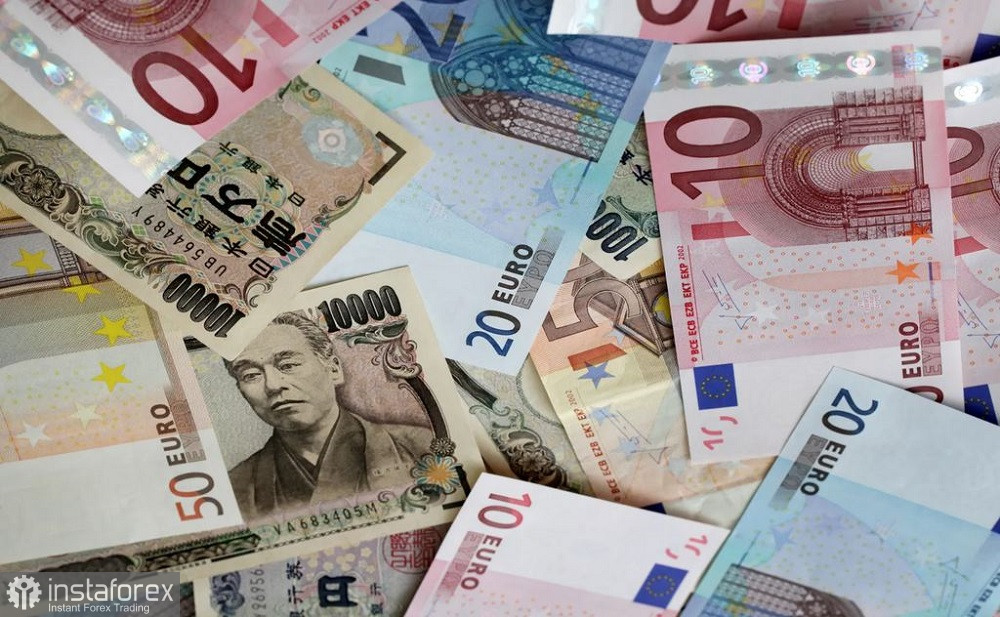
The BOJ noted that the Japanese economy is moderately recovering, although some areas show "some weakness." Exports and industrial production remain stable, while employment and household incomes have improved significantly. However, the central bank warned that a high level of uncertainty remains regarding Japan's economic activity and prices, "including the evolving situation in foreign trade."
As a result, the BOJ stated that it needs a pause to assess the impact of U.S. tariffs on Japan's export-oriented economy. On the other hand, the central bank indicated that it is ready to continue raising interest rates "if Japan makes progress toward sustainably achieving the 2% inflation target."
The market interpreted this rhetoric negatively for the yen. Additional comments from BOJ Governor Ueda failed to change the sentiment. He reiterated that the BOJ will adjust its monetary easing measures "if economic and price forecasts materialize." However, he also emphasized the need for caution "due to uncertainty in foreign policies, especially the potential consequences of new U.S. import tariffs."
Ueda further noted that given the high level of uncertainty, "it is difficult to determine how close Japan is to reaching its inflation target."
The key takeaway from the BOJ's March meeting is that expectations for a rate hike in May are now in serious doubt. Ueda said the BOJ will revise its forecasts in April when "the situation becomes clearer." However, it is unlikely that April will bring more clarity, given that U.S. reciprocal tariffs are set to take effect that month (unless Trump grants Japan a waiver). This suggests that the BOJ may delay rate hikes until at least June to assess the impact of U.S. trade policy.
Following the BOJ meeting, EUR/JPY briefly touched 163.85. However, it is essential to note that the BOJ only provided additional support for euro buyers—the fundamental backdrop already favors further price growth.
Looking at the weekly chart, EUR/JPY has been in an uptrend for four consecutive weeks. The European Central Bank has also boosted the euro despite cutting interest rates this month. At the same time, the ECB delivered a "moderately hawkish" stance.
During the ECB's press conference, President Christine Lagarde stated that the central bank is not following a pre-determined rate-cutting path—instead, decisions will be made on a meeting-by-meeting basis, depending on incoming data. While this is a standard formulation, Lagarde added an important remark: the ECB may pause rate cuts if macroeconomic data justifies it. Markets interpreted this as a signal that the ECB could end its easing cycle soon.
Further support for the euro came from the vote in the German Parliament (Bundestag). Lawmakers approved constitutional changes, allowing the government to borrow more and invest heavily in infrastructure and defense.
To achieve this, Germany relaxed its "debt brake," which previously restricted excessive government borrowing. The legislation will move to the Bundesrat (upper house of Parliament) on Friday for final approval.
German lawmakers rushed to pass the reform before the new Bundestag took office on March 25—the new Parliament would have rejected it. Both the far-right AfD party and the Left Party oppose increased defense spending.
Nevertheless, the current Bundestag passed the legislation, and the Bundesrat is expected to approve it. This means Germany will establish a €500 billion special fund to finance infrastructure modernization (railways, bridges, roads, etc.).
The fundamental picture for EUR/JPY remains bullish, especially considering the uncertain outcome of the BOJ's March meeting.
From a technical perspective, EUR/JPY trades between the middle and upper lines of the Bollinger Bands indicator and Ichimoku indicator lines, forming a bullish "Parade of Lines" signal. The first and primary upside target is 164.30, which aligns with the upper Bollinger Bands line on the D1 timeframe.
InstaForex analytical reviews will make you fully aware of market trends! Being an InstaForex client, you are provided with a large number of free services for efficient trading.


