 Stay
Stay 
Trading Conditions
Products
Tools



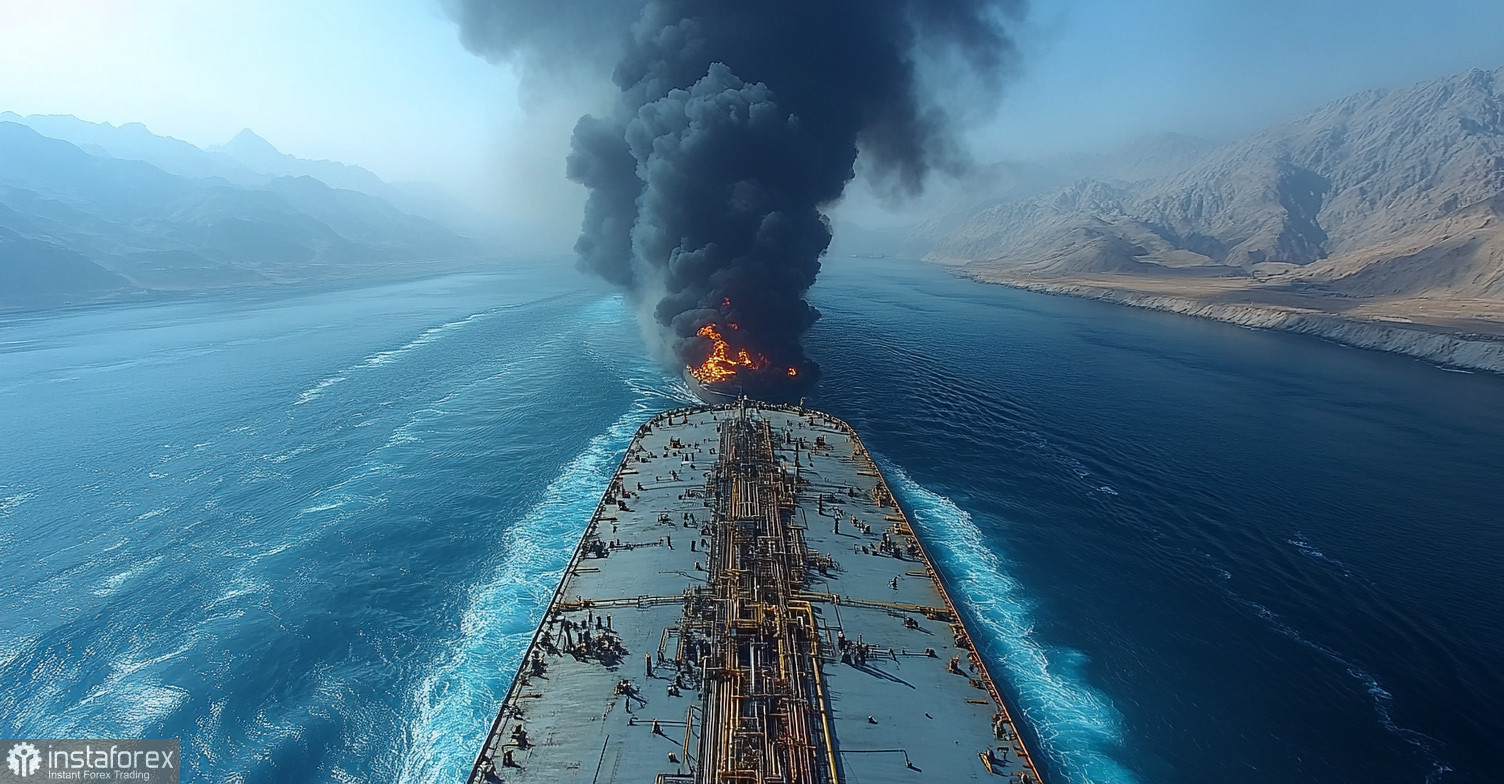
In this digest, we analyze four key events that have radically changed the global agenda in a short period.
Among them: a full-scale US and Israeli military operation against Iran, including strikes on Tehran and the threat of a prolonged closure of the Strait of Hormuz, which sent oil and gold sharply higher.
Record transfers of BTC to Binance totaling $8.8 billion by major holders, increasing the risk of sudden volatility in the crypto market.
An instantaneous currency reaction, with capital flows into the Swiss franc and the yen, and a weakening of risky currencies amid energy uncertainty.
An ambitious technological initiative by Nvidia to form a global coalition for the development of 6G based on AI, supported by changing production orders at TSMC.
The piece presents key facts, market analysis, and possible scenarios for how these developments could affect commodities, currencies, crypto, and technology assets.
US and Israeli military operation against Iran sends oil and gold soaring
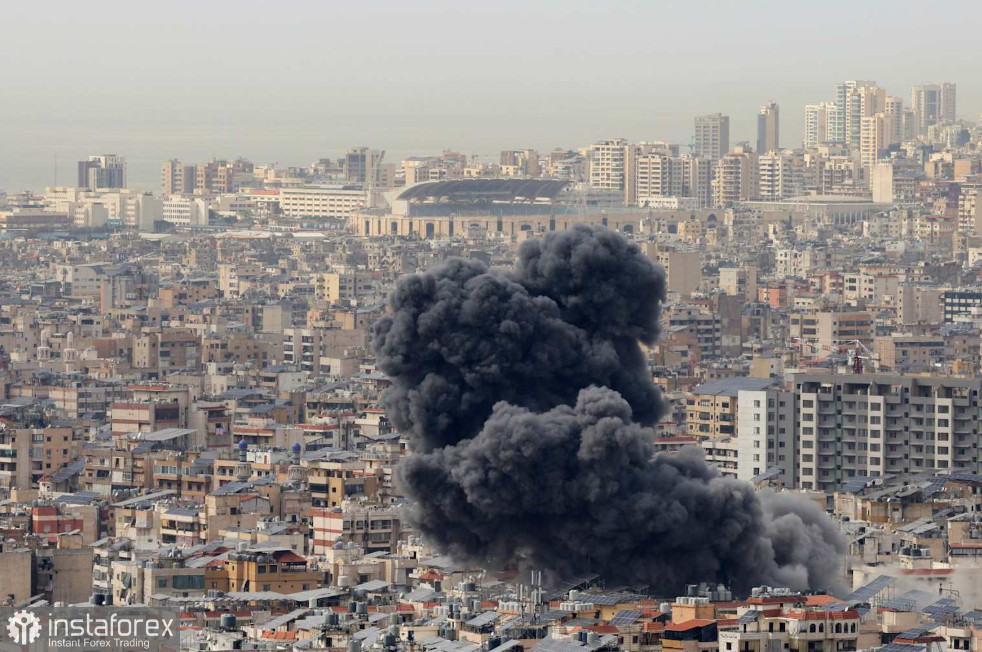
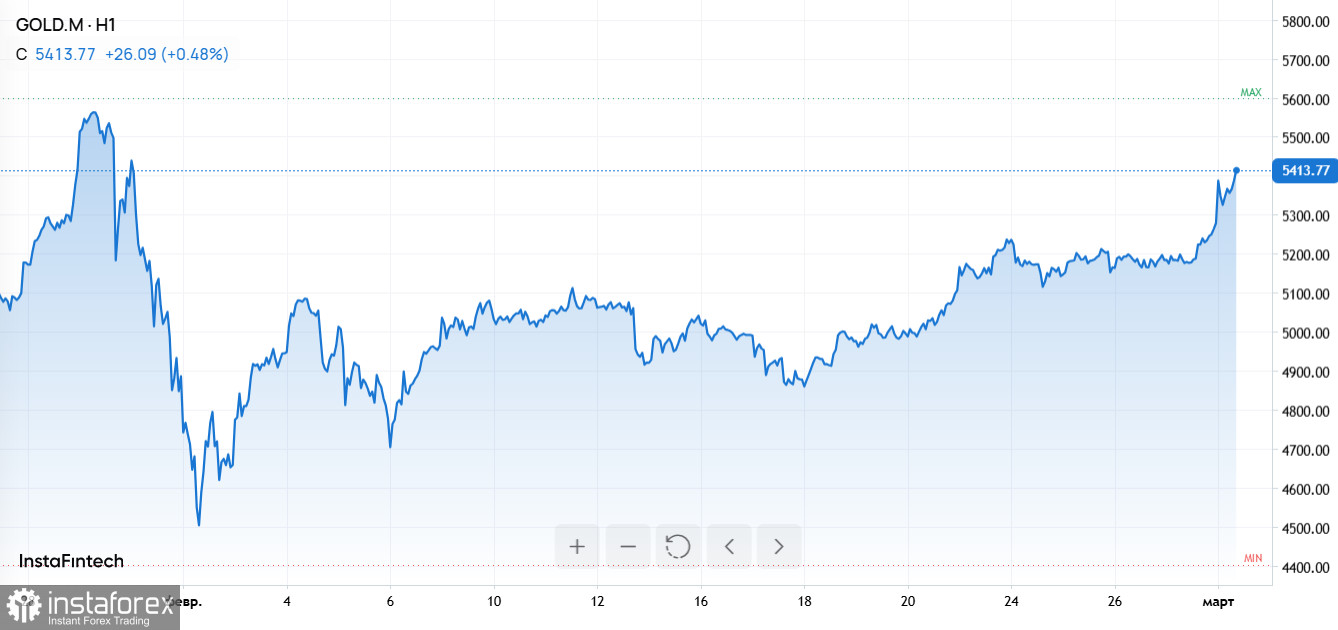
Monday morning, March 2, brought a shock to commodity markets: Brent jumped 6% to $77.50 a barrel (May futures), and gold hit a record high — $5,278 per ounce.
The trigger was a full-scale US and Israeli military operation against Iran, with strikes on Tehran and the threat of a prolonged blockade of the Strait of Hormuz, through which around 20% of the world's oil supply flows. Investors fled to safe havens en masse, pricing in the risk of a long-lasting supply deficit.
Oil and gold — key levels on March 2
Brent (May) — $77.50 (+6%); resistance $78.50 / $80.00, support $75.00 / $73.50.
Gold (spot) — $5,278 (+2.74%); resistance $5,300 / $5,350, support $5,250 / $5,220.
Oil: risk of real shortage and scenarios to $100
The main factor is an effective blockade of the Strait of Hormuz by the Islamic Revolutionary Guard Corps. About 15–20 million barrels per day transit the strait (roughly 20% of global consumption). Major tanker companies have suspended voyages pending clarification, and more than 200 vessels are anchored around the strait. Rystad Energy estimates potential losses, even allowing for alternative routes, at 8–10 million barrels per day. That is a physical shortage markets have not seen for decades.
Analysts' forecasts: Rystad Energy expects another $10–20 rise in prices if tensions persist; Barclays warns that prolonged closure could push Brent above $100. Items to watch in the coming days: the API inventory report (evening of March 3) and the official EIA report (March 4)—a quicker-than-expected drawdown would add further momentum to oil.
Gold: flight to safety and path to $5,500
Gold rose nearly 3% over the weekend, breaking the psychological $5,200 barrier and closing above it. A Kitco News poll showed 67% of analysts and 76% of retail respondents expect further gains next week.
A technical break of $5,250–$5,300 would open the way to $5,500. In the longer term, JP Morgan and Bank of America see scenarios toward $6,000 if geopolitical escalation continues.
A supporting factor is the potential for easier monetary policy: Chicago Fed president Austan Goolsbee has signaled cuts if inflation continues to soften, although markets currently price just two cuts in 2026.
Key macroeconomic events
2 March (Mon) – PMI indices (US, China, euro area).
3 March (Tue) – API oil inventory report (first signal on US demand).
4 March (Wed) – EIA official oil stocks (key report).
5 March (Thu) – OPEC+ meeting (an emergency cartel session and reaction are possible).
6 March (Fri) – Nonfarm Payrolls (US) – impact on the dollar and rate expectations.
Two baseline market scenarios
Escalation: further strikes and widening of the conflict—Brent to $90–100, gold to $5,500.
Diplomatic intervention: talks or a pause in the fighting—oil corrects to $70–72, gold to $5,000. The escalation scenario is unfolding today.
Timeline of the military operation and its regional consequences
On 28 February 2026, the United States and Israel conducted a large-scale joint operation against Iran in which Supreme Leader Ayatollah Ali Khamenei was killed and a significant portion of the country's military command was destroyed.
In the Pentagon, the operation was codenamed "Epic Fury". In Israel, it was called "Roaring Lion." Air strikes began at about 09:45 a.m. Tehran time using U.S. missiles, drones, and B-2 aircraft together with Israeli fighters. According to CBS News, the CIA had been tracking Khamenei's movements.
Iran responded with waves of ballistic missiles and drones against US and Israeli positions in the region. The New York Times reported strikes on targets in Bahrain, Iraq, the UAE, and three sites in Kuwait.
US Central Command confirmed three US service members were killed and five seriously wounded at the Arifjan base in Kuwait. Airports in Kuwait, Dubai, and Bahrain sustained damage; drone debris killed one person at Zayed International Airport in Abu Dhabi.
The IRGC announced the closure of the Strait of Hormuz. Reuters reported that at least three tankers were damaged off the Persian Gulf coast and one sailor was killed. The IMO and the US Maritime Administration advised vessels to avoid the area.
Against this backdrop, Brent jumped above $82 per barrel. Citi warns of possible $80–90 levels in the coming days; Rystad forecasts up to $92.
OPEC+ agreed to increase output by 206,000 barrels per day in April as the cartel's response to growing supplier concerns.
Diplomatic rhetoric remains harsh: Iranian Foreign Minister Abbas Araghchi rejected US warnings, calling Iran's response an act of self-defense and saying Tehran sees no limits to defending its people. President Donald Trump warned Iran on his social network with a stark message: "THEY BETTER NOT DO THAT, HOWEVER, BECAUSE IF THEY DO, WE WILL HIT THEM WITH A FORCE THAT HAS NEVER BEEN SEEN BEFORE!"
Key takeaways
The oil and gold markets are reacting to a real threat to supplies and rising geopolitical uncertainty. A physical shortfall could emerge within weeks.
If escalation continues, price pressure will intensify—there is a risk Brent moves toward $90–100 and gold toward $5,500 and above.
Short-term volatility will be high: inventory reports (API, EIA), OPEC+ decisions, and macro data (PMI, Nonfarm) will determine near-term price action.
How traders can take advantage (practical ideas)
1) Monitor key calendar events (API, EIA, OPEC+, Nonfarm) and trade breakouts: on a confident oil breakout, consider long positions; on pullbacks, enter at support levels.
2) Gold: buy while the price holds above $5,250–$5,300, targeting $5,500; on sharp moves, take partial profits and use protective stop-losses.
3) Use options to manage risk: buying calls offers limited risk with upside potential; protective puts help insure long positions in oil and risk assets.
4) Consider spread strategies and hedges (for example, Brent vs WTI futures spreads) to reduce portfolio volatility.
5) Avoid excessive leverage: volatility is extreme, so use prudent position sizing, wider stops, and partial profit-taking on rapid moves.
6) Follow real-time news: any statement from Trump, Tehran, or OPEC+ can rapidly change market sentiment.
The instruments discussed in the article (Brent oil, spot gold, futures, and CFDs) are available for trading on the InstaForex platform. Traders wishing to take advantage of the current market should open an InstaForex trading account and, for convenience, download the company's mobile app to react to news and enter or exit positions in real time.
Whales move record $8.8 billion to Binance—BTC market in crosshairs
Over the past 30 days, large Bitcoin holders ("whales") have moved a record $8.8 billion to the Binance exchange—the largest wave of deposits from large wallets since early 2022, according to blockchain data and CryptoQuant analytics. This has occurred as Bitcoin trades around $67,000 and has raised concerns about potential selling pressure while fueling debate over near-term volatility in the market.
CryptoQuant data show the 30-day inflow from whales to Binance reached $8.8 billion at a time when Bitcoin was trading near $64,000. The prior mid-February record was about $8.3 billion and was already the highest since 2024.
CryptoQuant contributor Darkfrost recorded that the whale-inflow ratio to Binance (the share of the ten largest deposits in total inflows) rose from 0.40 to 0.62 between early and mid-February. That means a handful of large wallets now account for the majority of incoming Bitcoin.
Binance's Bitcoin reserves have also increased: blockchain data show the exchange held about 673,600 BTC at the end of February versus roughly 659,000 BTC at the end of January. That is the highest structural level since November 2024.
Analysts draw historical parallels. Arab Chain notes that in 2021, price peaks were followed by sharp corrections after waves of whale inflows to exchanges, which sometimes precipitated subsequent sell-offs. Investing.com reports that the overall exchange whale ratio across platforms rose to about 0.64, a high not seen since 2015.
Whale movements coincided with a tough period for several key indicators: Bitcoin is down more than 20% year-on-year, and spot Bitcoin ETFs have experienced outflows—monthly redemptions approached $993 million by the end of February. Large inflows to Binance raised questions about whales' intentions: are they selling to take profits, or merely transferring assets between wallets and exchanges?
The market has shown high sensitivity to headlines: on the last day of February, Bitcoin briefly plunged to $63,000 amid reports of US and Israeli strikes on Iran but then bounced above $68,000 on hopes the geopolitical tension might ease.
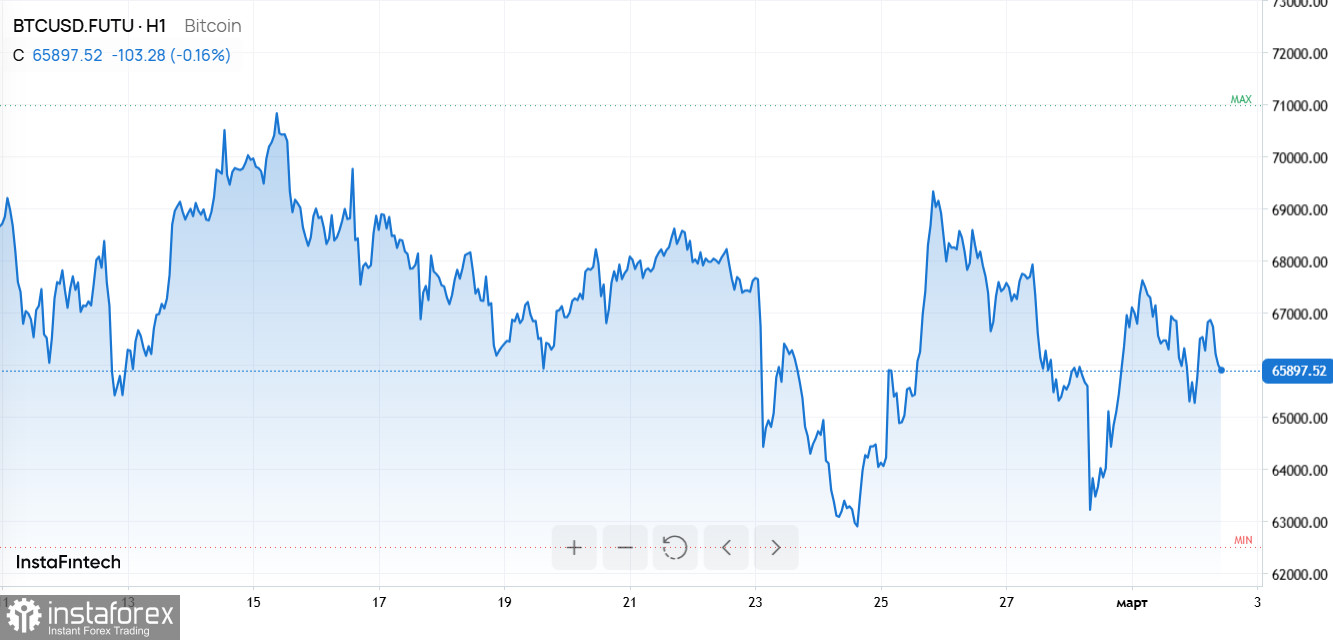
With March underway, the concentration of BTC among whales on the largest exchange has traders watching large wallets closely—their sales of big lots could intensify downward pressure, while mere redistribution of holdings would not necessarily depress prices.
Key takeaways
Whales' transfers of $8.8 billion to Binance represent the largest inflow since early 2022 and signal concentrated liquidity on one of the largest exchanges.
Rising whale-inflow ratios and expanding Binance reserves increase the likelihood of sharp price moves if mass selling occurs.
Historical precedents show large whale inflows do not always presage prolonged bear markets; sometimes they precede heightened volatility before a new leg up.
How traders can capitalize
1) On-chain monitoring: track whale inflows and exchange reserves — sharp spikes can signal opportunities for short-term trades.
2) Volatility trading: scalping and intraday strategies can work well in high-volatility environments, with strict stops and risk management.
3) Hedging with derivatives: use futures or options to ensure positions, or open short positions to protect capital against large sell events.
4) Position averaging and limit orders: place limit buys at attractive levels, or limit sells at target prices to capture moves during sharp corrections.
5) Follow real-time news: geopolitical developments and institutional outflows (e.g., from spot ETFs) can amplify short-term dynamics—rapid reaction matters.
The $8.8 billion whale inflow to Binance is an important on-chain signal that raises the likelihood of increased volatility and demands traders' heightened attention. It creates both risks and opportunities: placing limit orders, trading volatility, and prudent use of derivatives can help generate returns if risk is managed carefully.
FX markets react to Middle East escalation: franc and yen sought as havens, oil jumps
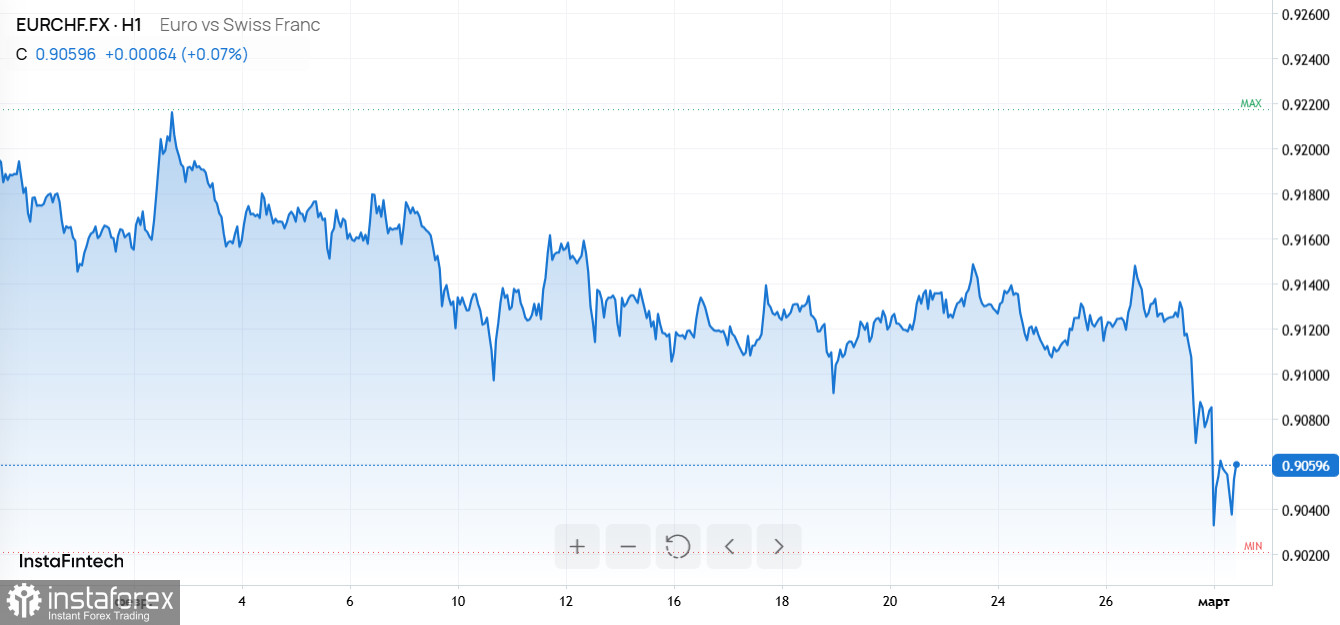
The unrest in the Middle East has boosted demand for safe-haven assets: the Swiss franc rose to its strongest level against the euro since 2015, and the Japanese yen strengthened. At the same time, risk-sensitive currencies have come under pressure, and the oil market has jumped — prices are up nearly 9%.
The euro fell 0.34% to $1.1776 and slid 0.5% against the Swiss franc to 0.9039. Risk-sensitive currencies, including the Australian dollar and the British pound, lost more than 0.5% — reflecting an investor flight to safe havens, Reuters reports. Offshore, China's yuan also weakened about 0.2% amid concerns over possible disruptions to oil supplies for the country, one of Iran's largest buyers.
Dollar moves were mixed: it strengthened versus the euro, the pound, and the Australian dollar but weakened against the Swiss franc and the yen — traditional safe-haven currencies in times of geopolitical instability.
The yen initially strengthened but then came under pressure because of Japan's heavy dependence on oil imports. Ultimately, the yen traded slightly lower against the dollar.
Commonwealth Bank of Australia analysts had warned before the strikes that if the situation persists and supplies are disrupted, we expect the US dollar to strengthen against most currencies, except the Japanese yen and the Swiss franc. Early on Monday, oil prices rose roughly 9%, and at least 150 tankers were anchored outside the Strait of Hormuz, highlighting the logistical risks to supply.
BNZ strategist Jason Wong said that it was impossible to predict how long the situation would last, how high oil prices might rise, or how long the Strait of Hormuz could remain closed, and that the immediate market reaction pointed to reduced risk appetite, requiring action based on the circumstances.
Wells Fargo analysts stressed the euro's vulnerability — Europe faces a restocking season for natural-gas inventories at historically low levels, which will require energy purchases precisely as prices are rising.
The Israeli shekel held relatively steady within the recent trading range of 3.09–3.14 per dollar, supported by solid economic fundamentals and the country's foreign reserves. By contrast, the Iranian rial plunged to a record low of 1.75 million per dollar on the open market—a decline of nearly 30% since the start of 2026.
Key takeaways
Geopolitical escalation in the Middle East has boosted demand for safe-haven currencies (Swiss franc and yen) and weakened risk-sensitive currencies.
Rising uncertainty sent oil prices approximately 9% higher and led to a buildup of tankers near the Strait of Hormuz, increasing the risk to global energy supplies.
The euro appears vulnerable amid Europe's need to procure energy at a time of low inventories.
How traders can take advantage
1) Currency trading: consider positions in EUR/CHF and USD/CHF, as well as USD/JPY, depending on strategy and horizon. In periods of elevated volatility, short-term approaches (scalping, day trading) and careful use of leverage with tight stop-losses may be preferable.
2) Energy assets: the oil rally creates opportunities to trade oil futures, Brent and WTI CFDs, or energy stocks. Monitor news on the Strait of Hormuz and inventory reports.
3) Hedging and diversification: if you hold risk positions, consider protective instruments (options, positions in safe-haven currencies).
4) Risk management: use position sizing, stop-losses, and loss limits; account for extreme volatility and the possibility of sharp reversals.
5) Real-time news monitoring: any statement from Trump, Tehran, or OPEC+ can quickly shift market sentiment.
The currency pairs and energy instruments discussed are available for trading on the InstaForex platform. Traders seeking to exploit current volatility should open an InstaForex trading account and consider downloading the mobile app for real-time execution.
NVIDIA launches global coalition for 6G with AI at its core
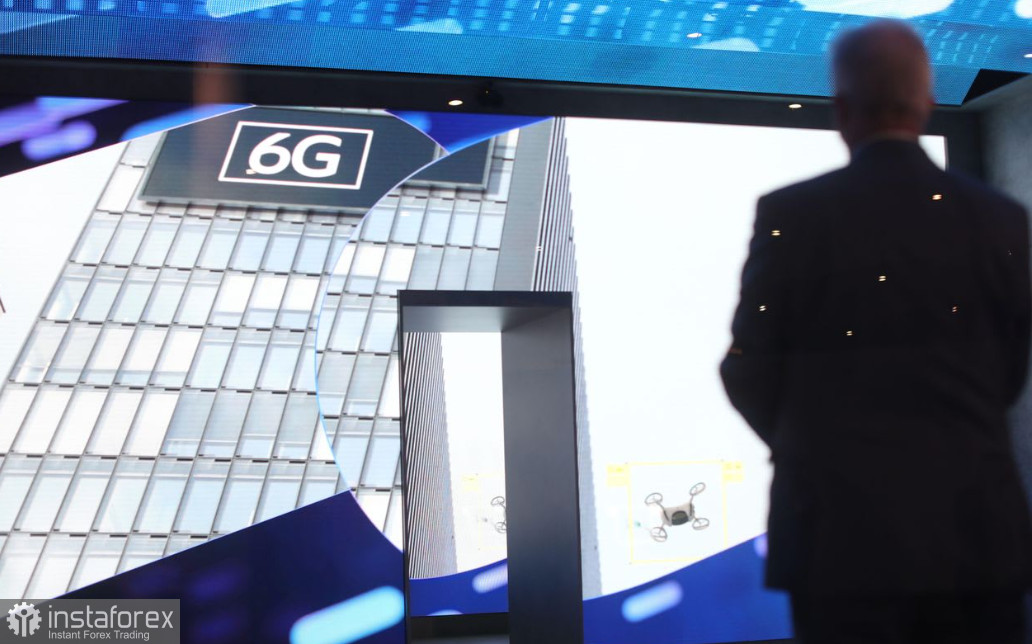
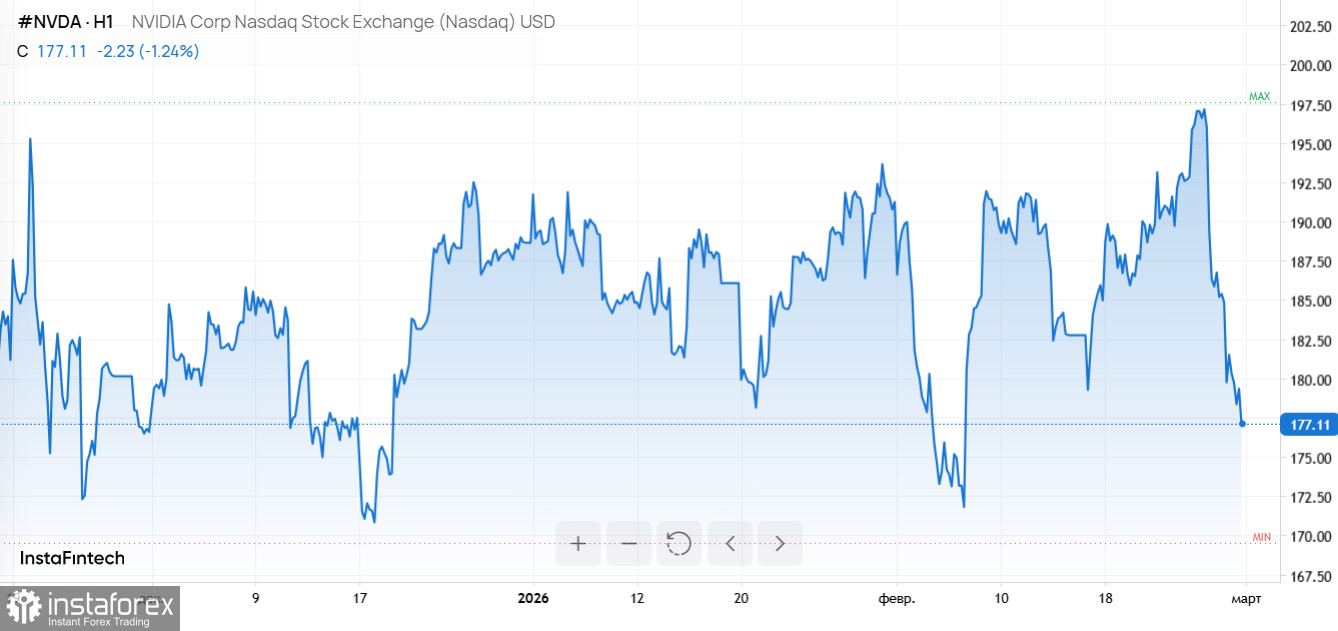
At the Mobile World Congress in Barcelona, Nvidia announced a large-scale partnership with more than a dozen major telecoms and infrastructure providers. The collaboration is intended to develop open, secure, AI-driven next-generation networks. At the same time, TSMC's 2025 annual report showed that Nvidia displaced Apple as the chipmaker's largest customer, underscoring a major shift in the semiconductor economy.
NVIDIA presented a coalition that includes Nokia, Ericsson, T-Mobile, Deutsche Telekom, BT Group, SoftBank, SK Telecom, Cisco, Booz Allen Hamilton, MITRE, and others. The goal is to build 6G infrastructure with artificial intelligence integrated at every level — from radio access networks to edge computing and core systems.
The partners propose a software-defined AI-RAN architecture able to evolve via software updates rather than hardware replacement, opening access to startups, researchers, and developers through open programmable platforms.
Jensen Huang said that AI is changing the notion of computing and becoming the driving force behind the largest infrastructure deployment in human history, that telecommunications are next in line, and that, together with a global coalition of industry leaders, NVIDIA is creating AI-RAN to turn telecom networks around the world into pervasive AI infrastructure.
Telecom chief executives also described the importance of the initiative. T-Mobile CEO Neville Ray called it a pivot point, noting that as 6G becomes the backbone of the AI era, telecommunications will serve as the nervous system of the digital economy.
Deutsche Telekom CEO Tim Hottges added that an open, intelligent, and resilient 6G infrastructure will lay the foundation for an era of physical AI.
Why this matters
6G networks are expected to begin commercial deployment around the end of the decade. The partnership reflects a growing consensus that 6G must go beyond legacy architectures to support billions of autonomous machines, vehicles, sensors, and robots. An open, software-defined model will allow faster, more flexible deployment of new services and applications.
Alongside the coalition announcement, TSMC, in its 2025 annual report (as of 31 December), disclosed that its largest customer (labelled "Customer A") generated revenue of NT$726.97 billion (about $23.4 billion), representing 19% of total revenue.
For comparison, in 2024, that figure was NT$352.27 billion, or 12% of revenue. According to the text and later comments by Nvidia CEO Jensen Huang, Customer A is Nvidia, which has supplanted Apple at the top of the list.
Apple, now identified as "Customer B," accounted for NT$645.17 billion, or 17% of TSMC's 2025 revenue, reflecting year-on-year growth of under 5%. Apple had been the top customer since roughly 2014, when the iPhone 6 introduced TSMC-made A8 processors.
The shift reflects not only Nvidia's rapid growth — the company reported record revenue of $215.9 billion for fiscal 2026, up 65%, with $193.7 billion attributable to data-center operations—but also the fact that Nvidia's GPU accelerators are larger and more complex to produce than Apple's mobile processors, yielding more revenue per wafer for TSMC. Advanced packaging capacity, notably TSMC's CoWoS platform used for AI chips, grew by 70% in 2025; TrendForce estimates that Nvidia accounted for over 80% of incremental demand.
Key takeaways
NVIDIA has launched a major coalition to create AI-centric 6G networks together with leading telecoms and infrastructure players, potentially accelerating the adoption of intelligent network architectures.
The shift in TSMC's customer mix confirms that the semiconductor industry is increasingly oriented toward AI chips: Nvidia has overtaken Apple in TSMC purchases.
Rising demand for advanced packaging solutions (CoWoS) and Nvidia's dominance in incremental demand are increasing pressure on supply chains and could boost capitalization for companies tied to AI chips and infrastructure.
How traders can capitalize
1) Equities and CFDs: consider long positions in Nvidia and semiconductor manufacturers (including TSMC), given the higher demand for AI chips and CoWoS packaging. Also review shares of key coalition partners — Nokia, Ericsson, Cisco — and major telecoms (T-Mobile, Deutsche Telekom, BT Group, SoftBank, and SK Telecom) as potential beneficiaries of AI-RAN deployment.
2) Sector ETFs: for diversification, consider ETFs focused on semiconductors and telecom infrastructure if direct stock positions seem too risky.
3) Options: using call options on Nvidia or TSMC can offer limited risk with upside potential in a bullish scenario; in high volatility environments, combine strategies (spreads) to reduce premium costs.
4) Shorts and hedging: if the market overprices prospects or a correction follows the initial surge, protective put options or short positions in high-risk names can preserve capital.
5) News trading: monitor coalition press releases, partner statements, and TSMC reports—these events can deliver quick intraday and short-term trading opportunities.
Risk management is essential: use stop-losses, limit position sizes, and take macro and geopolitical risks into account. This text is not personal investment advice; decisions should be based on your own analysis and risk tolerance.
New alliances around Nvidia and the significant reallocation of TSMC's orders signal a fundamental shift in the technology ecosystem toward AI chips and AI infrastructure. That creates opportunities for investors and traders in semiconductors and telecoms — from individual equities to ETFs, options, and CFDs.
The trading instruments referenced in this article (shares of Nvidia, TSMC, Apple, Nokia, Ericsson, Cisco, T-Mobile, Deutsche Telekom, BT Group, SoftBank, SK Telecom, sector ETFs, and semiconductor instruments) are available for trading on the InstaForex platform.
To take advantage of the market situation, traders should open an InstaForex trading account and, for convenience, download the broker's mobile app to react quickly to news and manage positions in real time.
InstaForex analytical reviews will make you fully aware of market trends! Being an InstaForex client, you are provided with a large number of free services for efficient trading.


