 Stay
Stay 

Trading Conditions
Products
Tools


Monday marks the beginning of a new week, and in this review, I would like to discuss the economy, economic reports, central bank positions, and speeches from their presidents. However, all of this seems meaningless. The focus remains on the ongoing war in the Middle East. The negotiations in Islamabad have failed, as expected. However, market participants are now more interested in the consequences of a negotiation breakdown than in the negotiations or the ceasefire itself.
Analyst opinions on this matter are divided. Some expect an escalation of hostilities as soon as Monday, while others believe that negotiations will continue. Official sources in Iran and the U.S. are also providing conflicting information. For example, JD Vance reported that no mutual understanding was reached on the most pressing issues, but negotiations may continue. The Iranian Foreign Ministry stated that the U.S. demands are excessive and that, while negotiations may continue, the opposing side must adopt a more realistic stance going forward.
Meanwhile, Donald Trump has stated that he may soon impose a blockade on the Strait of Hormuz, which is currently effectively blocked by Iran itself. This is quite a twist. What would this give the U.S.? In fact, quite a lot. In my previous reviews, I mentioned that the Strait of Hormuz is a key lever of pressure for Iran, not just on the U.S., but on the entire world. At the same time, Iran also sells its own oil through the Strait of Hormuz. Trump wants to blockade it for all vessels, including Iranian ones. This move would limit financial flows into Iran, which during wartime gains significantly more revenue from oil sales to Eastern Eurasia. Therefore, an American blockade of the Strait of Hormuz could severely impact Iran and its ability to continue resisting.
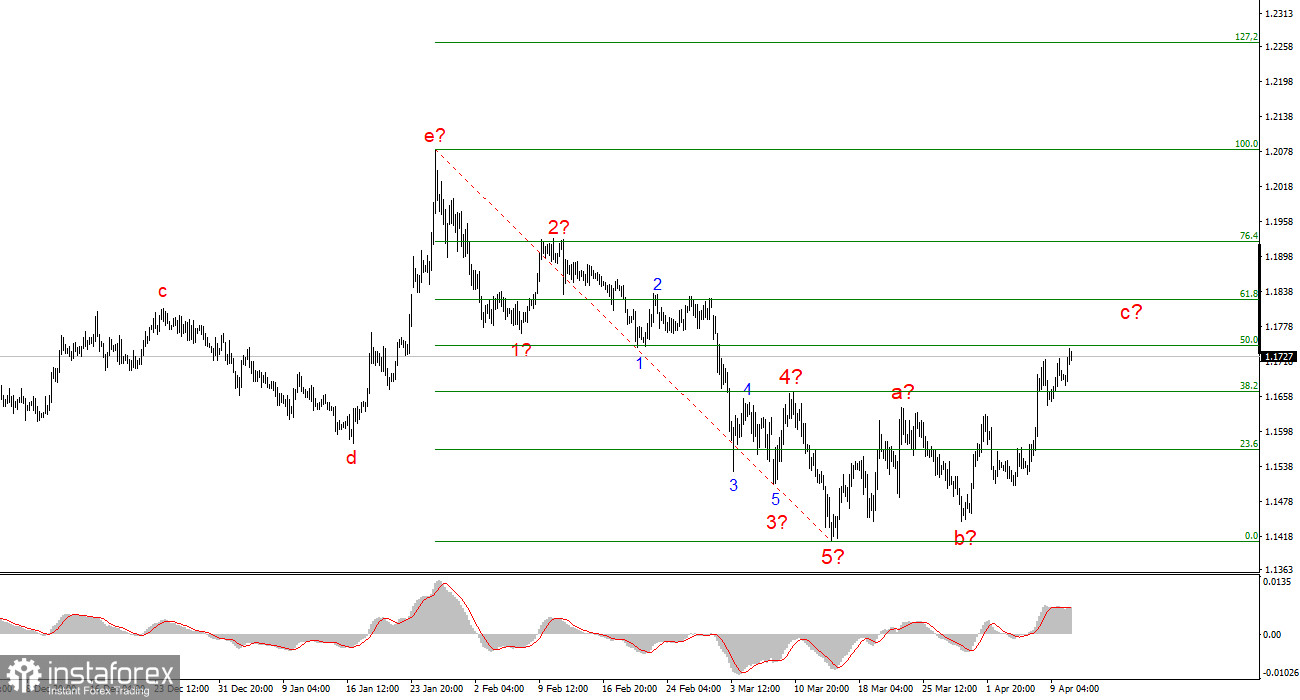
Based on the analysis of EUR/USD, I conclude that the instrument remains within the upward segment of the trend (lower image), while in the short term, it is within a corrective structure. The corrective wave set appears quite complete and may take on a more complex, extended form only if a sustainable ceasefire is established between Iran, the U.S., Israel, and ALL other countries in the Middle East. Otherwise, I believe that a new downward wave set may begin to form from the current positions.
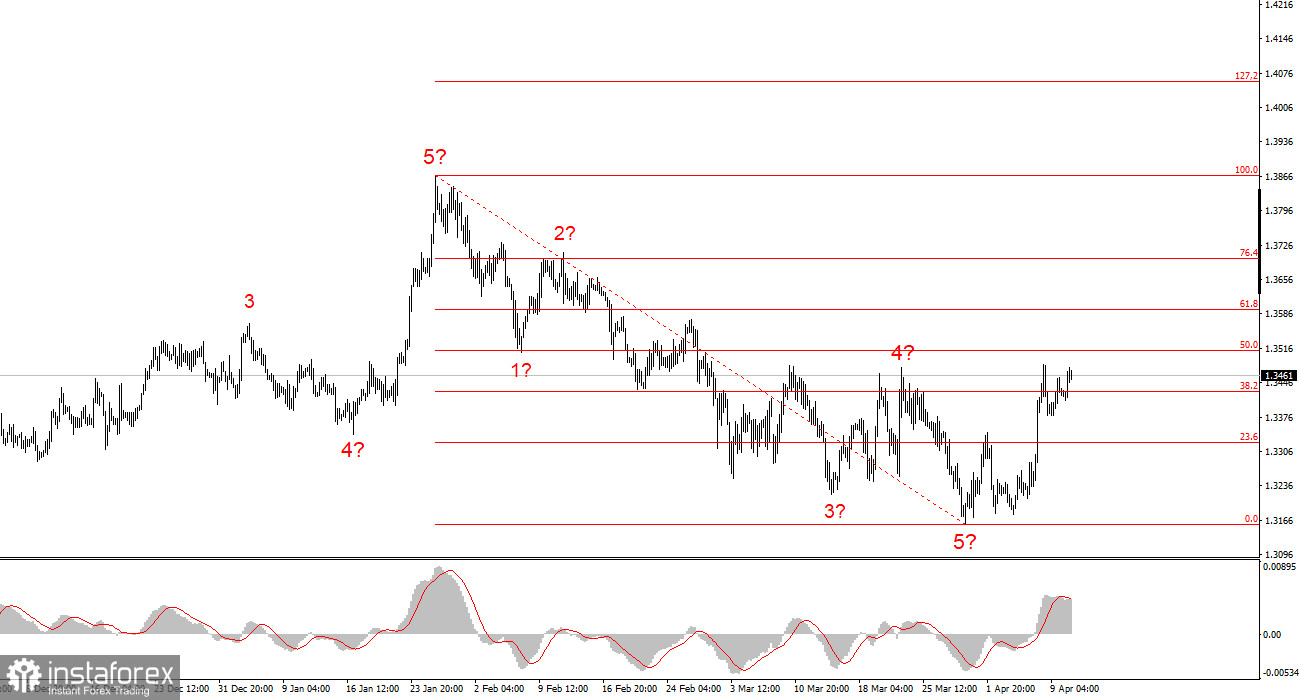
The wave pattern for the GBP/USD instrument has become clearer over time, as I had anticipated. We now see a clear five-wave downward structure on the charts with an extension in the third wave. If this is indeed the case, and geopolitics does not provoke a new crash of the instrument in the near future, we can expect the formation of at least a three-wave corrective structure, within which the pound could rise to levels of 1.3511 and 1.3594, corresponding to 50.0% and 61.8% on the Fibonacci scale. If a ceasefire is reached, the corrective segment of the trend could turn impulsive.
InstaForex analytical reviews will make you fully aware of market trends! Being an InstaForex client, you are provided with a large number of free services for efficient trading.


