 Stay
Stay 

Trading Conditions
Products
Tools



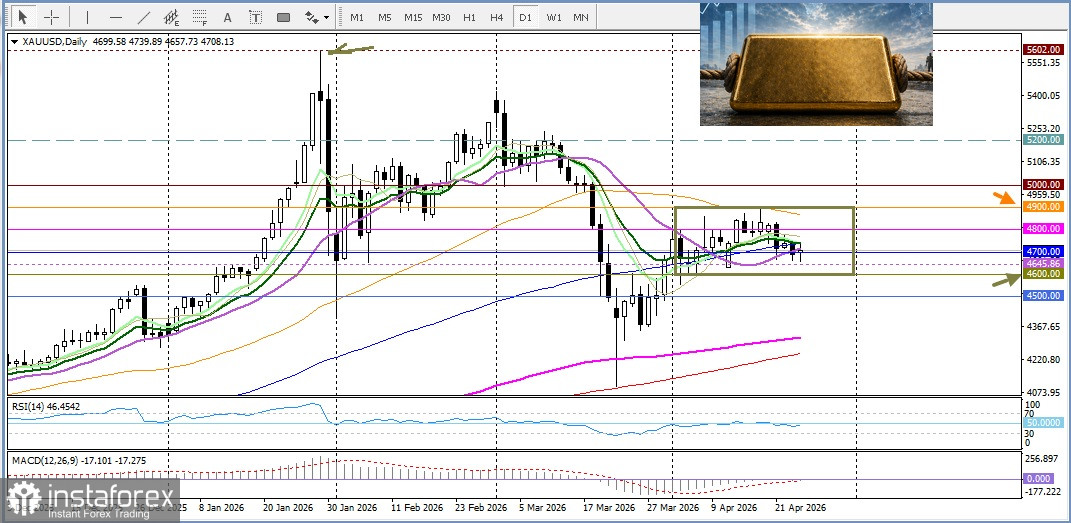
Although gold still receives basic support near the $ 4,700-per-ounce round level, the market remains neutral and is unable to consolidate above the $4,800-per-ounce round level. This is largely due to ongoing geopolitical tensions, which are strengthening the U.S. dollar's position as a safe asset.
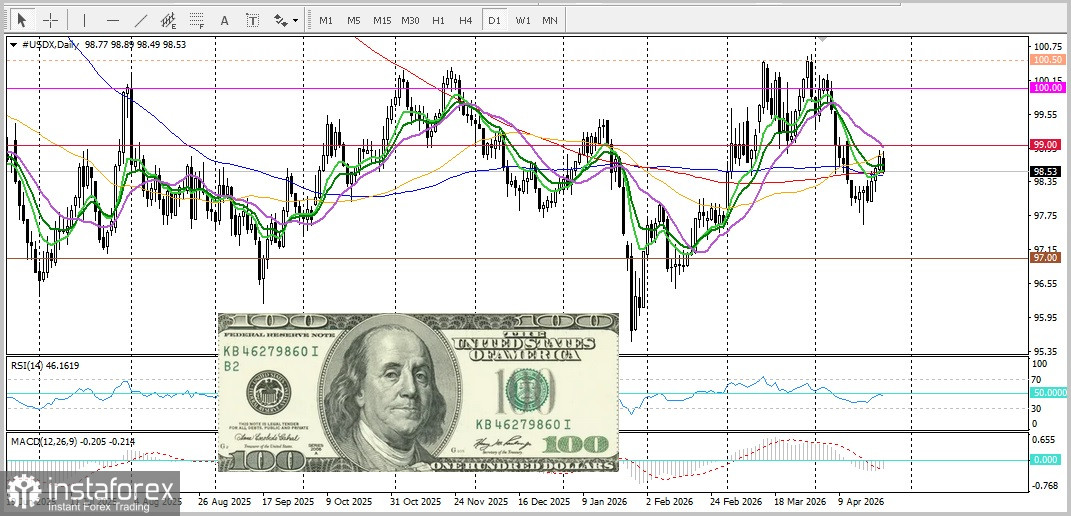
Amid uncertainty surrounding the ceasefire and the Middle East negotiation process, gold may test the lower boundary of a broader trading range around $4,600 this week. Additionally, high oil prices are intensifying inflation expectations and may compel the Federal Reserve to maintain its current monetary policy course in the foreseeable future. With the increasing risk of inflationary shocks, central banks are likely to keep interest rates at current levels or consider further increases. Such a tight policy negatively impacts gold, despite the overall rise in demand for safe assets.
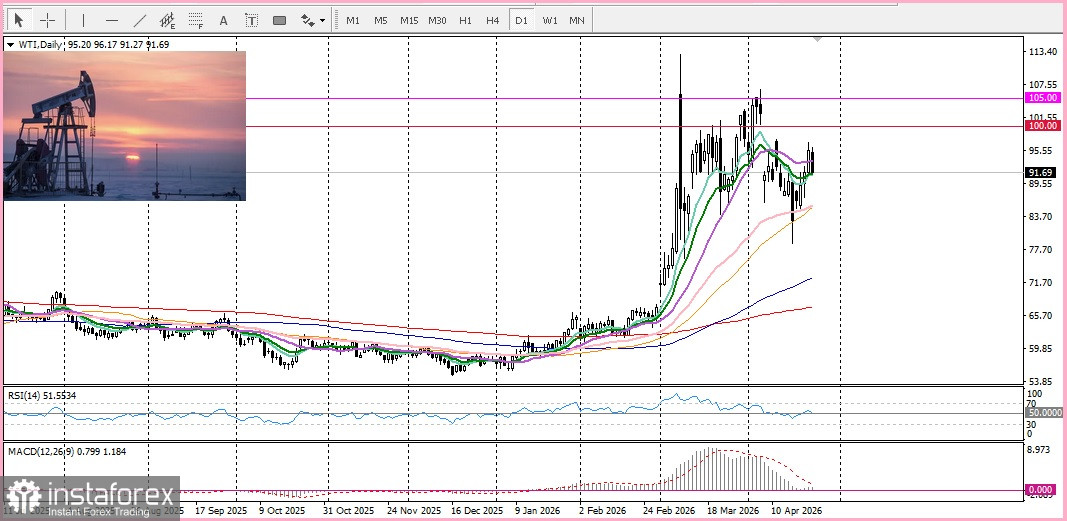
The escalation of tensions and uncertainty surrounding the conflict with Iran has effectively neutralized expectations of Fed rate cuts in 2026. Consequently, the market is pricing in a scenario in which rates remain unchanged at the April meeting.
From a technical perspective, prices have once again fallen below the 100-day moving average. A weekly close below this level could open the way to targets at $4,600 and $4,450. If prices hold above $4,700, buyers may target the 50-day moving average in the $4,870-$4,900 range. Regarding the Federal Reserve meeting, market expectations for the future trajectory of monetary policy remain extremely unstable amid economic and geopolitical turbulence. Just a month ago, market participants considered a slight probability of rate increases by the end of the year.
Currently, this scenario is reflected in quotes, and the market oscillates between rate-cut scenarios and maintaining current levels. If last week the probability of policy easing was rated around 50/50, it has now dropped below 40%.
Additional uncertainty in the monetary sphere arises from the Senate Banking Committee's confirmation process for Kevin Warsh as the head of the Federal Reserve. However, it is unlikely that his candidacy will be approved by mid-May when Jerome Powell's term expires.
Powell is unlikely to make significant adjustments to his position while the U.S. economy demonstrates relative resilience, albeit with moderate growth rates. Increasing concern is being raised about the state of public finances: intensifying fiscal pressure from tariff policies and rising military spending is further burdening an already significant national debt. In the longer term, fundamental factors supporting gold remain relevant. As geopolitical tensions surrounding Iran ease, investor attention is likely to shift back to the structural drivers of price growth in the metal.
In addition to the Fed meeting, monetary policy decisions will be made this week by the Bank of Japan, Bank of Canada, Bank of England, and the European Central Bank. They are expected to take a wait-and-see approach amid the ongoing instability in the Middle East.
A key factor for markets will be inflation data, as the U.S. government releases the initial estimate of first-quarter GDP, as well as personal consumption expenditure figures. March inflation data is expected to reflect the impact of the conflict with Iran on consumer price dynamics.
Against the backdrop of rising inflationary pressures, the technical picture for gold is deteriorating, as prices struggle to stay above $4,800 per ounce. Despite holding support at $4,700, a four-week upward series is being interrupted. A consolidative structure is forming on the daily chart.
InstaForex analytical reviews will make you fully aware of market trends! Being an InstaForex client, you are provided with a large number of free services for efficient trading.


