 Stay
Stay 
Trading Conditions
Products
Tools



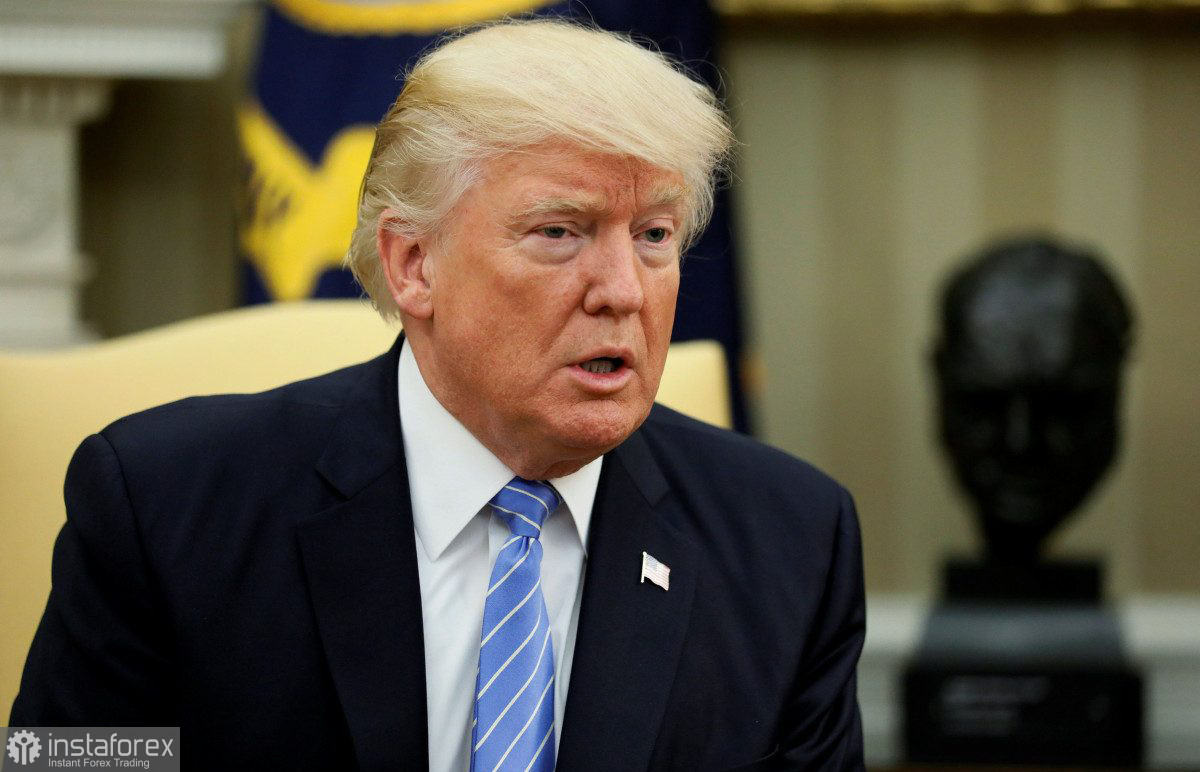
According to a "fresh" poll conducted by The Washington Post, Donald Trump's political ratings have fallen to all-time lows. The data shows that only 37% of Americans support Trump's actions, while 62% are dissatisfied with his policies. It's worth noting at the outset that results can vary significantly depending on the company or publication conducting the survey. However, in most cases, they indicate the ongoing decline in the US president's ratings.
A separate poll on the approval of Trump's economic policies yielded even worse results. In 2024, Trump won the elections under the slogan "Make America Great Again," promising Americans "unprecedented economic growth" and a "golden age." However, in practice, in 2025, Trump only managed (by various estimates) to collect between $150 billion and $300 billion from the American public through tariffs on imported goods, and in 2026, he began imposing an additional charge on fuel. Prices in the US (especially for consumer goods) are rising, and I can assume that they are not increasing by 3% per year. It is crucial to understand this point, and I will elaborate on it further.
Fuel prices in the US have risen by an average of 50%. Almost every American owns a car, which is the primary means of transportation in the US. Therefore, most Americans are experiencing an increase in fuel costs of 50%, not 3%. Taking any item from the grocery basket, for example, a loaf of bread or a burger at McDonald's, which costs $1. With an inflation rate of 3%, these items should cost $1.03 in a year. Clearly, if inflation on essential consumer goods were truly just 3%, few would even notice it.
However, the inflation figure is calculated as an average of price increases across a wide range of goods and services, most of which are not essential to the average person. Everyone buys food in stores, and nearly everyone fuels their cars. It is these prices that concern American citizens, not the pleasing average published by the Bureau of Statistics. 76% of respondents are dissatisfied with Trump's economic policy and report strong price increases—not just 3%... Seventy-two percent are dissatisfied with the government's actions regarding inflation, and 66% disapprove of the US war in Iran. Thus, the longer Trump fails to reach a peace agreement with Iran, and the longer the Hormuz blockade continues, the higher and more significant the prices for gasoline and all goods with transportation costs will rise. We are talking about increases well above 3%.
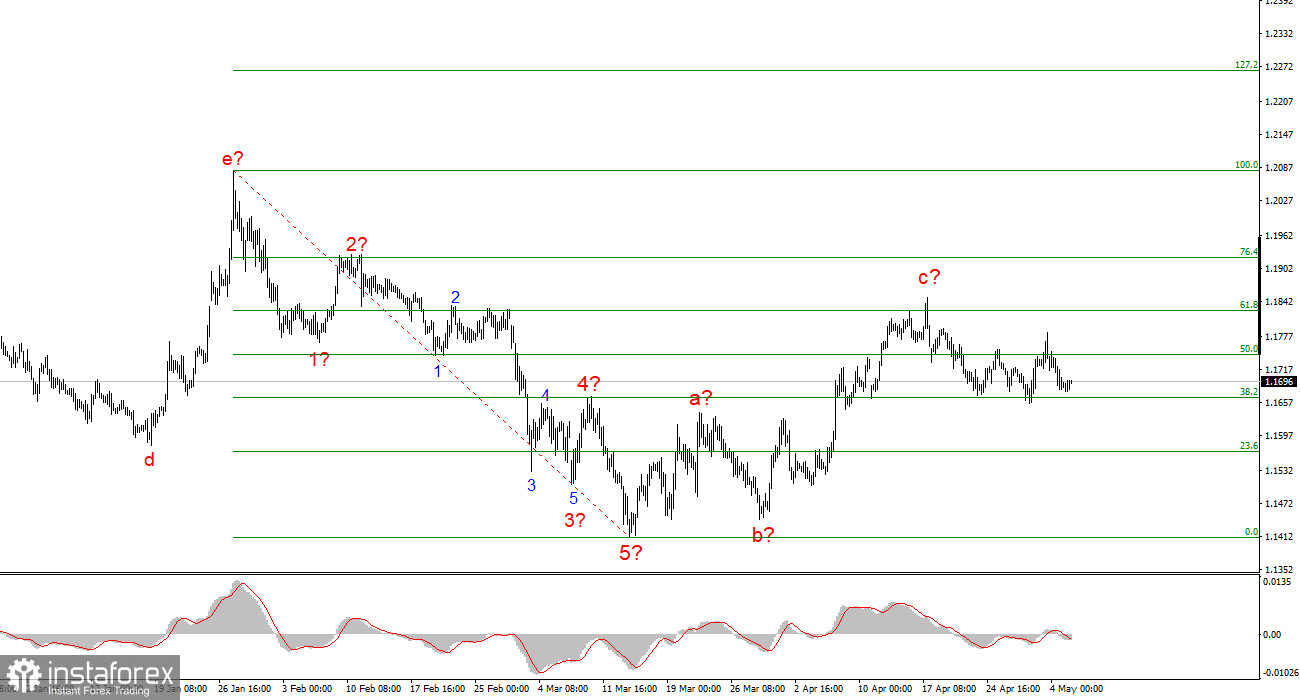
Based on the analysis of EUR/USD, I conclude that the instrument remains within an upward segment of the trend (as shown in the lower image) and, in the short term, is in a corrective structure. The corrective wave set appears quite complete and may only take on a more complex, elongated form if the geopolitical background in the Middle East does not worsen this week. Otherwise, a new downward segment of the trend may begin from the current positions. We have seen the corrective wave, and I expect further increases in the instrument from current levels, targeting around the 19 figure.
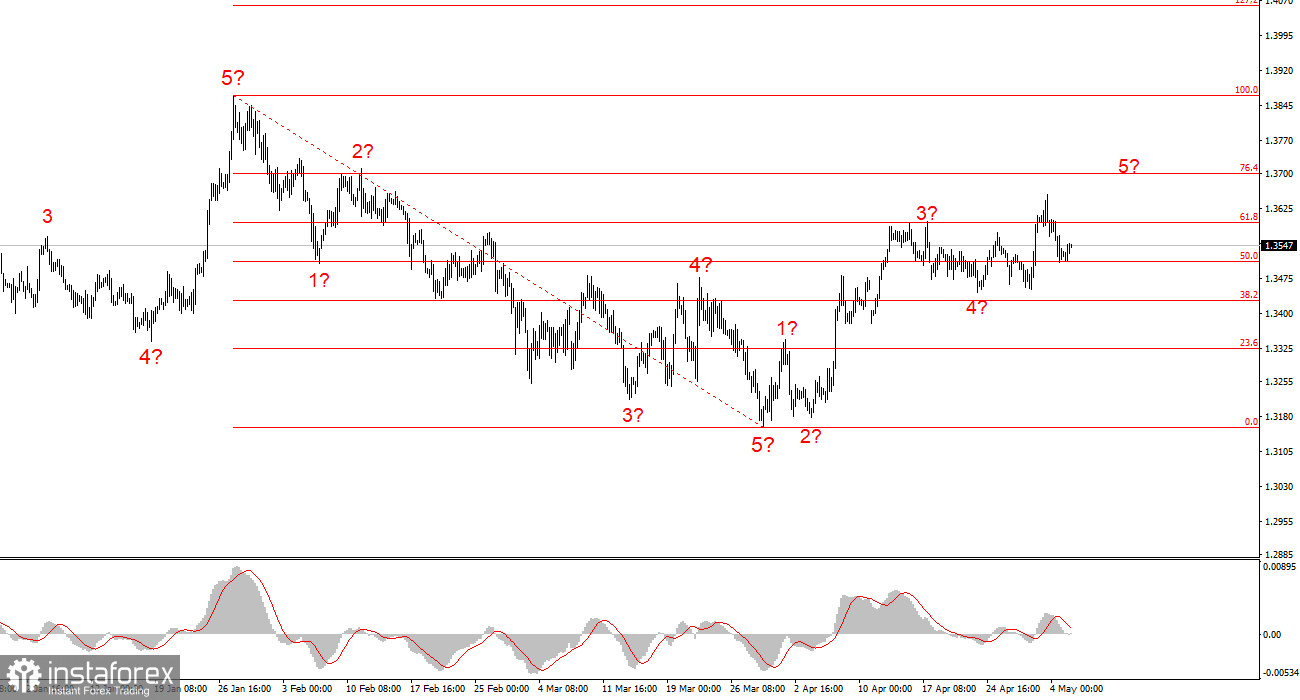
The wave pattern for the GBP/USD instrument has become clearer over time, as I anticipated. Now we see a clear five-wave upward structure on the charts that may be completed soon. If this is indeed the case, we can expect a corrective wave set to form. Therefore, the base scenario for the coming days is an increase in the area of the 37 figure. Everything else will depend on geopolitical factors.
InstaForex analytical reviews will make you fully aware of market trends! Being an InstaForex client, you are provided with a large number of free services for efficient trading.


