 Stay
Stay 

Trading Conditions
Products
Tools


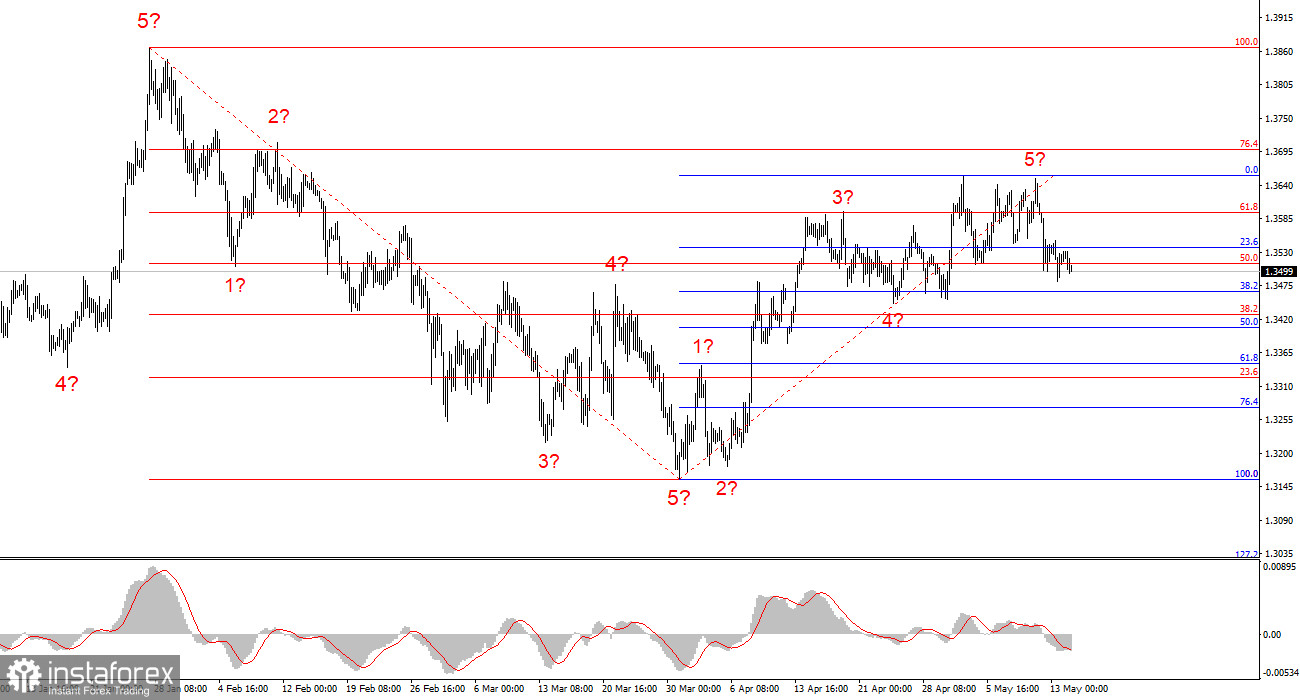
The wave pattern for GBP/USD continues to indicate the formation of an upward trend segment (lower chart). In the short term, the market is still developing a structure that was initially interpreted as corrective but is now viewed as impulsive.
The growth of both the euro and the British pound has been supported by the Middle East ceasefire, which has lasted for about a month (with occasional disruptions) and still has the potential to become the basis for a full peace agreement. However, recent rhetoric from Iranian and US leaders has become more aggressive and uncompromising, which could erase any optimism regarding a peace deal.
The latest upward wave sequence has formed a five-wave structure, and wave 5 may already be complete. If this is the case, a corrective structure of at least three waves is expected. Depending on developments in the Middle East, if no new escalation occurs and Tehran and Washington continue working toward a final ceasefire, the instrument may resume a new upward trend after the correction.
The GBP/USD pair fell by 20 basis points on Thursday, with extremely low volatility throughout the session. Over the week, the pound has already lost 135 points, which is not particularly significant given the news background. Most importantly, this scenario was expected after the formation of a five-wave impulsive structure.
The internal wave 5 of wave 5 appears weak and failed to break above the high of wave 3 of wave 5. However, truncated waves do occur, and the overall structure still remains technically valid.
The news background also fully supported the decline in the British pound. This week, risk-off sentiment increased sharply due to the potential escalation between Iran and the United States and near-zero expectations for the reopening of the Strait of Hormuz.
In the UK, the ruling Labor Party suffered a decisive defeat in elections, and party members called on leader Keir Starmer to resign. Starmer refused to step down, but a new political crisis is emerging in the UK.
US inflation came in higher than expected, and there is little expectation of near-term disinflation. As a result, markets are now pricing in the possibility of further Federal Reserve rate hikes.
The final highlight came from today's UK GDP and industrial production reports. While they cannot be described as disastrous, they also contained little positive information.
Overall, the British pound is declining quite logically — both from a wave structure perspective and from a fundamental news-flow perspective. However, the information remains mixed and uncertain, so selling pressure on the pound is not yet widespread.
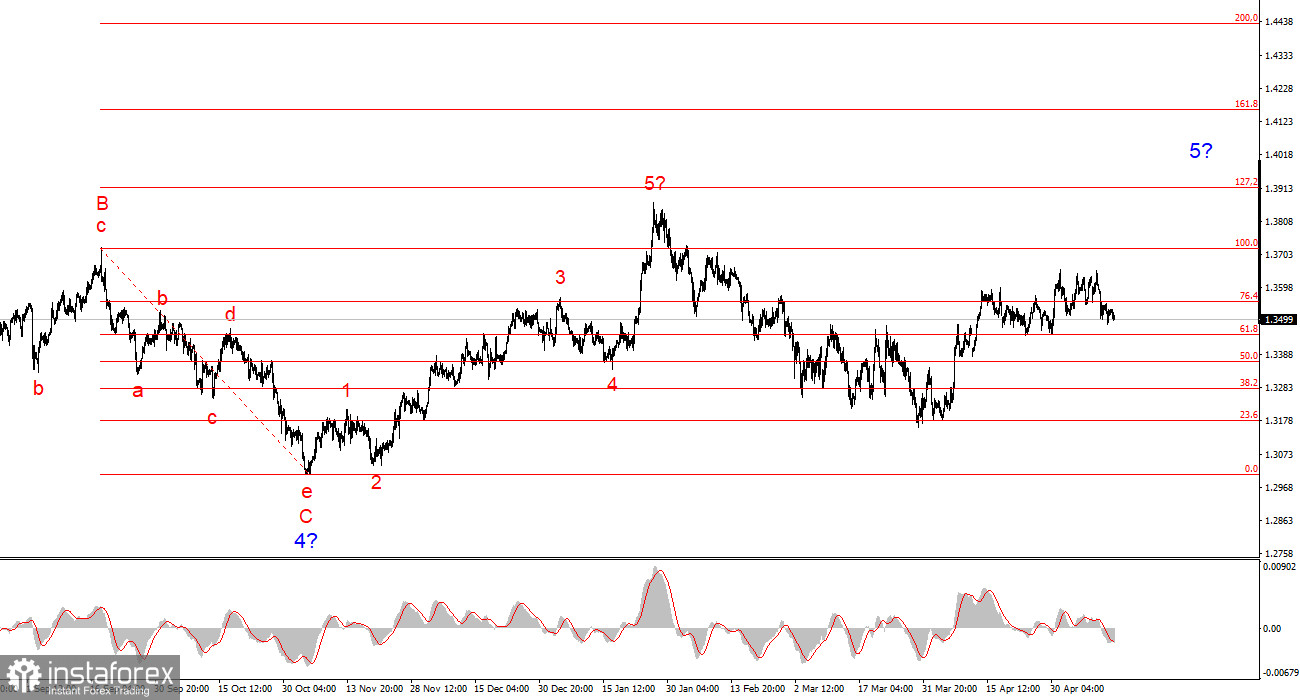
The wave pattern of GBP/USD has gradually become clearer, as expected. We now see a distinct five-wave upward structure on the chart, which may already be complete.
If this is the case, a corrective wave sequence is expected, with targets around the 1.34 level. If geopolitics continues to move toward long-term peace, then after the correction completes, a new upward trend may begin.
Therefore, the combination of wave structure and geopolitical developments will determine the pound's direction in the coming weeks.
The higher-timeframe wave structure appears nearly ideal, even though wave 4 slightly exceeded the high of wave 1. However, perfect wave structures exist only in textbooks. In practice, markets are more complex.
Wave 4 has a classic three-wave structure, and after its completion, a new impulsive trend segment began forming.
InstaForex analytical reviews will make you fully aware of market trends! Being an InstaForex client, you are provided with a large number of free services for efficient trading.


