
 Stay
Stay 


 11:56 2026-01-26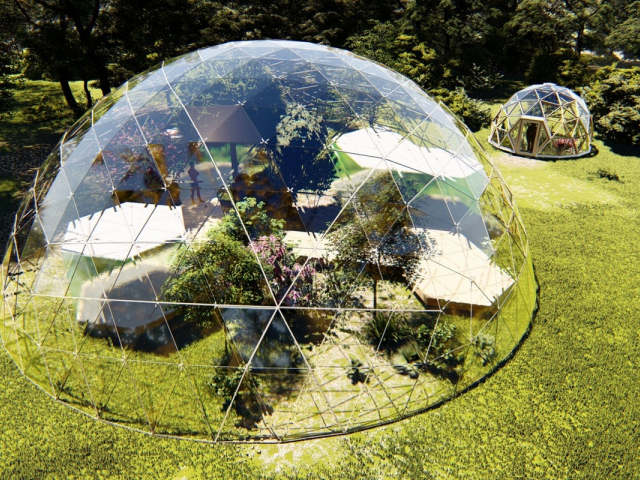
 424
424 9
9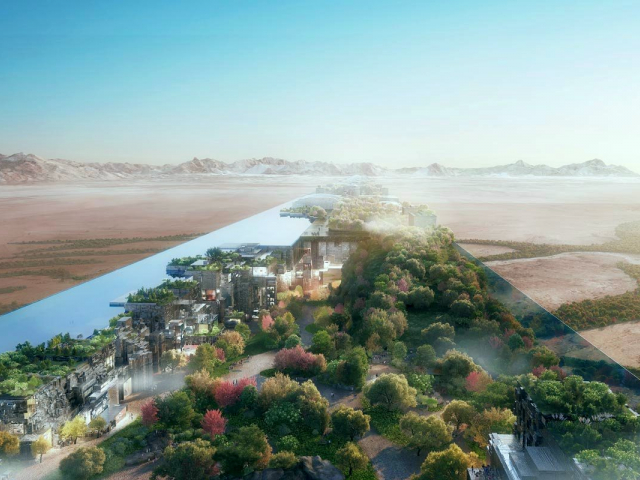
“Eden” — spherical city under dome
In regions with extreme air pollution or severe cold, residential neighborhoods are built under geodesic domes of ETFE film, as in the “Eden” concept. Inside, the dome designers create a controlled biome with forests and waterfalls. Psychologically, the dome functions as a protected “paradise in a bottle” that shields residents from a hostile outside environment. These structures serve as testbeds for Mars colonization, where a dome may be the only barrier between life and death.
The Line — ecological vertical in desert
Saudi Arabia’s Neom project advanced into reality. The Line is a 170‑kilometer linear city with a mirrored facade that reflects sunlight to prevent overheating. The structure houses a controlled, autonomous microclimate. All essential services for living and working sit within walking distance, eliminating the need for transport. Neom positions itself as a manifesto against desertification. A super dense vertical layout reduces energy use by up to 90% versus a conventional metropolis.
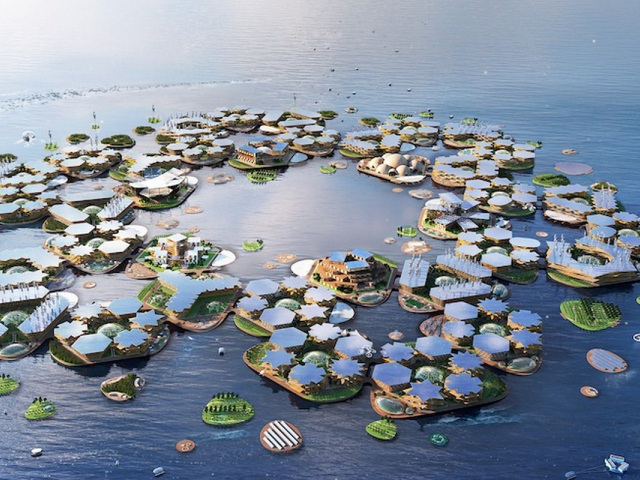
Oceanix — floating modules withstand flooding
In 2026, the prototype floating city opened in Busan, South Korea. The project uses hexagonal platforms rather than ships. The platforms rise with the sea level. They resist tsunamis and hurricanes. Each module can be a farm, a residential block, or a power station. The floating‑city model emphasizes adaptability to weather. If an area becomes overcrowded, planners can build a new quarter. Oceanix may offer a survival option for coastal cities at risk of submersion by mid‑century.
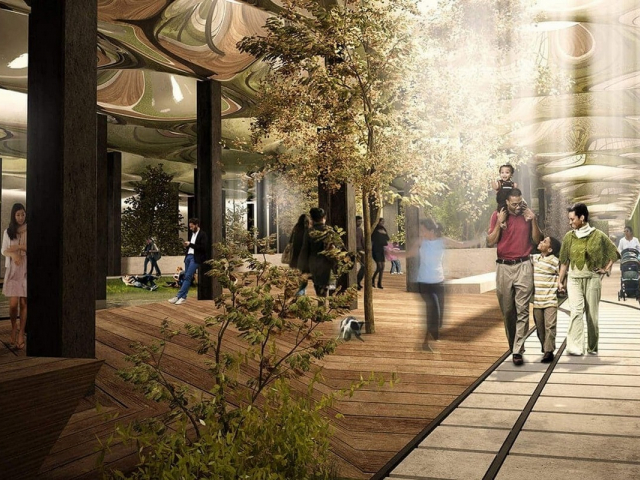
Earthscrapers — life below ground
In places with extreme heat or dense historical fabric, as in Mexico City, architects develop “earthscrapers” as an alternative to skyscrapers. These inverted pyramids sink hundreds of meters into the ground. A central light well delivers sunlight. The surrounding earth acts as natural thermal insulation and keeps interior temperatures stable at 20–22 degrees Celsius without air conditioning. The design provides shelter from tornadoes, dust storms, and solar radiation.
Halley VI — next‑generation Arctic stations
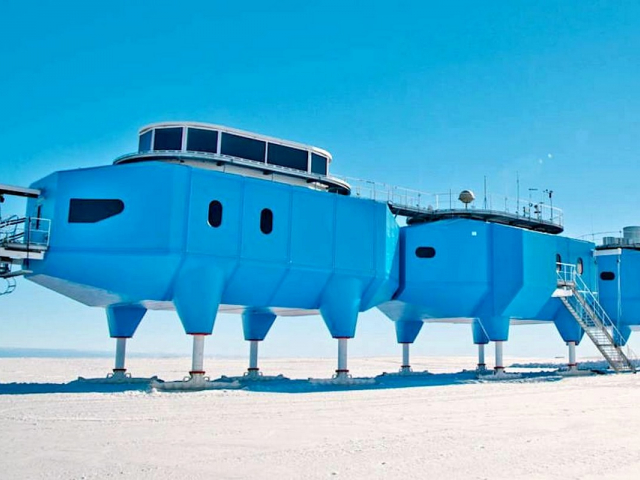
With permafrost thawing, northern buildings sit on hydraulic piles that can change height and tilt. The Halley VI research station in Antarctica can literally be moved if the ice beneath it becomes unstable. This is a nomadic research architecture. The units behave like high‑tech all‑terrain vehicles and provide full autonomy for six months of complete isolation.
Biomimetic smart facades
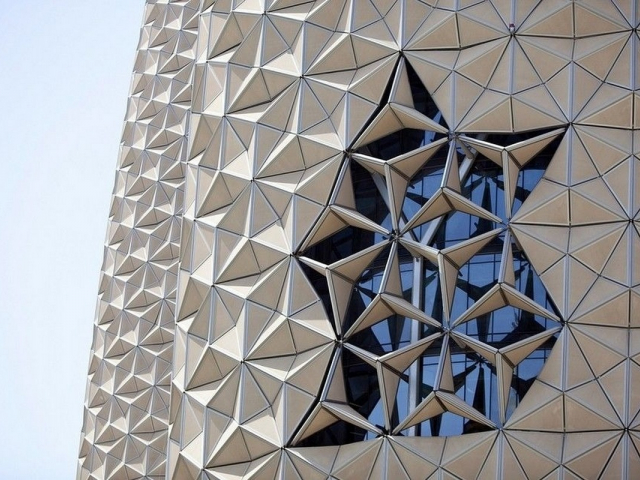
Modern towers in Dubai and Singapore use an adaptive “skin” that reacts to the sun like a living organism. Thousands of sensors control mechanical scales that open for ventilation or close to reflect excess heat. The system cuts cooling costs by about 40%. Buildings stop being passive objects and become active thermal regulators. The facades mimic cacti’s behavior or the pores of human skin.
3D printing from lunar and desert dust
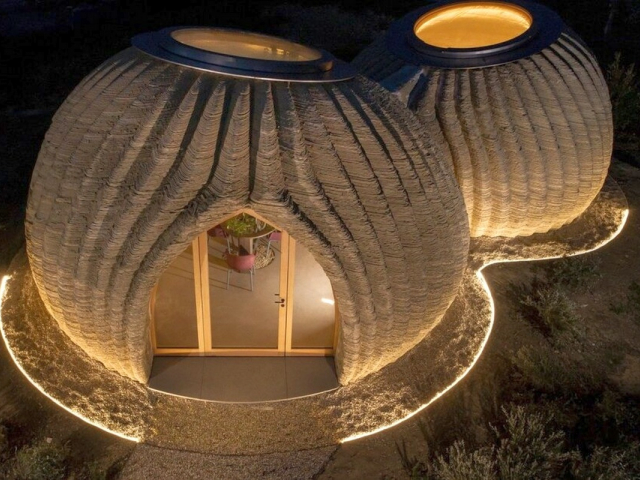
In‑situ resource utilization has made it possible to print durable domes in the Sahara from ordinary sand bound with biopolymers. The structures resemble termite mounds. Their form supports natural ventilation and protection from sandstorms. The technique is fast and accessible. Planners consider it for a rapid deployment of refugee camps, turning abundant sand into a reliable shelter.
Regenerative systems —house as filter and “vertical forests”
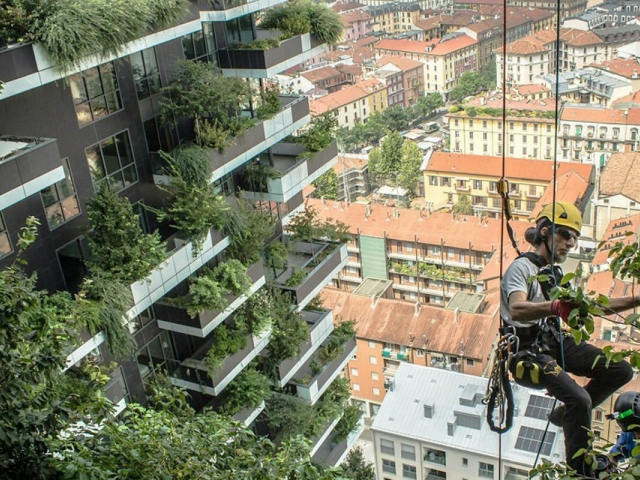
New projects prioritize cleaning over consumption. Cities install vertical forests to absorb smog. Buildings integrate algal bioreactors in transparent facade panels. The algae absorb carbon dioxide and convert it into biomass for heating. In this model, a residential block becomes part of the city’s lungs and actively helps restore the local environment.
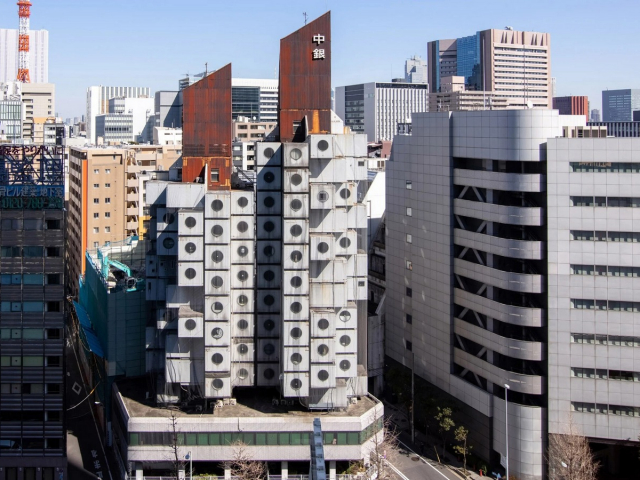
Metabolic cities — Lego on steroids
The concept envisions a city that can grow and shrink with demand. Modular capsule apartments slot into a giant steel frame. If a family needs more space, they buy a module and clip it onto their unit. In land‑constrained markets such as Japan and Hong Kong, this system maximizes space efficiency. The result is a living, constantly changing urban fabric.


