 Stay
Stay 

Trading Conditions
Products
Tools


The US dollar strengthened significantly against a range of risk assets after the majority of Federal Reserve officials at January's FOMC meeting noted that, provided inflation continues to slow, cuts to the policy rate are becoming increasingly likely. However, this did not constitute a reassuring signal to markets that the central bank is ready to loosen policy as soon as certain macroeconomic thresholds are met.
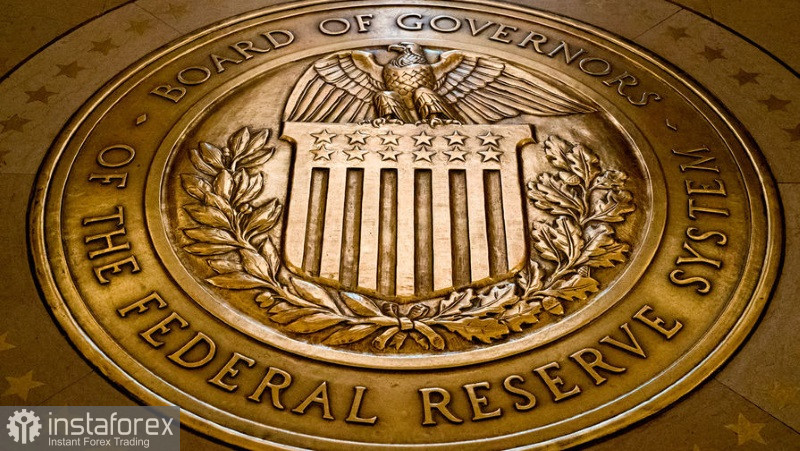
Despite that prospect, many committee participants also voiced concern about the potential for unevenness and a slower-than-expected pace of disinflation. "I see the risk of persistent inflation above our 2 percent target as significant, which means we need to remain vigilant," the minutes said.
Although Fed officials continue to expect inflation to reach the 2% target, the timing and pace of that process remain uncertain. That uncertainty is one of the main reasons the Fed is not yet prepared to take decisive action.
Accordingly, many committee members supported the notion of a two-sided rate signal. That approach implies readiness not only to cut rates if inflation cools but also to raise them if inflation expectations become entrenched above the target. The insurance mechanism is intended to minimize risks and preserve flexibility in steering the economy.
The minutes also noted that the labor market is showing clear signs of stabilization, which reduces concerns about further deterioration. With timely and appropriate policy, employment dynamics are expected to stabilize and likely improve over the course of the year. That is a positive factor, suggesting greater resilience of the economy to external shocks.
Overall, the path of policy rates will depend directly on inflation dynamics. While easing is possible, the Fed is demonstrating obvious caution. That caution reflects the risk of slower-than-expected progress toward the long-run 2% inflation goal, which means markets should be prepared for phased decisions by the Fed based on continuous assessment of incoming economic data.
As noted above, the dollar responded to all of this by strengthening against a range of risk assets.
A technical outlook for EUR/USD suggests that buyers should consider reclaiming 1.1800. That would open the way to test 1.1830. From there, a move to 1.1860 is possible, although advancing beyond that without support from major players would be difficult. The extended target is the high at 1.1890. On a decline, meaningful buying interest is likely around 1.1770. If buyers do not appear there, it would be prudent to wait for a new low at 1.1740 or to open long positions from 1.1710.
As for GBP/USD, buyers need to capture the nearest resistance at 1.3500. Only that will allow them to target 1.3530, above which a breakout would be challenging. The extended target is the area around 1.3560. If the pair falls, bears will try to seize control at 1.3465. If they succeed, a break of that range would deal a serious blow to bullish positions and could push GBP/USD down to 1.3430 with scope to extend to 1.3400.
InstaForex analytical reviews will make you fully aware of market trends! Being an InstaForex client, you are provided with a large number of free services for efficient trading.


