 Zostať

Podmienky obchodovania
Nástroje


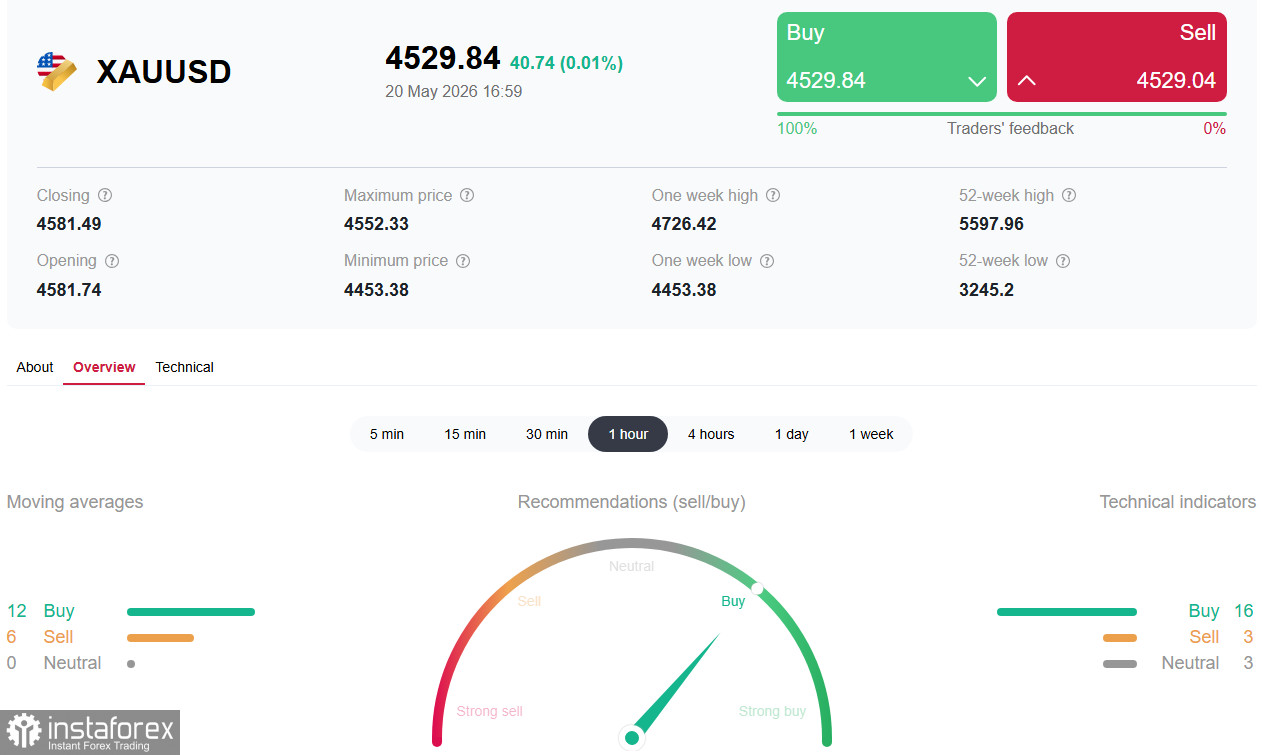
During the first half of the American trading session on Wednesday, the yield on 10-year U.S. Treasury bonds dropped sharply, reaching 4.570% at one point after a recent peak of 4.687%—the highest in 16 months. Similarly, the yield on 30-year bonds retreated to 5.154%, down from a record high of 5.200% since July 2007. Against this backdrop, the U.S. Dollar Index (USDX) corrected from its intraday high of 99.38 to 99.00.
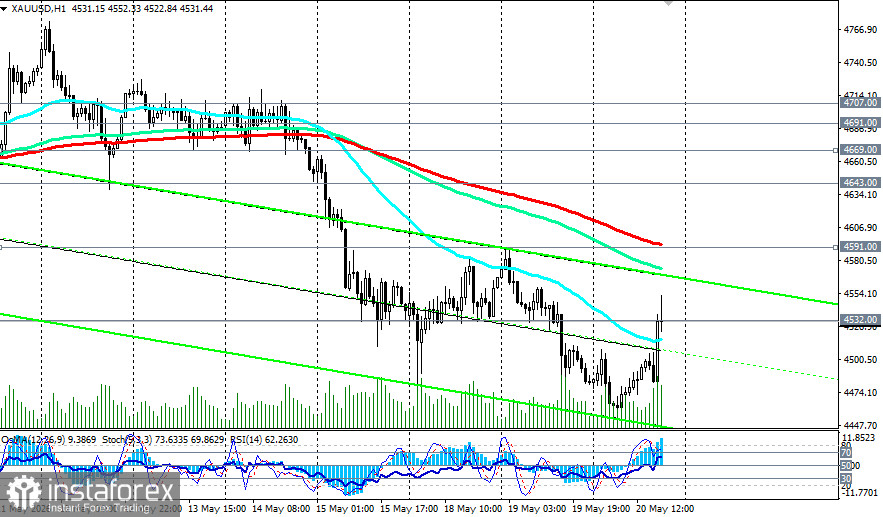
The XAU/USD pair took advantage of this moment and rose to 4552.00, recovering from the Asian session's low of 4454.00.
However, despite the temporary decline in yields, they remain elevated. Rising inflation risks, fueled by increasing oil prices and the escalation of the conflict between the U.S. and Iran, support expectations that major central banks, including the Federal Reserve, will be forced to maintain a tight monetary policy for longer or even implement further rate hikes.
High rates typically exert pressure on non-yielding assets such as gold. Rising bond yields increase the opportunity costs associated with holding bullion, which remains the main obstacle to further growth in the precious metal.
Investor optimism, however, is bolstered by forecasts that the U.S. Fed will continue to maintain a relatively tight monetary policy, though the likelihood of new rate hikes is gradually decreasing. This reduces the pressure on the non-yielding asset and promotes more balanced demand for gold.
Economists warn that the dynamics of XAU/USD in 2026 will largely depend on key macroeconomic factors:
Thus, gold retains its status as a key asset for diversification and capital protection amid instability, despite the pressure from high Treasury yields and the strength of the dollar.
Gold remains a crucial asset in conditions of uncertainty. Investors should pay close attention to U.S. inflation data and statements from the Fed. Short-term corrections present an opportunity to build positions.
In Wednesday's session, the publication of the minutes from the April FOMC meeting (6:00 PM GMT) is in focus. This is the last minutes related to Jerome Powell's tenure as Fed chairman before Kevin Warsh officially takes over.
At the April 28-29 meeting, the Fed maintained the rate in the range of 3.50-3.75%, but the meeting revealed an unusually high level of dissent—the largest since 1992. One board member (Stephen Miran) voted for a 25-basis-point rate cut, while three others opposed maintaining a "dovish" stance in the policy statement.
What to Expect from the Release:
Economists expect the minutes to reinforce the Fed's recent hawkish tone, reflecting policymakers' concerns about persistent inflation risks and upward pressures from geopolitical issues.
Possible Market Reaction:
A hawkish surprise (broad support for the cancellation of dovish guidance and discussion of conditions for a rate hike) could strengthen the dollar and add new pressure on gold, potentially breaking support at 4450.00.
Dovish Surprise (a majority considers inflation shocks to be temporary and still sees easing as the next step) - a weakening dollar, with a rebound in gold above 4570.00.
Outlook in the short term (1-2 weeks), the dynamics of gold will be determined by two factors: the Fed's minutes (released on Wednesday) and developments in the geopolitical situation.
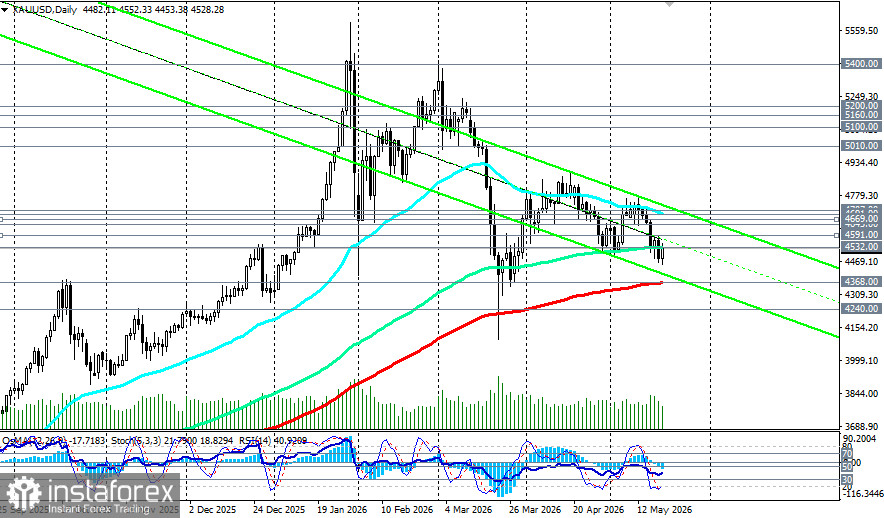
Bearish Scenario: Confirmation of a "hawkish" tone from the Fed in the minutes would lead to a breakout below 4450.00, with a decline toward 4350.00-4368.00 (200 EMA on the daily chart).
Bullish Scenario: An unexpectedly "dovish" tone in the minutes or signs of progress in U.S.-Iran negotiations would lead to a return above 4532.00 (144 EMA on the daily chart) and a test of 4590.00–4600.00.
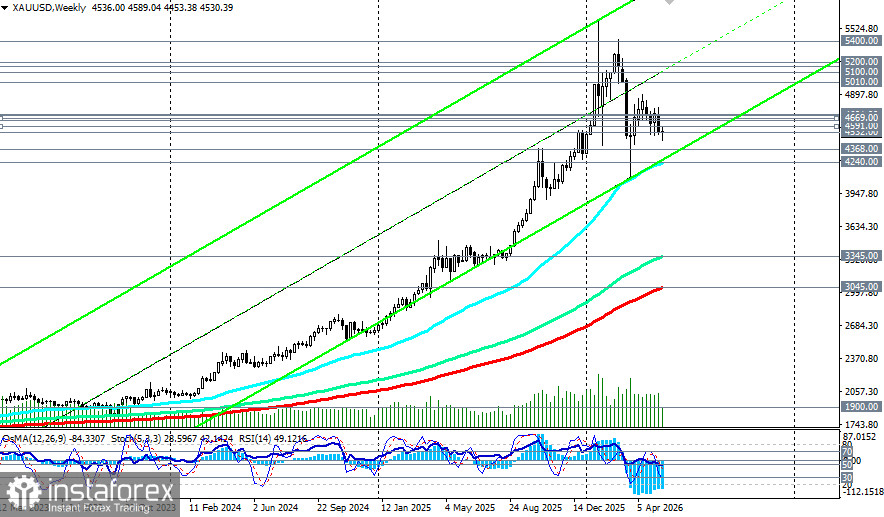
At the same time, despite the current pressure, the long-term outlook for gold remains constructive, say economists.
Four Key Drivers
| Date | Event | Expected Impact on XAU/USD |
|---|---|---|
Wednesday, May 20, 18:00 GMT | Release of the FOMC April meeting minutes | Main trigger of the day. Hawkish tone — pressure on gold; dovish — rebound |
May 21-22 | Speeches by Fed representatives (including possible comments on the minutes) | Additional signals about the interest rate trajectory |
Throughout the week | Development in the Strait of Hormuz / U.S.-Iran negotiations | Escalation — increased demand for safe-haven assets; progress — reduction of geopolitical premium |
Conclusion
Gold is facing powerful triple pressure: the dollar strengthening to six-week highs, a rise in Treasury yields to levels not seen since 2007, and a revision of expectations for Fed policy toward tightening (with a 55% probability of a hike by the end of the year).
The short-term technical picture remains bearish, with key support at 4450.00 and the risk of movement toward 4400.00-4368.00.
However, long-term investors may view the current correction as an opportunity for accumulation. Structural factors—deglobalization, U.S. debt issues, diversification of central bank reserves, and the expansion of the institutional investor base—remain in play and are projected by economists to support gold in the range of 4600.00–5100.00 in 2026–2027.
The immediate focus is on the FOMC minutes set to be released this evening. Any hints that policymakers are leaning toward tightening, or conversely, still see easing as the next step, will trigger significant movements in gold.
InstaForex analytical reviews will make you fully aware of market trends! Being an InstaForex client, you are provided with a large number of free services for efficient trading.


