 Zostať
Podmienky obchodovania
Nástroje



The minutes of the latest ECB meeting are filled with hawkish wording. The ECB framed the question of interest rate increases not as whether they will happen, but when they will happen. The issue of rate hikes is now being discussed not in terms of "if," but "when." This indicates that the ECB is preparing for a possible rate increase as early as June, as has been repeatedly mentioned in the context of incoming additional data.
Since the March meeting, risks related both to inflationary pressure and to economic slowdown have increased. This creates a "difficult policy trade-off," although committee members cautiously note that "there is still no evidence of strong second-round effects" from inflation.
Last week, members of the ECB Executive Board, Isabel Schnabel and Philip Lane, made statements pointing to a potential rate hike at the upcoming June 11 meeting, regardless of developments in the Middle East. Members of the Governing Council from Finland and Greece also supported a rate increase to strengthen confidence in the ECB. These statements reflect growing concern over persistent inflation dynamics, particularly given the risk that an energy shock could spill over into broader price pressures and inflation expectations.
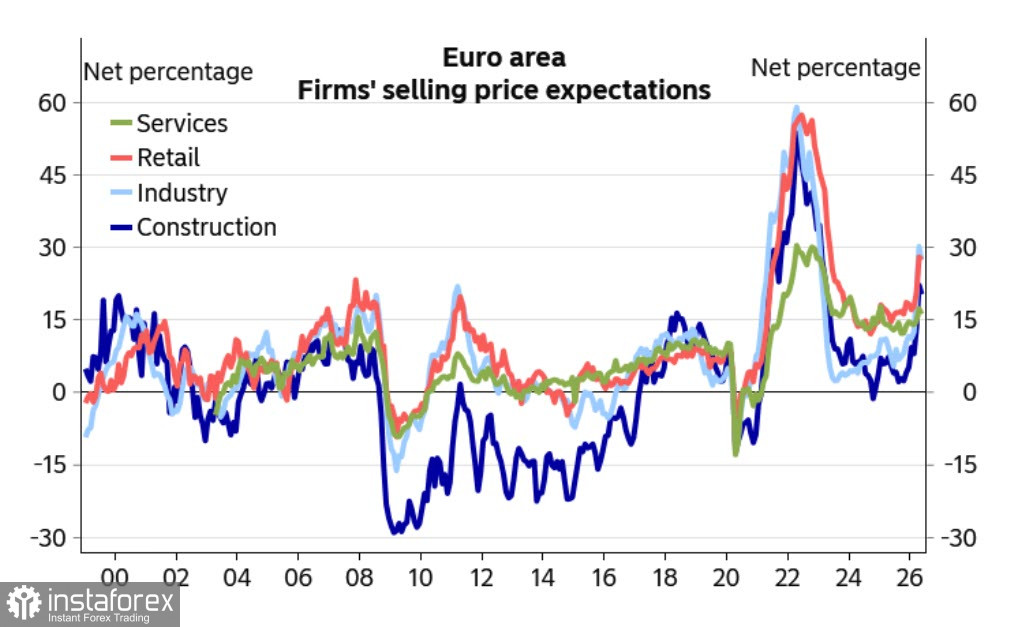
Despite increasing risks, markets have not yet shown a clear reaction. The euro even strengthened last week amid expectations of a potential peace settlement. ECB rate expectations through the end of the year imply a total tightening of 59 basis points, meaning euro yield differentials are unlikely to converge toward U.S. dollar levels. As a result, there is currently no strong long-term support factor for the euro.
Further developments will largely depend on events in the Persian Gulf. The announcement of a 60-day ceasefire carries a dual message. On one hand, it signals easing tensions. On the other hand, it indicates that the crisis is becoming prolonged. In such a scenario, both inflationary pressures and strain on global industry will intensify with each passing day.
Speculative positioning in the euro has become somewhat more bearish, with a weekly change of -1.04 billion. The estimated price remains below the long-term average, although momentum is weakening.
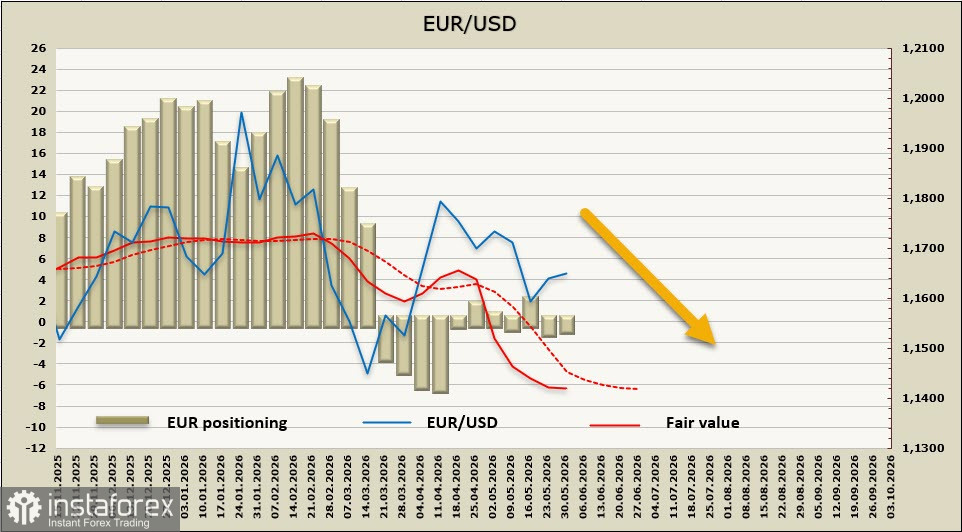
Last week, we observed the potential for a short-term rise in the euro toward resistance at 1.1700 amid rumors of easing tensions, but in the longer term, there are still no solid grounds for euro appreciation.
The only scenario in which the euro could strengthen against the dollar would be if inflation forces the ECB to adopt a more aggressive policy while the European economy is not harmed by either higher rates or an energy shortage. Given current realities, the simultaneous fulfillment of these two conditions appears unlikely. Therefore, a downward reversal in EUR/USD is expected after the current correction is completed. Resistance is located at 1.1700, with target levels at 1.1575 and subsequently 1.1410.
InstaForex analytical reviews will make you fully aware of market trends! Being an InstaForex client, you are provided with a large number of free services for efficient trading.


