 Zostať

Podmienky obchodovania
Nástroje


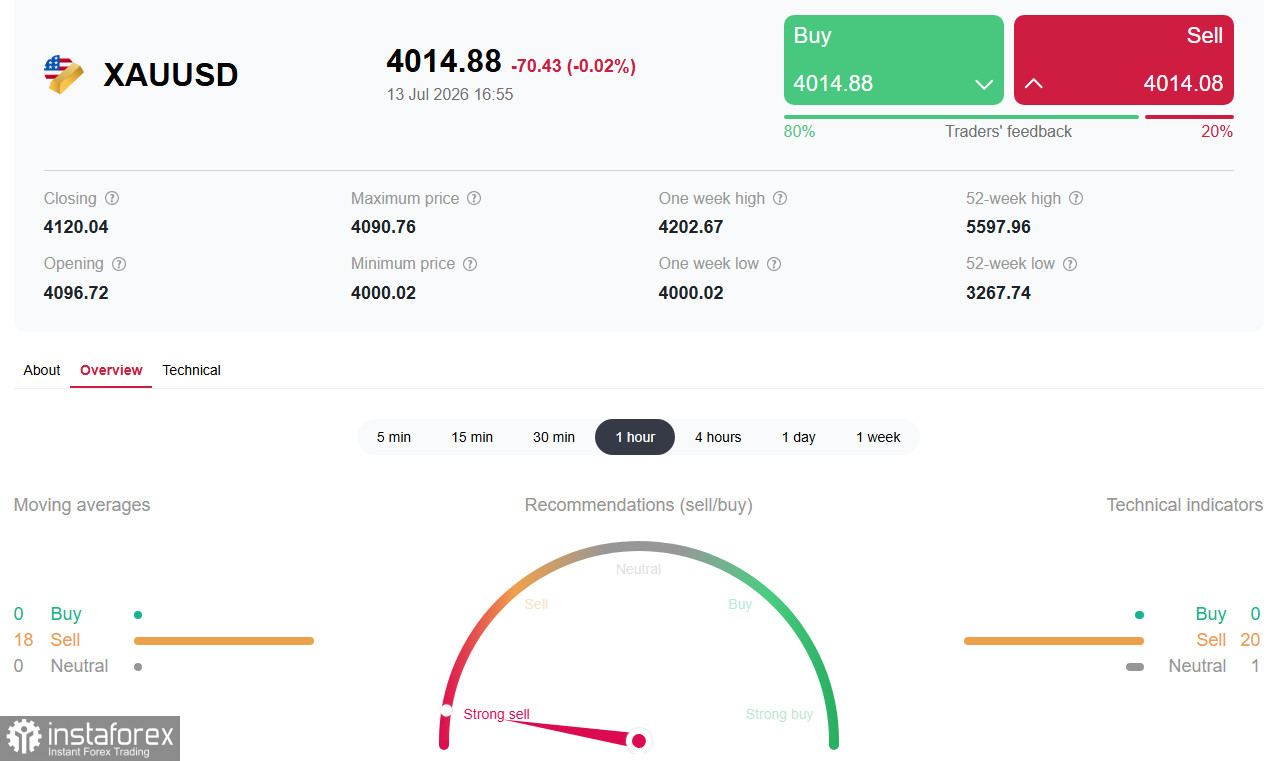
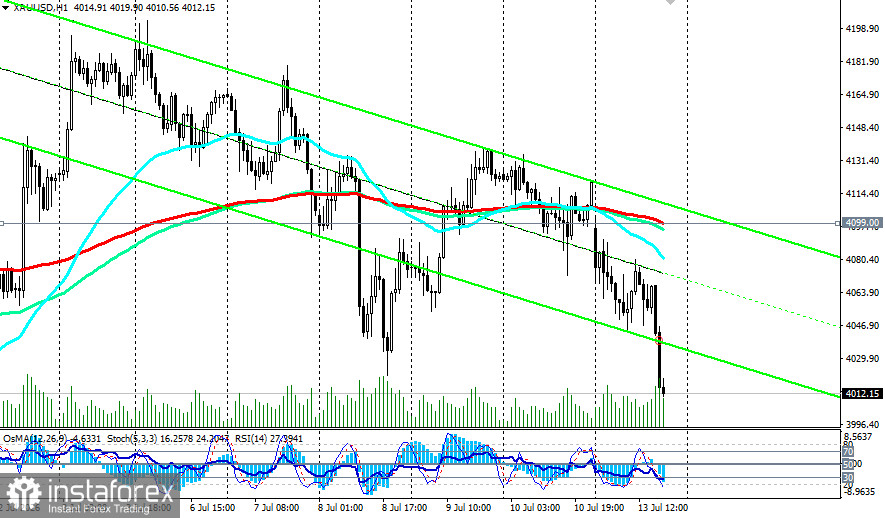
In the early hours of the U.S. trading session on Monday, XAU/USD is trading in the range of $4010.00-$4015.00, losing over 2.5% intra-day. This is the lowest value since July 1. The decline followed a weekend when the U.S. and Iran exchanged missile and drone strikes, and Tehran announced the renewed closure of the Strait of Hormuz "until further notice."
In response to these events, U.S. President Donald Trump stated that the strait is "open and will remain open—whether with Iran or without it," declaring the U.S. as the "Guardian of the Strait of Hormuz." Washington intends to levy a 20% fee on all cargo passing through the strait to cover security expenses. Markets perceived this escalation as a signal to bolster inflationary pressures, leading to WTI oil prices rising above $74 per barrel, a strengthening of the dollar (USDX approached 101.00), and higher Treasury yields.
A key factor pressuring gold has been the market's shift in focus from geopolitical risks to inflationary consequences. The rise in oil prices due to disruptions in the Strait of Hormuz has revived fears of a "second wave" of inflation. This, in turn, has strengthened expectations that the Fed will have to maintain a hawkish stance longer than previously assumed. According to the CME FedWatch tool, the likelihood of a rate hike in September has risen to 67%, and by the end of the year, markets are pricing in nearly a 90% probability of tightening.
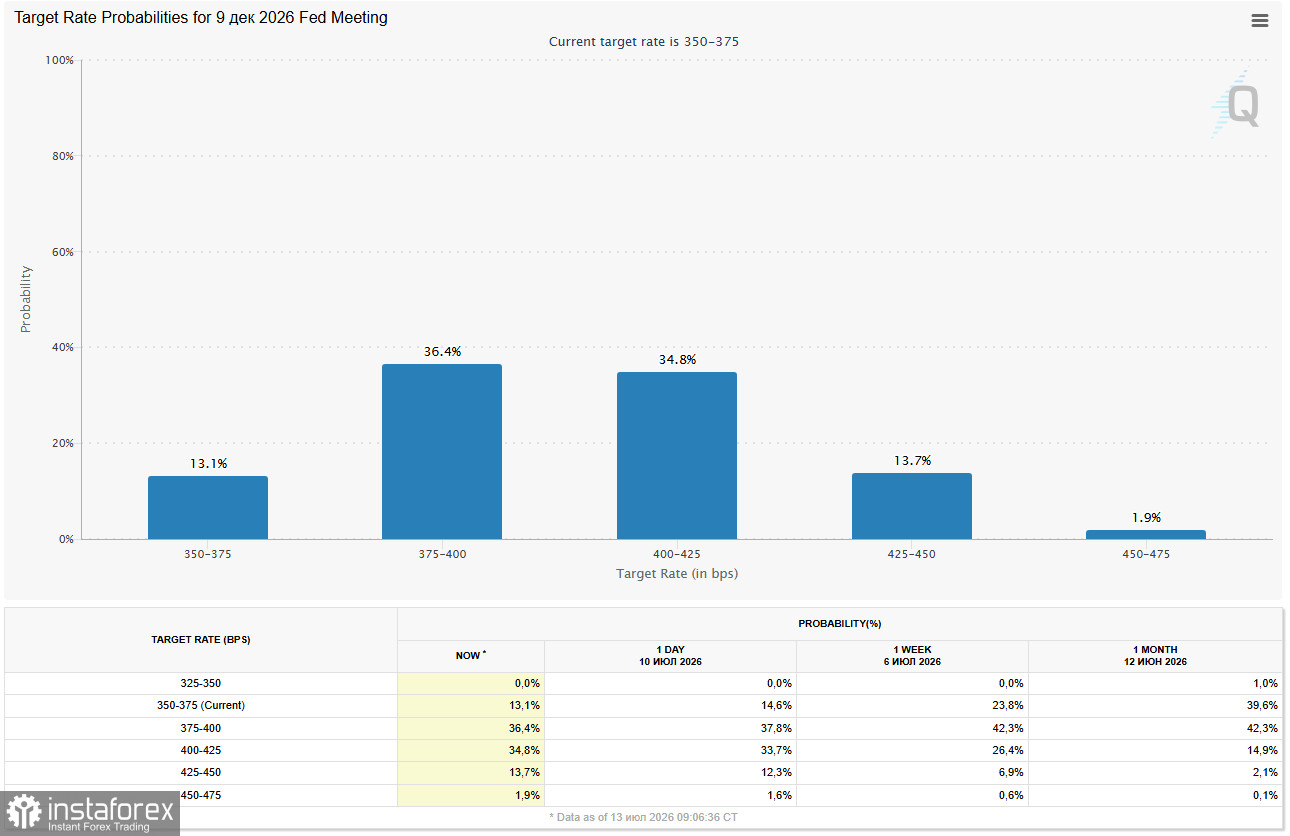
Economists confirm that labor market stabilization and persistent inflation maintain a hawkish tone in rate pricing. Markets have fully priced in a 25-basis-point rate hike by the end of the year and nearly 50 basis points over the next 12 months. This makes gold less attractive, as higher rates increase the opportunity cost of holding a non-yielding asset.
| Date | Event | Forecast / Expectation | Expected Impact on XAU/USD |
|---|---|---|---|
July 14 | U.S. Inflation Data (CPI) for June | Forecast: 3.8% YoY | "Cold" CPI = support; "Hot" CPI = pressure |
July 14 | Fed Chair Warsh's Speech in Congress | Hawkish rhetoric expected | "Dovish" signals = support; "Hawkish" = pressure |
July 15 | U.S. Producer Price Index (PPI) Data | — | Additional indicator of inflation |
Throughout Week | Developments in Geopolitical Situation | — | Escalation = pressure; de-escalation = support |
Gold finds itself at the intersection of geopolitical risks and monetary expectations, and currently, inflation concerns driven by rising oil prices outweigh its traditional role as a safe haven. A key moment will arrive on Tuesday when the CPI data is released, and Warsh speaks. These two events, along with developments in the Strait of Hormuz, will determine gold's future trajectory.
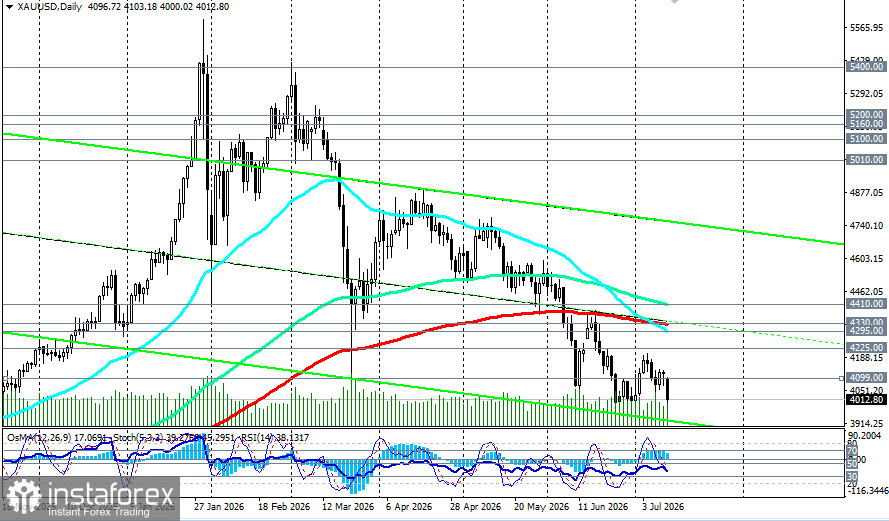
For Short-Term Traders: Prioritize short positions on a breakout below $4000. Consider long positions only if consolidating above $4100 with confirmation from fundamental factors.
For Medium-Term Investors: Take a wait-and-see position until the CPI data is published and the geopolitical situation clarifies. Corrections in the $3940.00–$3960.00 range can be used to enter long positions if structural support factors remain in place (central bank demand, geopolitical risks).
Risk Management: Exercise caution given the high volatility of macroeconomic data and geopolitical events. Strictly adhere to stop-loss orders and monitor developments in the Middle East and U.S. inflation data.
InstaForex analytical reviews will make you fully aware of market trends! Being an InstaForex client, you are provided with a large number of free services for efficient trading.


