 Zostať
Podmienky obchodovania
Nástroje



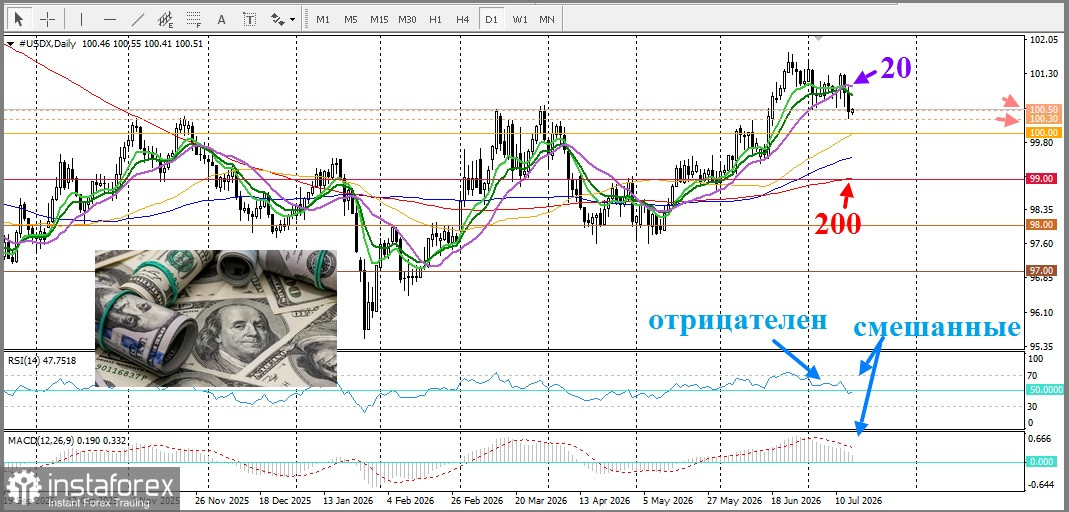
The US Dollar Index (DXY), which tracks the dollar against a basket of six currencies, is consolidating around 100.50, remaining close to the nearly four-week low reached yesterday. Fading expectations for a Fed rate hike have encouraged dollar bears. At the same time, concerns about energy-driven inflation and the rising US–Iran tensions are holding back further declines.
Data released on Wednesday showed US producer prices (PPI) fell 0.3% in June, following a revised 0.6% rise the previous month. This came against weak consumer price index (CPI) data released on Tuesday, easing fears that the Fed will keep rates elevated for an extended period. That factor, in turn, weighs on the dollar and supports the near-term bearish outlook.
On the geopolitical front, the conflict between the US and Iran sharply escalated this week with a new round of attacks. On Wednesday, US forces began airstrikes against Iranian missile and drone infrastructure, and Tehran responded with drone and missile strikes on US facilities in the region, signaling further intensification of the military confrontation.
US President Donald Trump raised tensions further by saying critical Iranian infrastructure—such as power plants and bridges—could become targets if the situation deteriorates. In addition, a US aircraft fired on a tanker attempting to break through a naval blockade of Iranian ports. Iran has effectively blocked the Strait of Hormuz and threatened to expand disruptions to the Bab el-Mandeb Strait.
These actions could significantly impact maritime trade and global energy supplies, continuing to support high oil prices and maintaining a geopolitical risk premium. Moreover, the prospect of a Fed rate increase of at least 25 basis points keeps further downside in check for the dollar. Traders are now focused on the release of US macroeconomic data during the North American session, which could be a significant catalyst.
From a technical viewpoint, with prices having dropped below the 20-day SMA and the relative strength index moving into negative territory, the near-term picture favors bears. But because prices are trading well above the 200-day SMA, the bulls are not giving up. Importntly, the 200-day SMA has flattened, indicating sideways movement within the current range.
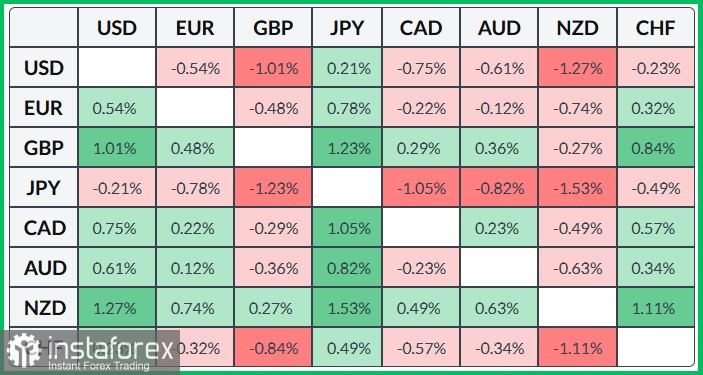
The table below shows the percentage change of the US dollar against major currencies for the current week. The US dollar showed its strongest performance against the Japanese yen.
InstaForex analytical reviews will make you fully aware of market trends! Being an InstaForex client, you are provided with a large number of free services for efficient trading.


