 Zostať

Podmienky obchodovania
Nástroje


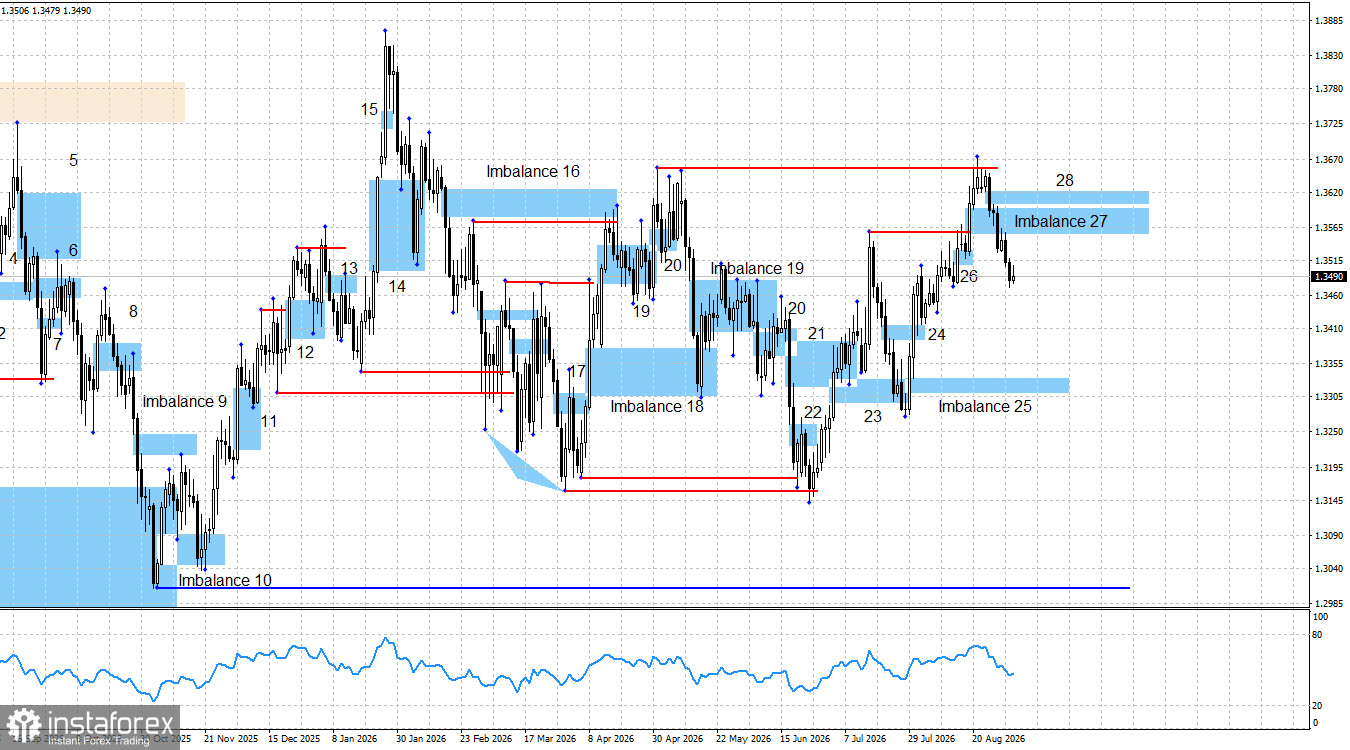
The GBP/USD pair has lost its bullish momentum, but the bullish advance is not yet over. In my view, saving the pound is in the hands of the euro. The euro is still maintaining a bullish bias at present and has not invalidated the last two bullish imbalances. These imbalances could save both European currencies. As I said earlier, I see no reason for the bears to advance. For example, it is extremely difficult to explain the decline in the euro and the pound this week. All of the U.S. economic reports released this week have, to varying degrees, created obstacles for the dollar. The geopolitical escalation in the Middle East was classified as "another escalation" by the end of the week. We have seen a huge number of such escalations over the past few months. If traders rushed to buy dollars every time this happened, the dollar would already have reached parity with the euro and the pound. Hawkish expectations strengthened last Friday, but traders continue to focus solely on Kevin Warsh's statements. Looking at the economic data, the Fed should arguably ease monetary policy rather than tighten it. Thus, I consider a resumption of the euro and pound's advance to be the most logical scenario.
Over the past month, the dollar has suffered numerous setbacks, including the U.S. Treasury's decision to increase the volume of long-term bond buybacks, weak monthly Nonfarm Payrolls reports, a weak annual Nonfarm Payrolls report, a slowdown in the Consumer Price Index, slower GDP growth, and a decline in market expectations for Fed monetary policy tightening. However, at the most critical moment, the bulls retreated despite having every card in their hands. All that remains is to hope for the euro and for the temporary nature of such actions by the bulls.
Do the bears have any prospects at present? In my view, very few. As we have already established, the fundamental backdrop does not support the U.S. dollar. However, it should not be forgotten that not everything in the market depends solely on the fundamental backdrop. From a long-term perspective, the market has been range-bound for about a year. We have seen three waves to the upside, and everything suggests that the bulls should continue their advance. However, over the past year, we have actually been seeing an alternation of three-wave structures and similar patterns. The liquidity sweep of the May 1 swing could serve as a basis for a new bearish leg, which would be completely inconsistent with the fundamental backdrop.
Geopolitics is no longer having a favorable impact on the dollar. Negotiations between the United States and Iran have failed once again and are no longer taking place. From time to time, Iran and the United States exchange strikes, threats, and ultimatums, which has had no effect whatsoever in terms of resolving the conflict and ending the war. No one can currently predict how much longer the conflict will continue. And the dollar cannot expect market support every time the two sides exchange strikes, which are occurring with notable regularity.
Technical analysis shows that the picture changed from bullish to bearish in just a few days, based on two highly ambiguous events. The euro may stop the pound's decline, but at present it is the bears who have two imbalances from which positions can be opened. The latest imbalance 27, which was initially bullish but is now an inverted bearish imbalance, has already elicited a market reaction. However, the pound's decline could end at any moment if the euro fails to break through its imbalances. Within the euro-pound pair, the euro holds the stronger position.
The fundamental backdrop on Thursday did not give the bears reason to expect another decline, while since the beginning of the week, traders have already ignored a large amount of weak U.S. economic data. Ahead of Friday, the dollar is declining, which best reflects market expectations for payrolls and unemployment.
The overall fundamental backdrop remains such that, in the long term, I can expect nothing other than a decline in the U.S. dollar. However, this decline appears to be postponed once again for some time. The war between Iran and the United States has not changed my long-term expectations. Geopolitics prompted the market to remember the dollar's safe-haven status for several months, but the conflict has already passed its most active phase. The prospects for FOMC monetary policy tightening remain ambiguous, while the market itself is constantly changing its expectations. Thus, in my view, any appreciation of the dollar is temporary and random in nature. I see no reason for a large-scale bearish advance.
On September 4, the economic calendar contains three releases, each of which can be considered important. The impact of the fundamental backdrop on market sentiment will be felt in the second half of the day on Friday.
The long-term outlook for the pound remains bullish. After liquidity sweeps of the two most recent swings and the formation of a series of buy signals, the bulls may still resume their advance. Unfortunately, the bears have controlled the initiative over the past week, and all recent bullish patterns have been invalidated. The bears currently have technical grounds to push the pair lower. Only the euro may be able to save the pound. The liquidity sweep of the May 1 swing triggered the decline, and a sell signal formed inside inverted imbalance 27. It is difficult to say how long the pound will continue to fall. Two bullish imbalances on EUR/USD could potentially stop the decline. On Friday, the United States will release important labor-market and unemployment reports.
InstaForex analytical reviews will make you fully aware of market trends! Being an InstaForex client, you are provided with a large number of free services for efficient trading.


